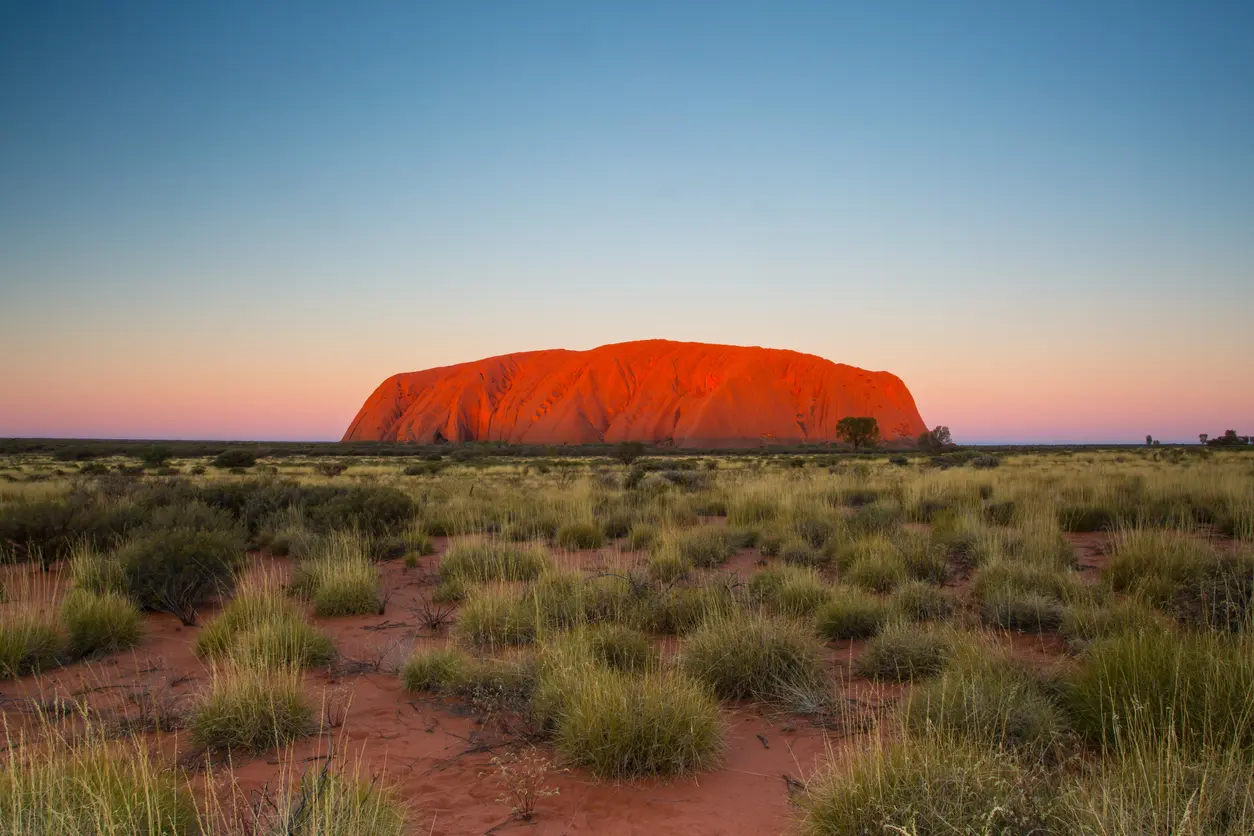
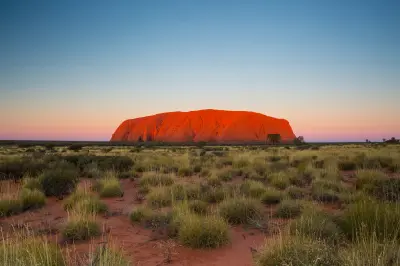
Uluru glows red in the low evening light above the spinifex plains of Uluru-Kata Tjuta National Park, Northern Territory, Australia.
Australia
Australia is a continental landscape system defined by vast deserts, ancient mountain ranges, tropical forests, temperate wilderness, and an exceptionally long coastline. The country extends from the tropical environments of northern Queensland and the Top End to the arid interior, forested southeast, Mediterranean southwest, and cool landscapes of Tasmania.
The terrain transitions between desert plains, rocky ranges, tropical wetlands, eucalyptus forests, alpine environments, and coastal cliffs and beaches. Ancient geology and long geographic isolation have created landscapes and ecosystems found nowhere else.
Seasonal rainfall, tropical monsoons, drought, fire, and changing coastal weather influence vegetation, water levels, wildlife activity, and atmospheric conditions throughout the year.
Explore Australia by Region
Choose a region to discover its landscapes, photographic character, and destinations.
Explore Regions in Australia
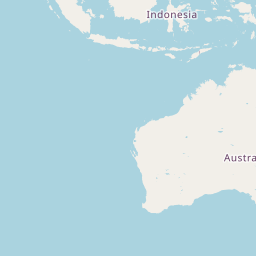
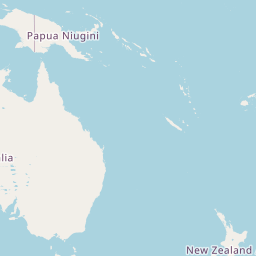




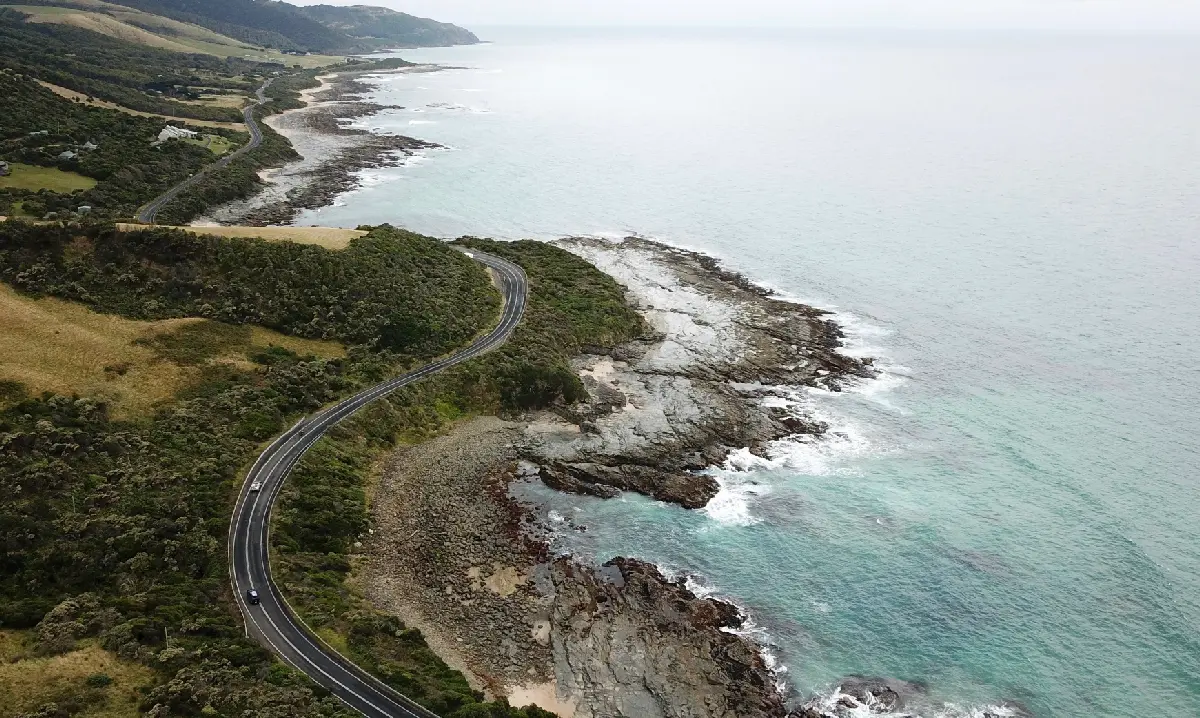
Great Ocean Road & Victorian Coast
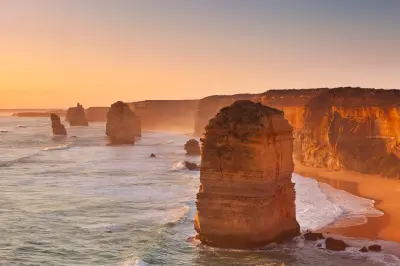
The Great Ocean Road follows a highly varied coastline shaped by persistent Southern Ocean erosion. Around Port Campbell, layered limestone cliffs have been carved into monumental formations including sea stacks, arches, narrow gorges, and offshore rock platforms. Farther east, the Otway Ranges reach the coast through forested hills, river valleys, waterfalls, and steep headlands. Temperate rainforest and tall eucalyptus forests provide a strong inland contrast to the open beaches and exposed coastal environments. The visual character of the region is defined by the relationship between ocean, geology, and forest, producing layered compositions across sea stacks, cliffs, beaches, headlands, waterfalls, and elevated coastal viewpoints.
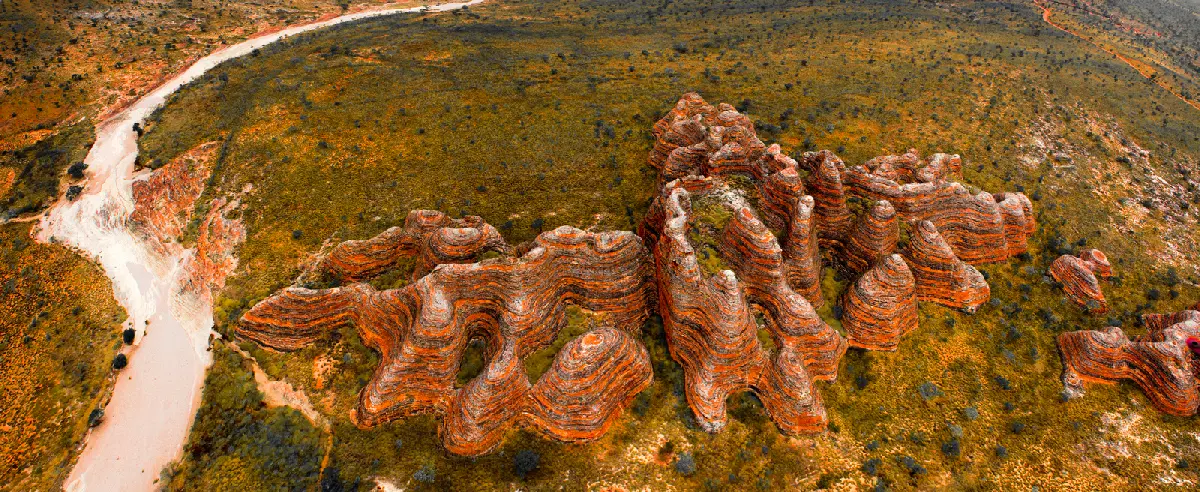
Kimberley
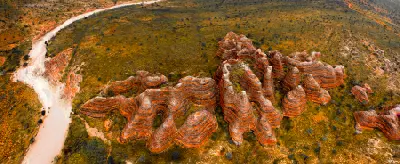
The Kimberley is structured around an ancient and extensively dissected plateau surrounded by ranges, plains and desert margins. Sandstone dominates much of the rugged interior, while ancient limestone reef systems form distinctive ranges in the west. Rivers have cut through these formations to produce immense gorges, escarpments, waterfalls and isolated rock landscapes across one of Australia's largest wilderness regions. Across the interior, tropical savanna and open woodland extend between rocky ranges and major river systems including the Fitzroy and Ord. Toward the coast, the plateau breaks into towering sandstone cliffs, deeply indented bays, tidal rivers and thousands of offshore islands, creating a markedly different landscape from the broad plains and ranges farther inland. The visual structure of the region is defined by immense scale and strong contrasts between red rock, golden savanna, dark gorges and tropical water. Seasonal waterfalls, boab-dotted plains, exposed escarpments and long river corridors create repeated focal points within otherwise expansive wilderness, while monsoonal cloud and low-angle dry-season light continually alter colour and atmospheric depth.
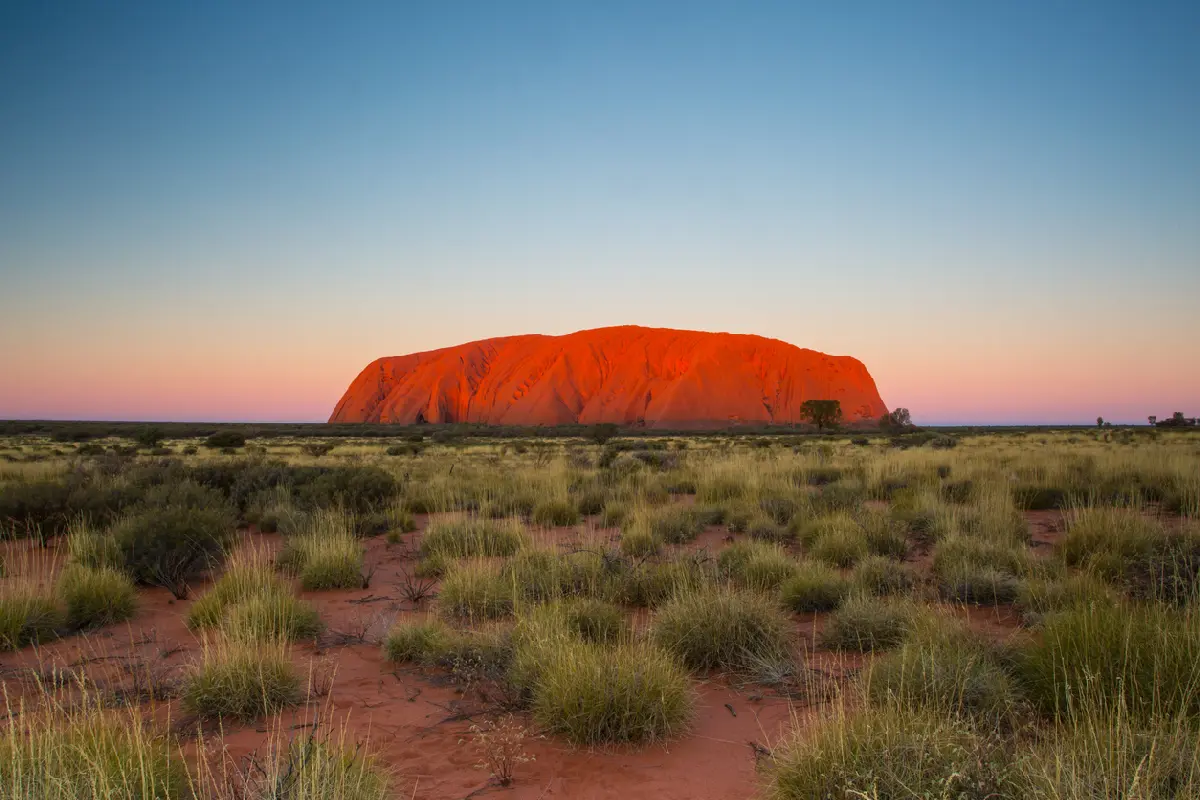
Red Centre
The Red Centre is shaped by some of Australia's oldest exposed geological systems, where prolonged erosion has reduced ancient mountain chains into isolated ranges, residual rock formations and enormous desert plains. Uluru and Kata Tjuta dominate the southern landscape, while the MacDonnell Ranges extend east and west of Alice Springs as parallel ridges broken by narrow gaps and deeply incised gorges. Across the region, sandstone, conglomerate and other resistant rocks contrast with surrounding plains of red sand, spinifex and sparse desert vegetation. Waterholes and sheltered gorges introduce small but important concentrations of vegetation, while dunes and open plains emphasise the immense horizontal scale of the interior. The visual structure of the region is defined by the contrast between monumental landforms and surrounding emptiness. Low-angle sunlight reveals rock texture and intensifies red and orange tones, while clear horizons, sparse vegetation and rapidly changing desert weather create strong variations in colour, shadow and atmospheric depth.
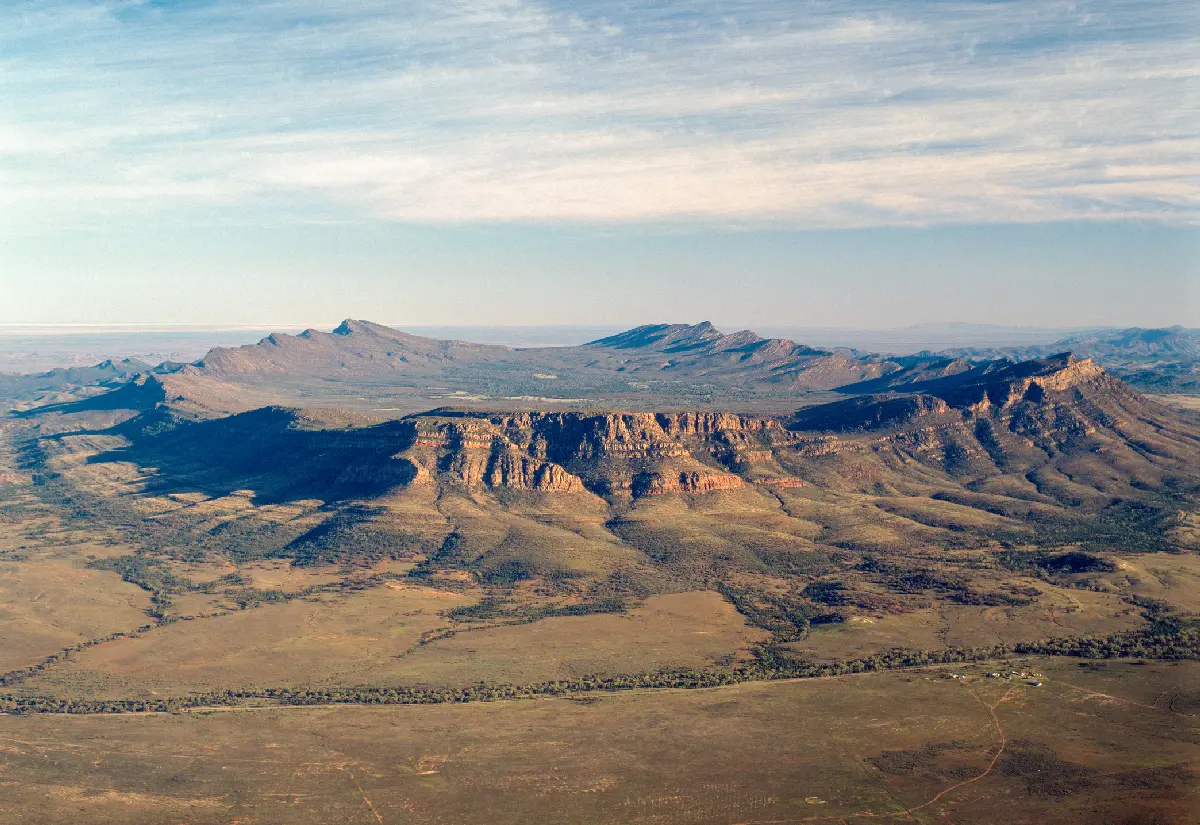
South Australia
South Australia is structured around a transition from ancient folded mountain systems and arid interior basins to low coastal plains and the Southern Ocean. The Flinders Ranges rise from surrounding semi-arid country as a series of parallel ridges, broad valleys and eroded escarpments, with Wilpena Pound forming one of the region's most recognisable geological features. Farther south, the landscape changes towards coastal plains, limestone cliffs and exposed ocean environments. Kangaroo Island contains rugged headlands, sheltered beaches and sculpted granite formations, while the mainland coast includes broad bays, rocky shorelines and extensive stretches of dune and coastal vegetation. The visual structure of the region is defined by contrasts between inland relief and open coastal landscapes. Elevated viewpoints reveal layered ridges and immense dry valleys, while the southern coastline introduces cliffs, offshore rocks and breaking surf. Seasonal vegetation, atmospheric haze and directional light create distinct photographic conditions across both environments.
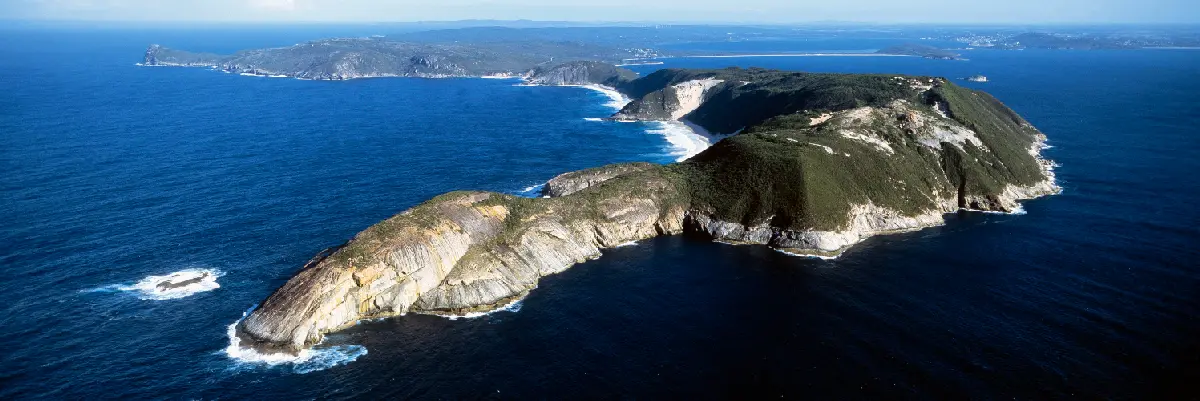
Southwest Australia
Southwest Australia is structured around a broad transition between forested interior landscapes and an extensive southern and western coastline. Margaret River combines agricultural country with limestone headlands and surf beaches, while the southern forests contain some of Australia's tallest karri trees and dense temperate vegetation. Farther south, the coastline around Denmark and Albany is characterised by granite formations, sheltered bays and exposed Southern Ocean headlands. East towards Esperance, pale beaches, turquoise water and granite peaks create a more open coastal landscape adjoining increasingly dry inland terrain. The visual structure of the region is defined by the contrast between forest, farmland and ocean. Tall karri forests and rolling agricultural landscapes provide enclosed and layered compositions inland, while granite headlands, beaches and exposed coastal formations create broader landscapes along the southern coast.
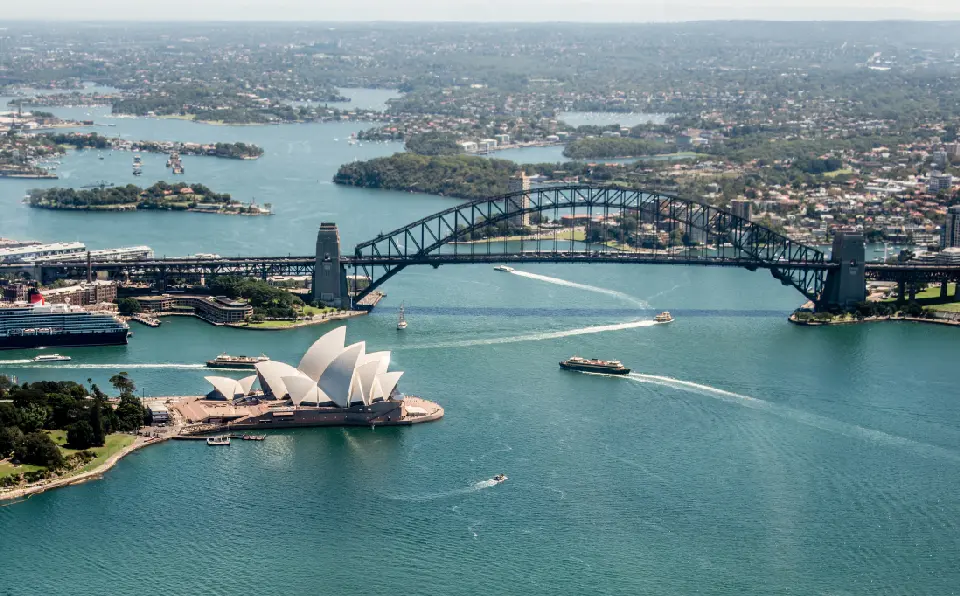
Sydney, Blue Mountains & NSW Coast
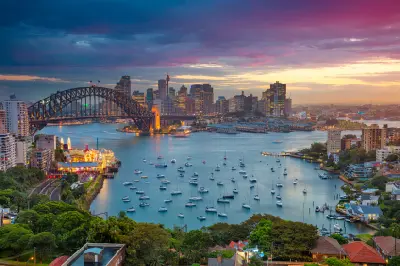
Sydney, Blue Mountains & NSW Coast is structured around the interaction between the sandstone geology of the Sydney Basin and the Pacific Ocean. Rivers have cut deeply into the plateau and flooded valleys form Sydney's intricate harbour system, while marine erosion has shaped the eastern edge into beaches, cliffs, rocky platforms, and headlands. Inland, the same broad geological system rises towards the Blue Mountains. Each part of the region produces a different landscape scale. Sydney combines harbour water, sandstone shoreline, architecture, bridges, and dense urban form, while the Pacific coast opens into long beaches, ocean cliffs, surf, and rocky foregrounds. The Blue Mountains shift the emphasis towards immense valleys, vertical escarpments, waterfalls, forested ridges, and layered horizons extending across the Greater Blue Mountains wilderness. The visual structure of the region is defined by repeated relationships between sandstone, water, forest, and elevation. Harbour viewpoints compress architecture and shoreline into layered compositions, coastal positions work through surf and geological foregrounds, and elevated mountain lookouts reveal successive escarpments and valleys. Sunrise, mist, eucalyptus haze, reflections, storm cloud, and warm sandstone light provide strong seasonal and atmospheric variation.
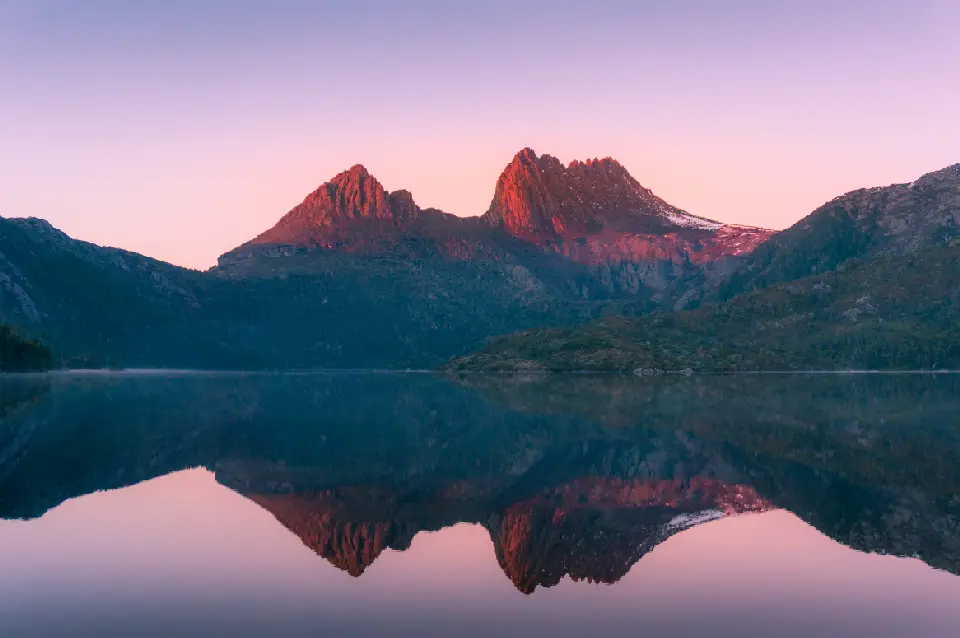
Tasmania
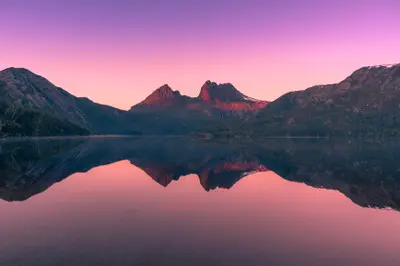
Tasmania is structured around a mountainous central and western interior surrounded by highly varied coastal environments. Glacial erosion has formed steep peaks, alpine plateaus, deep valleys, lakes, and tarns, while high rainfall supports extensive temperate rainforest across the west. The eastern and southern coasts provide a strong contrast, combining granite mountains, sheltered bays, beaches, rocky headlands, and monumental sea cliffs. Rivers, waterfalls, forests, and wetlands connect these environments across the island. The visual character of Tasmania is defined by the relationship between mountains, water, forest, and coast, producing layered compositions across alpine lakes, wilderness valleys, rainforest, beaches, and exposed shorelines.
Top End
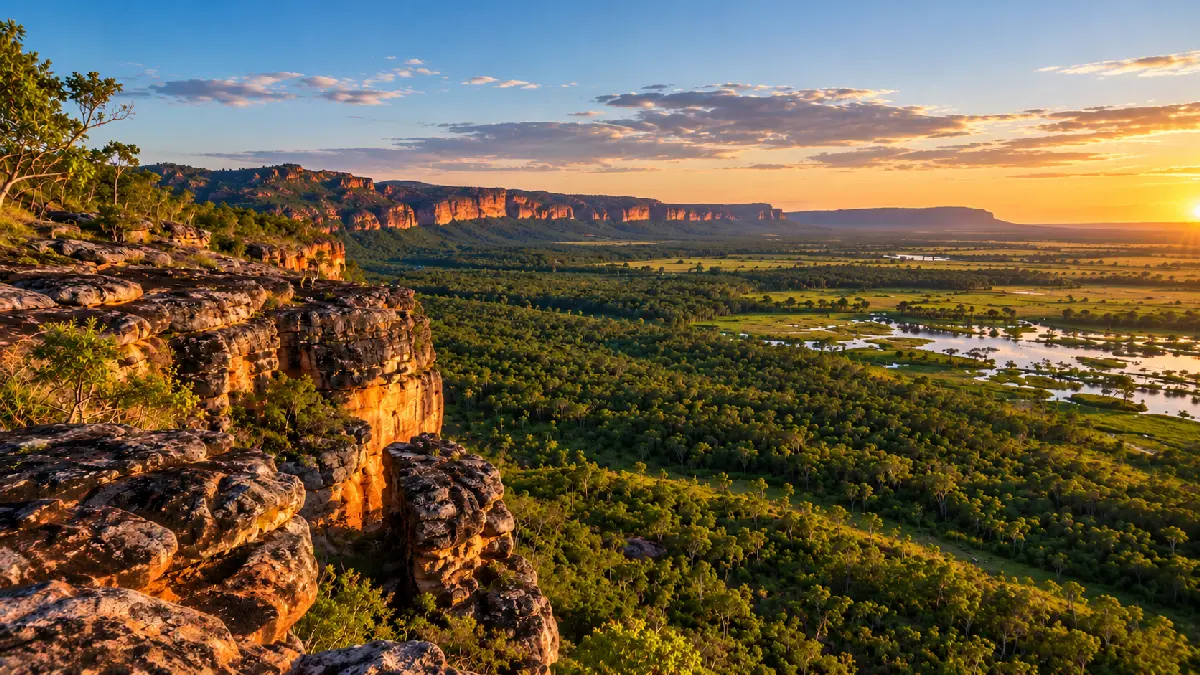
The Top End is structured around ancient sandstone plateaus and extensive lowland floodplains shaped by tropical monsoon systems. In Kakadu, the Arnhem Land Escarpment rises above broad wetlands and river corridors, creating a distinct boundary between elevated sandstone country and the seasonally flooded plains below. Across Kakadu, Yellow Water Billabong and the surrounding wetlands support extensive aquatic vegetation and wildlife, while Ubirr and Nourlangie occupy rocky escarpment landscapes overlooking the plains. Farther west, Litchfield National Park contains sandstone plateaus, waterfalls and sheltered plunge pools, with termite mounds forming distinctive patterns across the surrounding savanna. The visual structure of the region is defined by contrasts between horizontal wetlands, vertical escarpments and flowing water. Seasonal flooding creates broad reflective surfaces, while waterfalls, weathered sandstone and tropical vegetation introduce stronger relief and texture. Changing monsoon cloud and low-angle sunlight further emphasise the scale of the landscape.
Tropical North Queensland
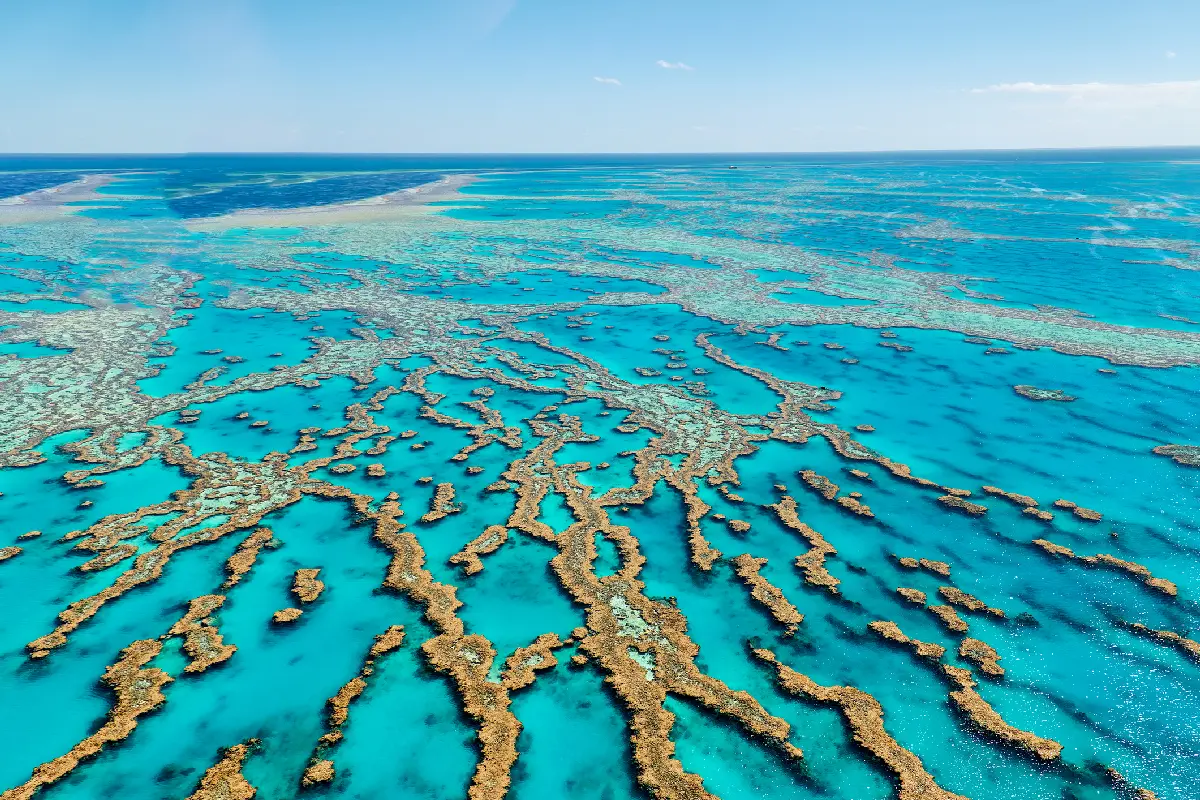
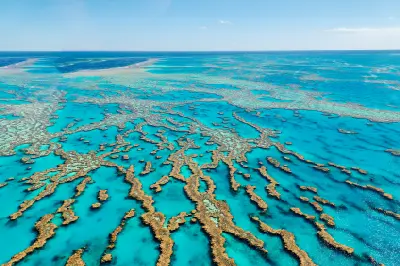
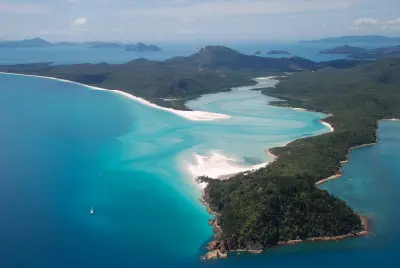
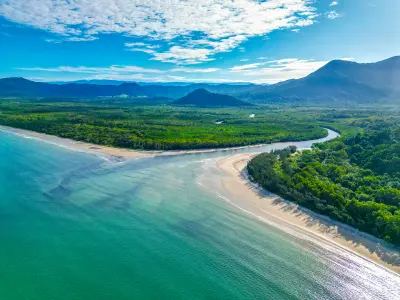
Tropical North Queensland is structured around the close relationship between the Great Barrier Reef and the Wet Tropics, two immense natural systems separated in places by only a narrow coastal corridor. Offshore, coral reefs, islands and shallow lagoons extend across the continental shelf, while immediately inland forested ranges rise steeply from the coast. North of Cairns, the Daintree and Cape Tribulation preserve one of the strongest transitions between tropical rainforest and marine landscape in Australia. Farther inland, the Atherton Tablelands form an elevated volcanic plateau where crater lakes, waterfalls and dense forest contrast with the hotter coastal lowlands. The visual structure of the region is defined by transitions between water, forest and elevation. Aerial perspectives reveal reef patterns, islands and changing ocean depth, while the rainforest interior is shaped by layered vegetation, rivers, waterfalls and filtered light beneath the canopy.
Western Australia Coast
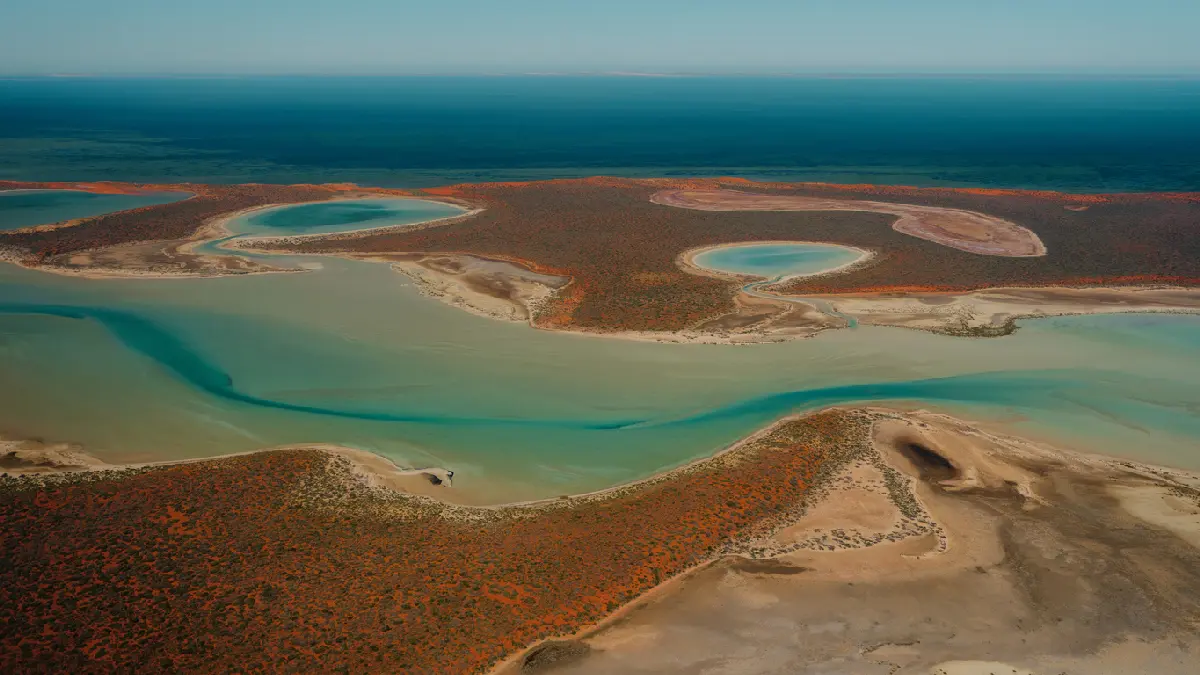
The Western Australia Coast is structured around a long transition between the Indian Ocean and the arid landscapes of the continent's western interior. Ningaloo Reef follows the shoreline beside Cape Range, while farther south the Shark Bay peninsulas enclose extensive bays, tidal flats and shallow coastal waters. Around Kalbarri, the Murchison River cuts through layered sandstone before reaching the coast, creating a landscape of inland gorges and exposed coastal cliffs. Across the wider region, limestone, sandstone and marine environments create distinct geographic areas linked by an increasingly dry coastal landscape. The visual structure of the region is defined by the contrast between clear ocean water and arid land. Reefs, beaches and sheltered bays create strong coastal forms, while cliffs, river gorges and rocky headlands introduce greater relief along an otherwise expansive shoreline.
Overview
Australia is a continental landscape system defined by vast deserts, ancient mountain ranges, tropical forests, temperate wilderness, and an exceptionally long coastline. The country extends from the tropical environments of northern Queensland and the Top End to the arid interior, forested southeast, Mediterranean southwest, and cool landscapes of Tasmania.
The terrain transitions between desert plains, rocky ranges, tropical wetlands, eucalyptus forests, alpine environments, and coastal cliffs and beaches. Ancient geology and long geographic isolation have created landscapes and ecosystems found nowhere else.
Seasonal rainfall, tropical monsoons, drought, fire, and changing coastal weather influence vegetation, water levels, wildlife activity, and atmospheric conditions throughout the year.
Key Photography Subjects
- Desert plains, monumental rock formations, and ancient ranges
- Tropical rainforest, wetlands, waterfalls, and river systems
- Eucalyptus forests, mountain escarpments, and alpine landscapes
- Coral reefs, islands, beaches, and turquoise coastal waters
- Rugged cliffs, headlands, sea stacks, and Southern Ocean coastline
- Native wildlife within distinctive Australian environments
- Seasonal weather, storms, wildflowers, and atmospheric light
Gallery
Workshops in Australia
No upcoming workshops scheduled for Australia at this time.
Check back soon or explore other destinations.