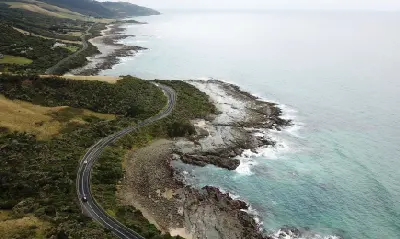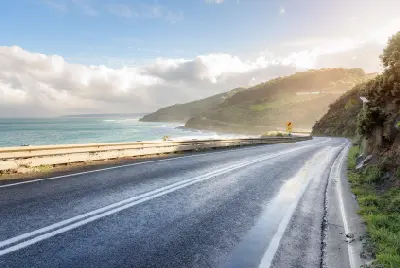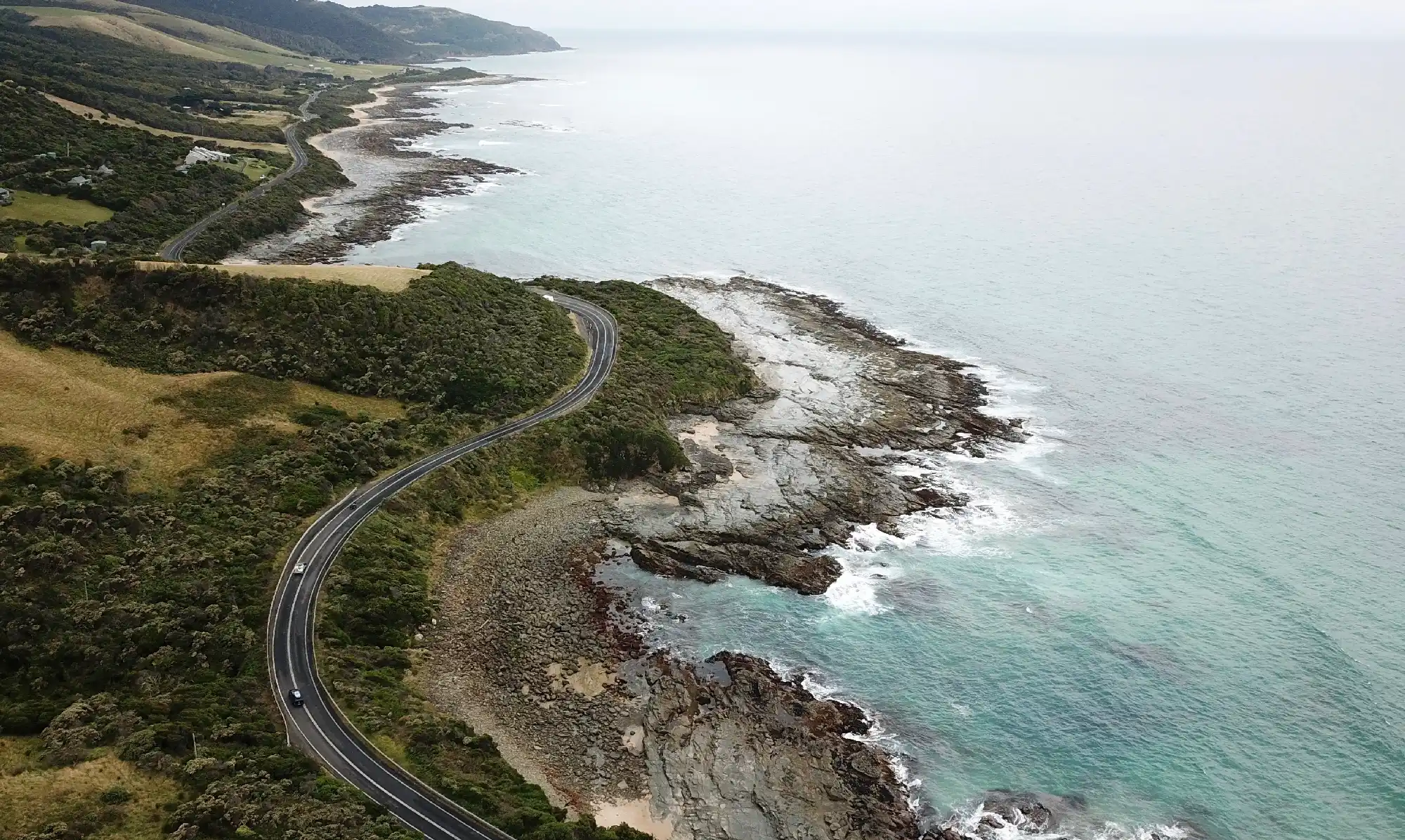
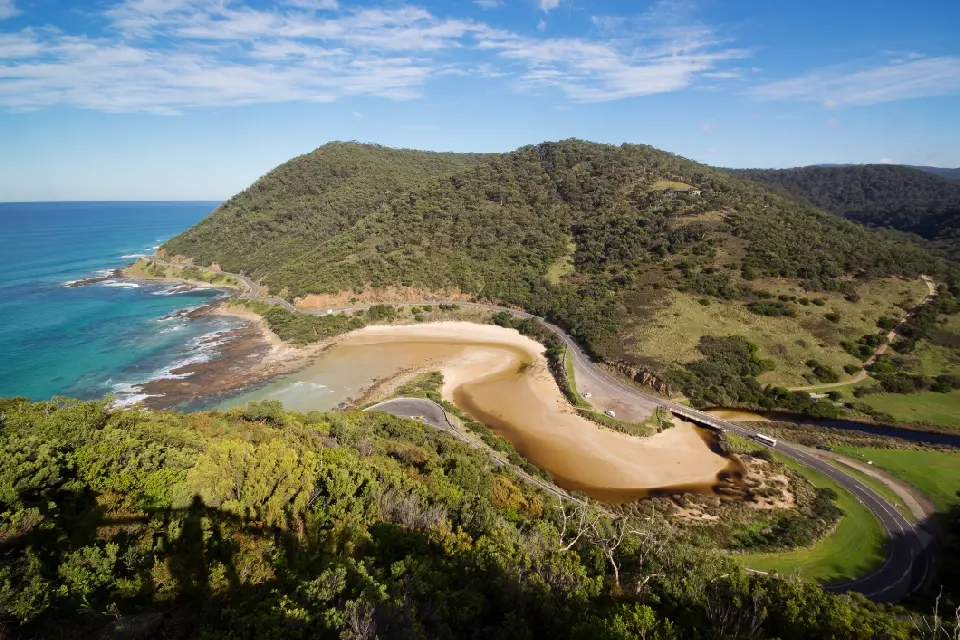
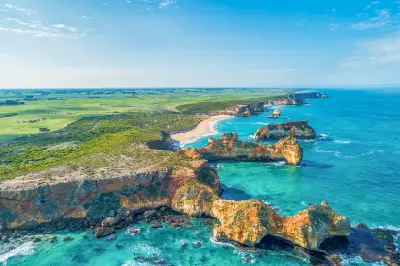
Aerial view of the Great Ocean Road curving beside rocky coastline and the Southern Ocean in Victoria, Australia.

    Great Ocean Road winding along Victoria’s rugged southern coastline, Australia.

    Great Ocean Road & Victorian Coast

    The Great Ocean Road and Victorian Coast form a southern coastal landscape system defined by limestone cliffs, offshore sea stacks, surf beaches, forested ranges, and exposed Southern Ocean shores. The region extends along Victoria’s southwest coast through Port Campbell, the Otways, and a succession of bays, headlands, and coastal settlements.

    The terrain transitions between eroded limestone coastlines, broad beaches, rocky platforms, river valleys, and the densely forested Otway Ranges. Powerful ocean conditions have created arches, stacks, caves, and isolated rock formations along some of Australia’s most dramatic shoreline.

    Seasonal weather, ocean swell, changing tides, and rapidly shifting coastal light influence the character of the landscape throughout the year.

    Geographic discovery

    Explore Great Ocean Road & Victorian Coast by Area

    Choose a part of the Great Ocean Road & Victorian Coast to discover its landscapes, photographic character, and locations.

    Open interactive Explore

    Explore Areas in Great Ocean Road & Victorian Coast

    Open in Explore
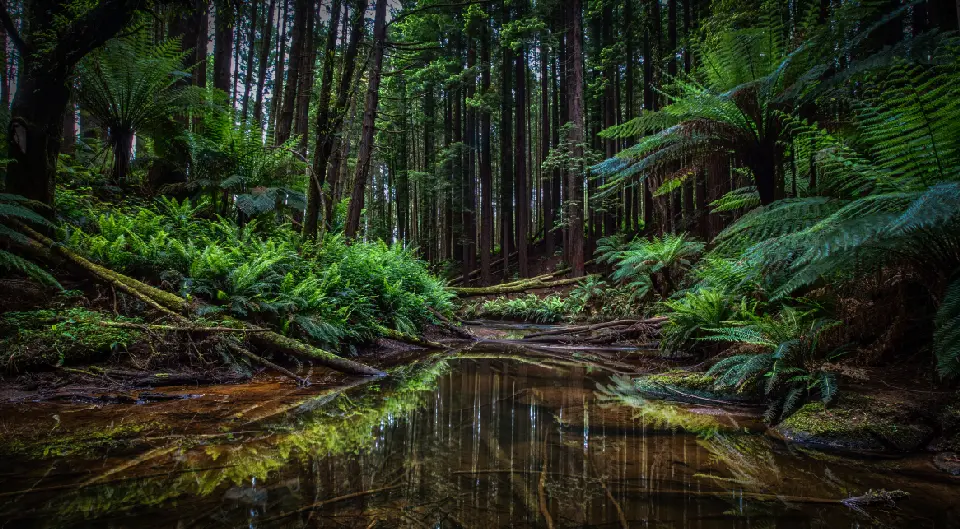
    Californian redwood forest reflected in the Aire River among lush tree ferns in Great Otway National Park, Victoria.

    Otways & Cape Otway

    Otways & Cape Otway is structured around a wet mountain range rising immediately inland from Victoria's Southern Ocean coast. Moisture carried from the ocean supports dense temperate rainforest, giant eucalypts, tree ferns, and moss-covered gullies, while numerous streams descend through deeply eroded valleys towards the surrounding lowlands and sea. Each location reveals a different part of this water-and-forest system. Maits Rest concentrates the area's rainforest character beneath an enclosed canopy, while Hopetoun Falls, Beauchamp Falls, Triplet Falls, and Erskine Falls place moving water within steep forested gullies. Aire River introduces broader wetlands and reflective water, while Cape Otway opens the landscape onto exposed headlands and the Southern Ocean. The visual structure of the region is defined by transitions from enclosed forest to open coast. Tree trunks, ferns, moss, streams, and waterfalls create layered compositions at intimate scale, while river landscapes and Cape Otway provide broader horizons. Rain, mist, wet foliage, filtered light, and rapidly changing maritime weather are integral to the photographic character rather than conditions to be avoided.

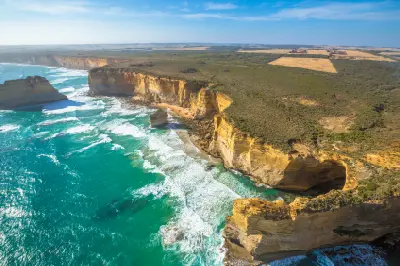
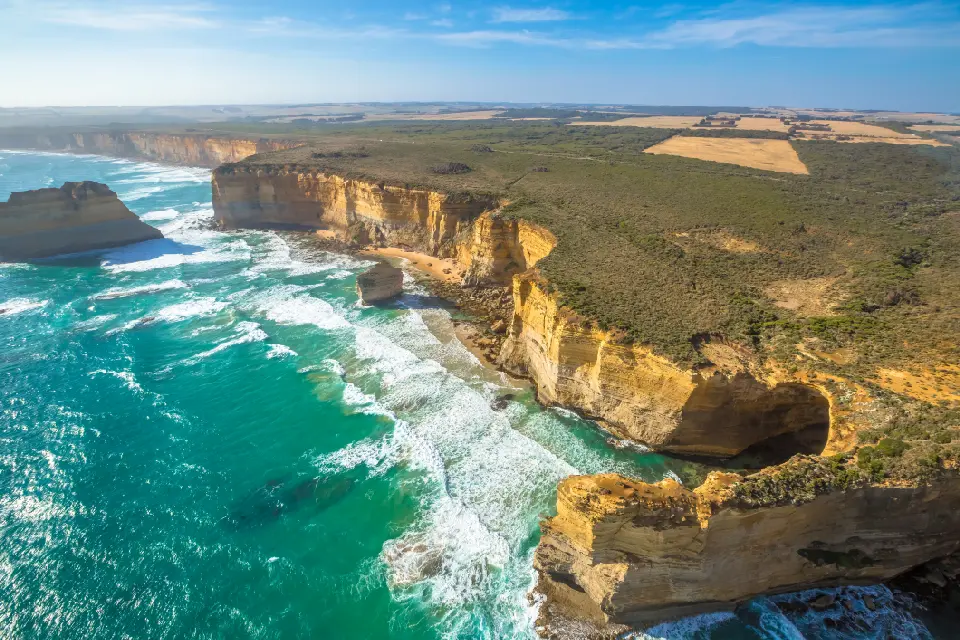
    Aerial view of limestone cliffs, sea stacks and turquoise ocean along the Shipwreck Coast near Port Campbell, Victoria.

    Port Campbell & Shipwreck Coast

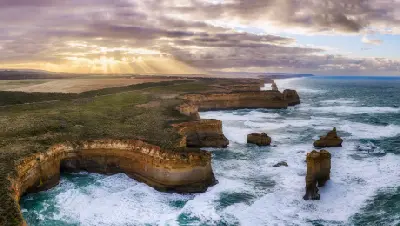
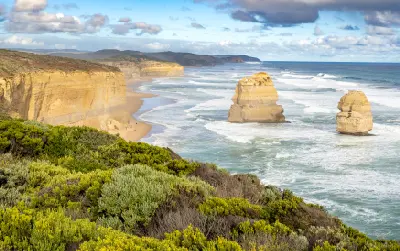
    Port Campbell & Shipwreck Coast is structured around a deeply eroded limestone escarpment extending along the western section of the Great Ocean Road. Waves attacking the relatively soft rock have progressively formed caves, arches, stacks, islands, and sheltered gorges, leaving a fragmented coastline where erosion remains visibly active. Each location reveals a different expression of the same geological process. The Twelve Apostles and Bay of Islands place isolated stacks against broad Southern Ocean horizons, while Gibson Steps brings the immense cliff face into view from beach level. Loch Ard Gorge cuts deeply into the coast, and London Bridge, The Arch, The Grotto, and Childers Cove reveal successive combinations of collapsed cliffs, openings, caves, and protected inlets. The visual structure of the coast is defined by the contrast between vertical limestone, dark offshore rock, turbulent water, and expansive ocean. Elevated viewpoints emphasise repetition and scale, while beaches and gorges provide lower perspectives beneath the cliffs. Sunrise and sunset, storm fronts, sea mist, backlit spray, and changing swell continually alter the separation, colour, and atmosphere of the formations.

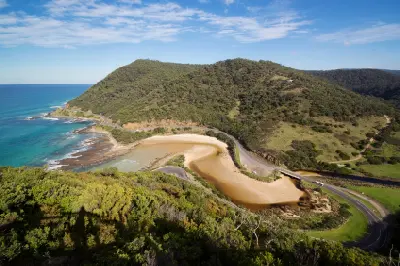
    Elevated view of the Great Ocean Road curving around a sandy inlet between the ocean and forested hills near Lorne, Victoria.

    Surf Coast

    Surf Coast is structured around the meeting of the Southern Ocean and the eastern foothills of the Otway Ranges. The coastline becomes progressively more enclosed and mountainous westward, shifting from broad beaches and low headlands around Bells Beach to steeper forested slopes, rocky bays, and winding coastal roads approaching Lorne. Each location reveals a different expression of this transition. Bells Beach places powerful ocean swell against cliffs and reefs, while Split Point Lighthouse provides a strong architectural landmark above the exposed coast at Aireys Inlet. Lorne introduces the meeting of settlement, beach, forest, and mountain, and Teddy's Lookout reveals the larger geography as the Great Ocean Road curves between steep wooded slopes and the shoreline. The visual structure of the region is defined by the repeated contrast between ocean, headland, road, and forest. Lower coastal positions emphasise surf, reefs, beaches, and rock platforms, while elevated viewpoints compress successive ridges and bays into layered compositions. Morning and evening light, breaking surf, sea mist, cloud, and rapidly changing Southern Ocean weather continually alter the coastline's atmosphere.

    Photographic journey

    Great Ocean Road & Victorian Coast Photography Route

    Great Ocean Road & Victorian Coast · 22 stops

    Aerial view of limestone headlands, rocky outcrops, turquoise coves and farmland around Childers Cove, Victoria.01

    Childers Cove

    Childers Cove is a secluded section of Victoria's Shipwreck Coast where limestone cliffs surround a small sandy beach and offshore rock formations. The coastline is less developed and considerably quieter than the major attractions around Port Campbell, with eroded headlands, sea stacks and powerful Southern Ocean surf defining the landscape. Its isolation and rugged geology make it a strong secondary photography location along the western Great Ocean Road.
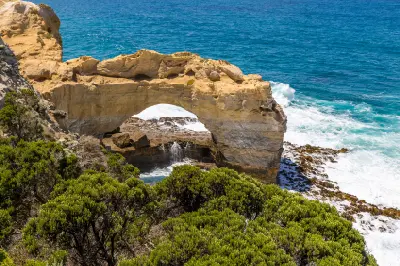
    Limestone formation known as The Arch above breaking waves on Victoria’s Great Ocean Road.05

    The Arch

    The Arch is a large limestone sea arch carved into the cliffs of Victoria's Shipwreck Coast by the Southern Ocean. Waves pass through the opening beneath a thick span of weathered rock, with steep cliffs and open sea surrounding the formation. Its simple geometric shape and exposed coastal setting make it a strong example of the continuing erosion that defines the Port Campbell coastline.

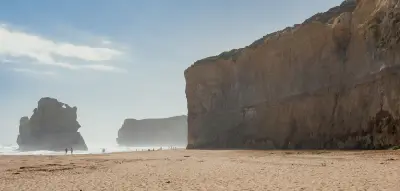
    Beach beneath towering limestone cliffs and sea stacks at Gibson Steps, Great Ocean Road, Victoria, Australia.09

    Gibson Steps

    Gibson Steps is a dramatic section of Victoria's Shipwreck Coast where towering limestone cliffs rise directly above a broad Southern Ocean beach. A steep staircase descends from the cliff-top to the sand, providing a rare opportunity to experience the immense coastal escarpment from sea level. Offshore limestone stacks, including Gog and Magog, combine with powerful surf and vertical cliffs to create one of the Great Ocean Road's strongest coastal landscapes.

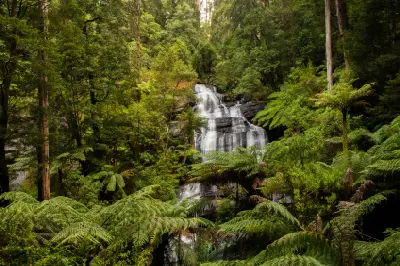
    Multi-tiered Triplet Falls surrounded by lush tree ferns and tall forest in Great Otway National Park, Victoria.13

    Triplet Falls

    Triplet Falls is a multi-tiered waterfall in Great Otway National Park, surrounded by dense temperate rainforest. A forest circuit passes through towering mountain ash, tree ferns and remnants of the area's historic timber industry before reaching views of the cascading falls. The combination of flowing water and deeply layered forest makes it a strong location for intimate rainforest photography.

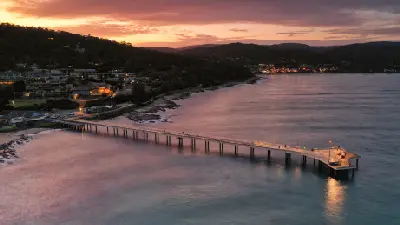
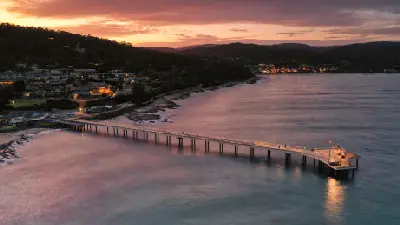
    Aerial view of Lorne Pier extending across the bay at twilight, with the coastal town and forested hills illuminated beneath a warm sunset sky.18

    Lorne

    Lorne is a coastal town on the Great Ocean Road where forested Otway hills descend towards beaches and the Southern Ocean. Its waterfront, pier, surrounding headlands and relationship with the rainforest hinterland make it one of the route's principal destinations. Coastal scenery, town life and changing ocean conditions provide a broader travel and photography experience than a single landmark.

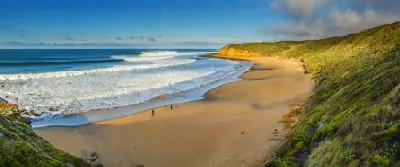
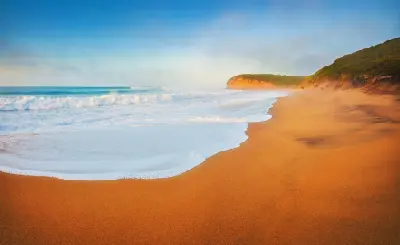
    Elevated view across Bells Beach with breaking surf, sandy shoreline and coastal cliffs near Torquay, Victoria.22

    Bells Beach

    Bells Beach is one of Australia's most famous surf beaches, set beneath high cliffs on Victoria's Surf Coast. Powerful Southern Ocean swells break across the exposed reef, drawing surfers and spectators throughout the year. The combination of surfing action, rugged cliffs and sweeping ocean views gives Bells Beach strong sporting and coastal-photography appeal.

    Explore the Full Great Ocean Road & Victorian Coast Route22 stops across Great Ocean Road & Victorian Coast

    Overview

    The Great Ocean Road follows a highly varied coastline shaped by persistent Southern Ocean erosion. Around Port Campbell, layered limestone cliffs have been carved into monumental formations including sea stacks, arches, narrow gorges, and offshore rock platforms.

    Farther east, the Otway Ranges reach the coast through forested hills, river valleys, waterfalls, and steep headlands. Temperate rainforest and tall eucalyptus forests provide a strong inland contrast to the open beaches and exposed coastal environments.

    The visual character of the region is defined by the relationship between ocean, geology, and forest, producing layered compositions across sea stacks, cliffs, beaches, headlands, waterfalls, and elevated coastal viewpoints.

    Key Photography Subjects

    • Limestone cliffs, sea stacks, arches, and offshore formations
    • Twelve Apostles and Port Campbell coastal landscapes
    • Surf beaches, rocky platforms, and Southern Ocean shorelines
    • Forested headlands and elevated coastal viewpoints
    • Otway rainforest, waterfalls, and tall eucalyptus forests
    • Coastal roads, bays, river mouths, and rugged headlands
    • Storm systems, ocean swell, sunset, and atmospheric coastal ligh

    Gallery

    Workshops in Great Ocean Road & Victorian Coast

    No upcoming workshops scheduled for Great Ocean Road & Victorian Coast at this time.

    Check back soon or explore other destinations.