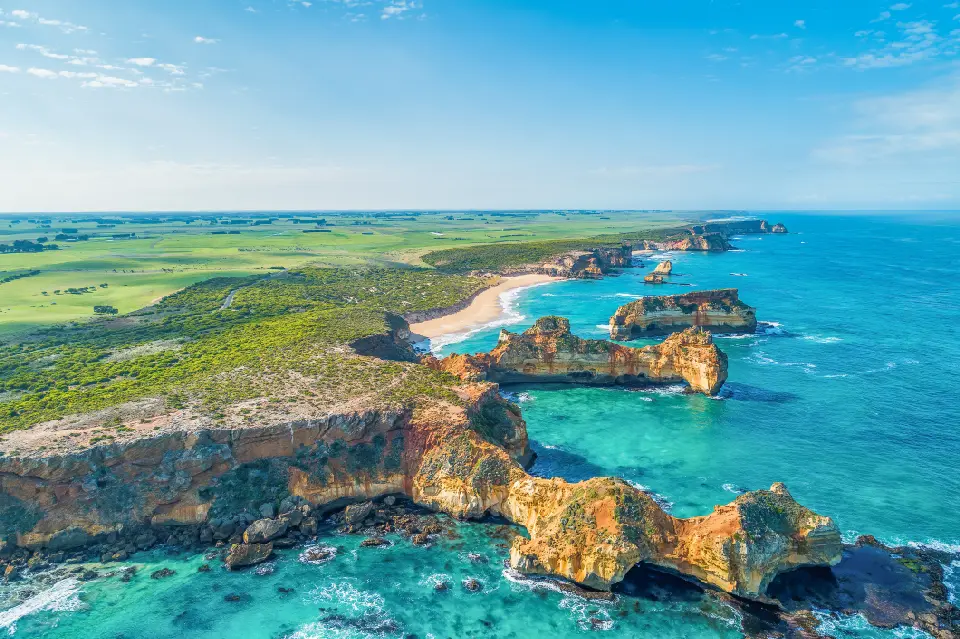
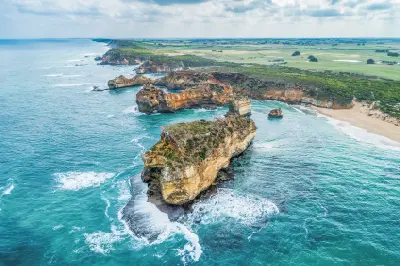
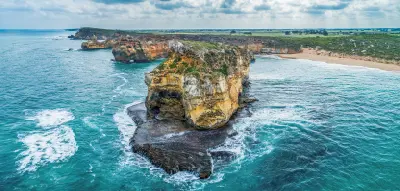
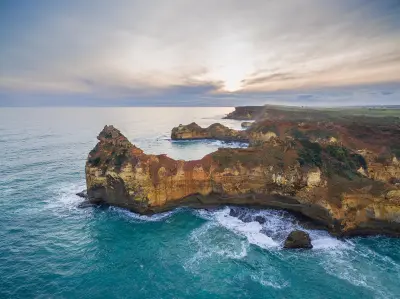
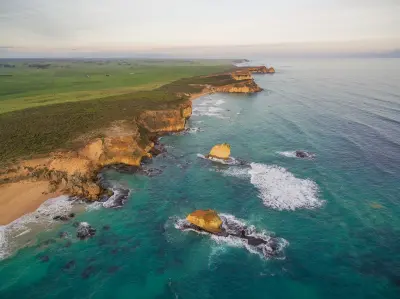
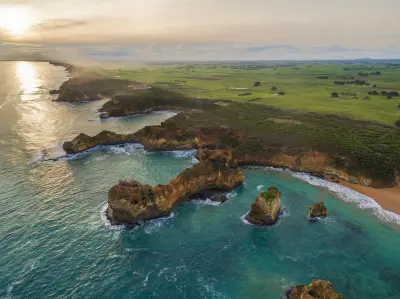
Aerial view of the spectacular eroded coastline around Childers Cove, Victoria.
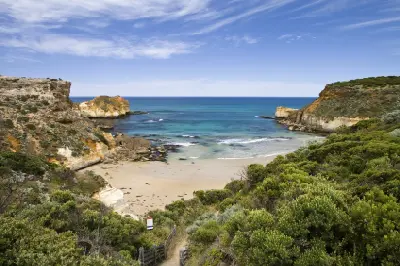
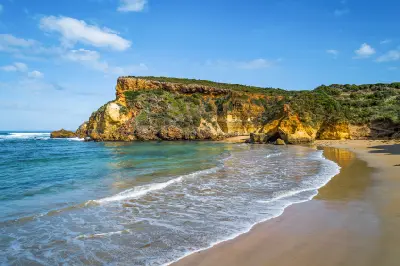
Childers Cove is a secluded section of Victoria's Shipwreck Coast where limestone cliffs surround a small sandy beach and offshore rock formations. The coastline is less developed and considerably quieter than the major attractions around Port Campbell, with eroded headlands, sea stacks and powerful Southern Ocean surf defining the landscape. Its isolation and rugged geology make it a strong secondary photography location along the western Great Ocean Road.
-38.49004, 142.67234
Gallery
Quick Facts
Access
Short Walk
5–15 min
Elevation Gain
30 m
Best Light
Low-angle light reveals texture across the limestone cliffs and formations, while softer conditions retain detail between shaded rock, beach and ocean.
Why This Light
Season
Seasonally Distinct
Summer brings longer daylight and generally easier beach conditions. Winter produces stronger swell, dramatic skies and wetter cliffs, while autumn and spring often combine quieter conditions with rapidly changing coastal weather.
Crowds
Usually Quiet
Restrictions
Childers Cove is reached via local roads west of the main Port Campbell attractions, followed by a short walk from the parking area towards the coast. Access is less developed than at the major Great Ocean Road viewpoints, and beach conditions vary with tide and swell. Unstable cliffs, rough seas and wet rock require care.