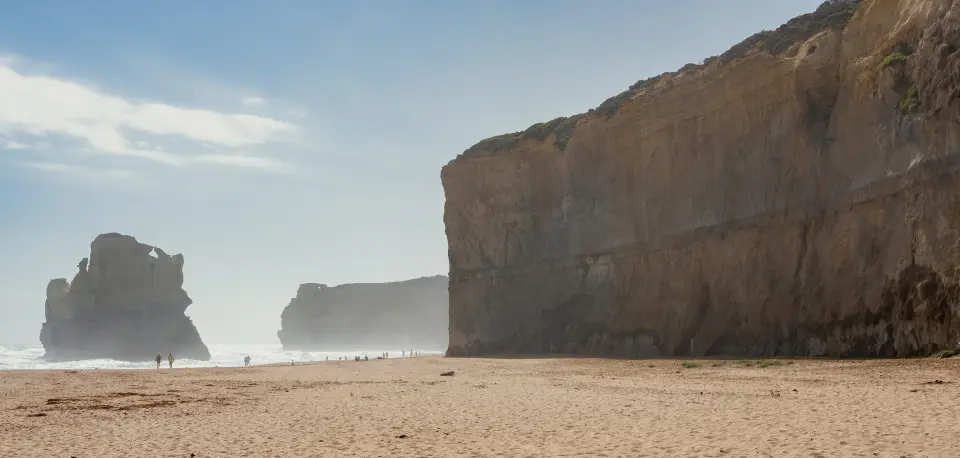
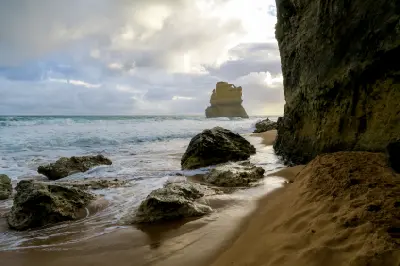
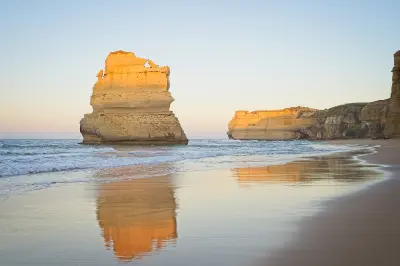
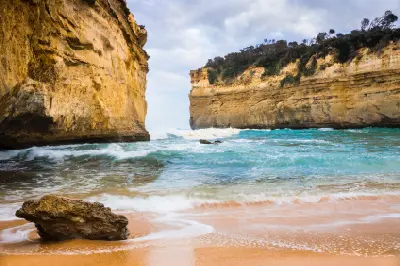
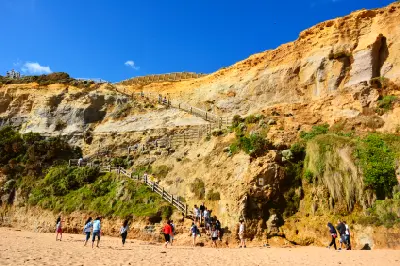
Towering limestone cliffs and offshore stacks seen from the beach at Gibson Steps on the Great Ocean Road.
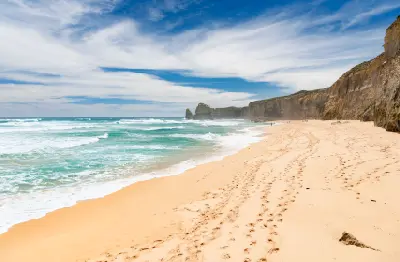
Gibson Steps is a dramatic section of Victoria's Shipwreck Coast where towering limestone cliffs rise directly above a broad Southern Ocean beach. A steep staircase descends from the cliff-top to the sand, providing a rare opportunity to experience the immense coastal escarpment from sea level. Offshore limestone stacks, including Gog and Magog, combine with powerful surf and vertical cliffs to create one of the Great Ocean Road's strongest coastal landscapes.
-38.66863, 143.11210
Gallery
Quick Facts
Access
Short Walk
5–15 min
Elevation Gain
40 m
Best Light
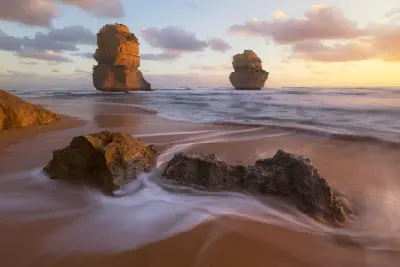
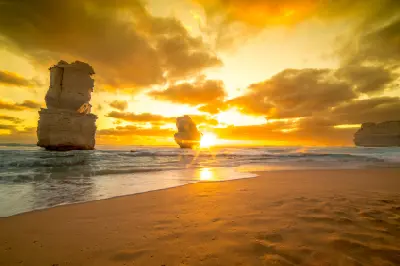
Low-angle light reveals texture across the immense limestone cliffs and sea stacks, while warm light strengthens their golden tones against the ocean.
Why This Light
Season
Seasonally Distinct
Summer brings longer daylight and generally easier beach conditions but higher visitor numbers. Winter produces stronger seas, dramatic skies and wetter conditions, while autumn and spring often combine changing weather with quieter periods along the beach.
Crowds
Often Busy
Restrictions
Gibson Steps is reached from the Great Ocean Road by a short walk to a steep staircase descending approximately 70 metres to the beach. Access to the sand can be restricted when tides, large swell or hazardous conditions make the shoreline unsafe. The return requires climbing the staircase back to the cliff-top.