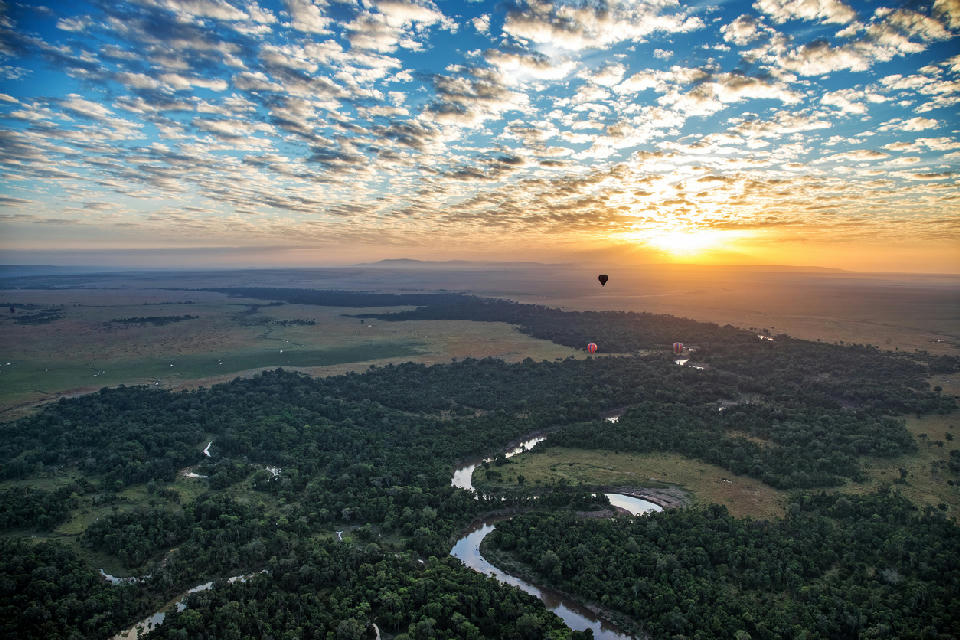
Hot air balloons drift above the winding Mara River at sunrise, revealing the forests, plains and river crossings that define the northern Serengeti ecosystem.
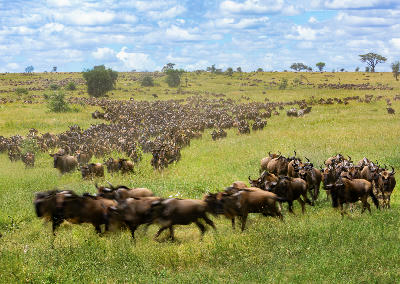
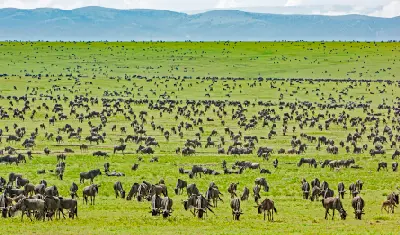
The Serengeti Ecosystem is one of the world's greatest natural landscapes, encompassing vast savanna plains, seasonal rivers, granite kopjes, volcanic grasslands and acacia woodlands that together support the largest remaining terrestrial wildlife migration on Earth. Extending across northern Tanzania into Kenya's Maasai Mara, this UNESCO World Heritage landscape forms the ecological heart of East Africa and is internationally recognised as one of the finest destinations for wildlife and landscape photography. The ecosystem has been shaped over millions of years by volcanic activity from the Ngorongoro Highlands, ancient tectonic movement associated with the East African Rift System and long-term climatic cycles that created an immense mosaic of open plains, wooded savannas and river valleys. Fertile volcanic soils support nutrient-rich grasslands that sustain enormous populations of grazing animals, while permanent rivers, granite kopjes and scattered acacia woodlands provide critical habitat for predators and countless other species throughout the year. Seasonal rainfall drives the rhythm of the Serengeti. As fresh grass emerges across different parts of the ecosystem, more than a million wildebeest, accompanied by hundreds of thousands of zebra and gazelle, undertake the Great Migration in a continuous circular movement. The changing seasons transform both the landscape and its wildlife, creating dramatically different photographic opportunities throughout the year, from lush green plains and calving herds to dramatic river crossings and golden dry-season savannas.
Gallery
Key POIs in Serengeti National Park
Nearby Places
View all on mapOverview
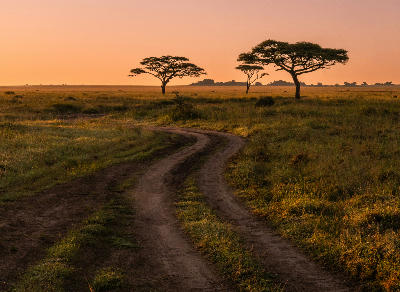
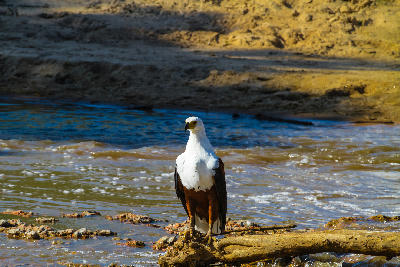
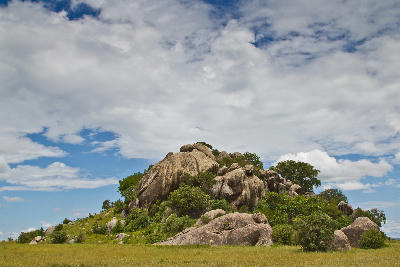
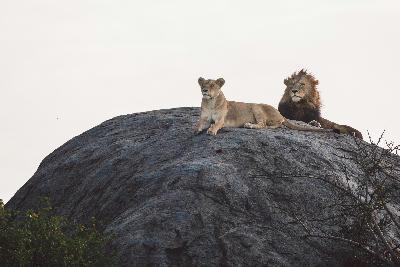
The Serengeti Ecosystem is structured around several interconnected landscapes, each contributing a distinctive ecological and photographic character. The Central Serengeti around Seronera forms the year-round wildlife core, while the Western Corridor follows the Grumeti River toward Lake Victoria. The Northern Serengeti borders Kenya's Maasai Mara and is famous for dramatic Mara River crossings, while the Southern Serengeti and Ndutu Plains provide nutrient-rich short-grass plains where the migration gathers for calving. Granite kopjes, seasonal rivers and scattered acacia woodlands link these regions into a single functioning ecosystem. Each landscape offers a unique visual identity. Endless grasslands dominate the southern plains, granite kopjes rise dramatically above the central savanna, riverine forests follow the Grumeti and Mara Rivers, and rolling wooded hills become more common toward the western and northern boundaries. These changing habitats support exceptional biodiversity, from vast grazing herds to lions, cheetahs, leopards, elephants, giraffes, hyenas and hundreds of bird species. The visual character of the Serengeti is defined by immense open horizons, isolated acacia trees, rocky kopjes and constantly changing wildlife activity beneath expansive African skies. Morning mist, dust raised by migrating herds, dramatic thunderstorms and warm golden light create endlessly changing conditions that have made the Serengeti one of the most photographed wilderness landscapes on Earth.
Key photography subjects
- The Great Migration and vast wildlife herds
- Endless savanna plains and expansive African landscapes
- Granite kopjes and iconic umbrella acacia trees
- Lions, cheetahs, leopards and other predators
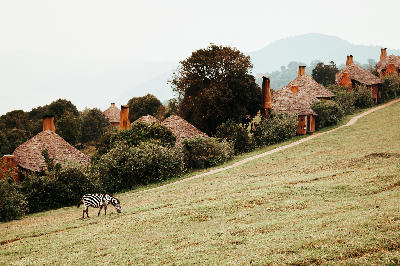
- Elephants, giraffes, zebras and abundant plains game
- Mara River and Grumeti River crossings
- Golden sunrise light, dramatic storm skies and spectacular sunsets
Workshops in Serengeti National Park
No upcoming workshops scheduled for Serengeti National Park at this time.
Check back soon or explore other destinations.