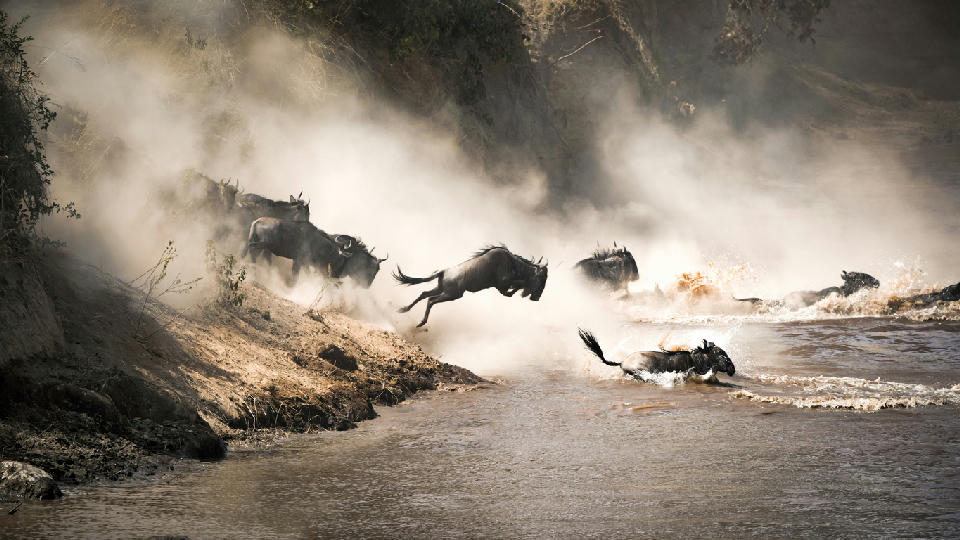
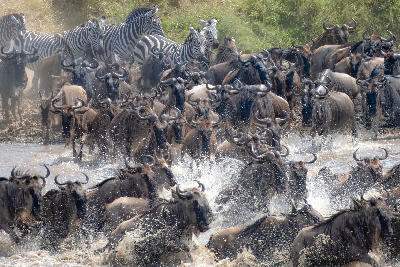
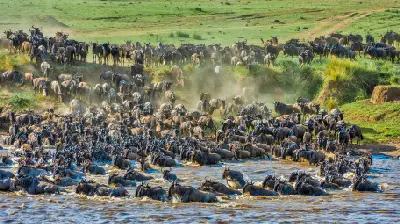
Wildebeest plunge into the Mara River during the Great Migration, where dramatic river crossings define the northern Serengeti each year.
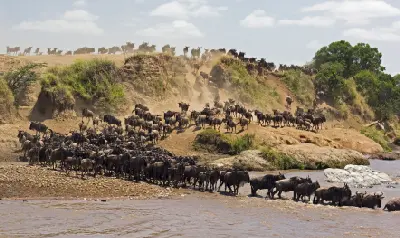
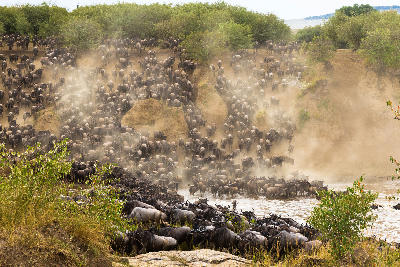
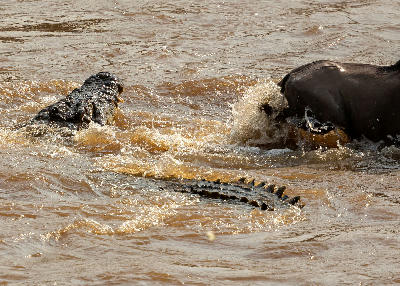
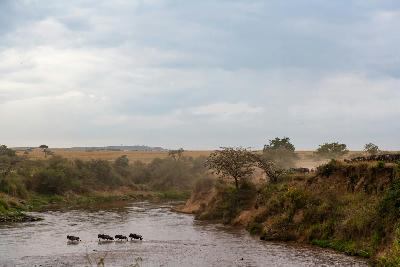
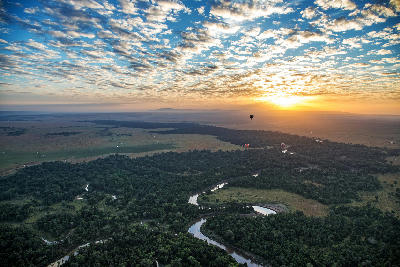
The Mara River is the most famous wildlife crossing point within the Serengeti, where the annual Great Migration reaches its dramatic climax. During the migration season, vast herds of wildebeest and zebra attempt to cross the crocodile-filled river, creating one of the world's most spectacular natural events.
-1.55703, 34.68529
Gallery
Quick Facts
Access
Roadside / Step-out
0–5 min
Elevation Gain
0 m
Best Light
Morning light produces the strongest wildlife images, while overcast conditions soften contrast during fast-moving river crossings.
Why This Light
Season
Seasonally Distinct
The dry season from July to October brings the Great Migration to the Mara River, creating some of Africa's most dramatic wildlife spectacles. Outside the migration season, resident wildlife remains abundant, offering quieter game viewing with fewer vehicles.
Crowds
Often Busy
Restrictions
Access is by registered safari vehicle within Serengeti National Park. River crossings are unpredictable and vehicles may wait for extended periods at designated viewing areas. Visitors must follow guide and park instructions at all times, and stepping out of vehicles is only permitted where specifically authorised.