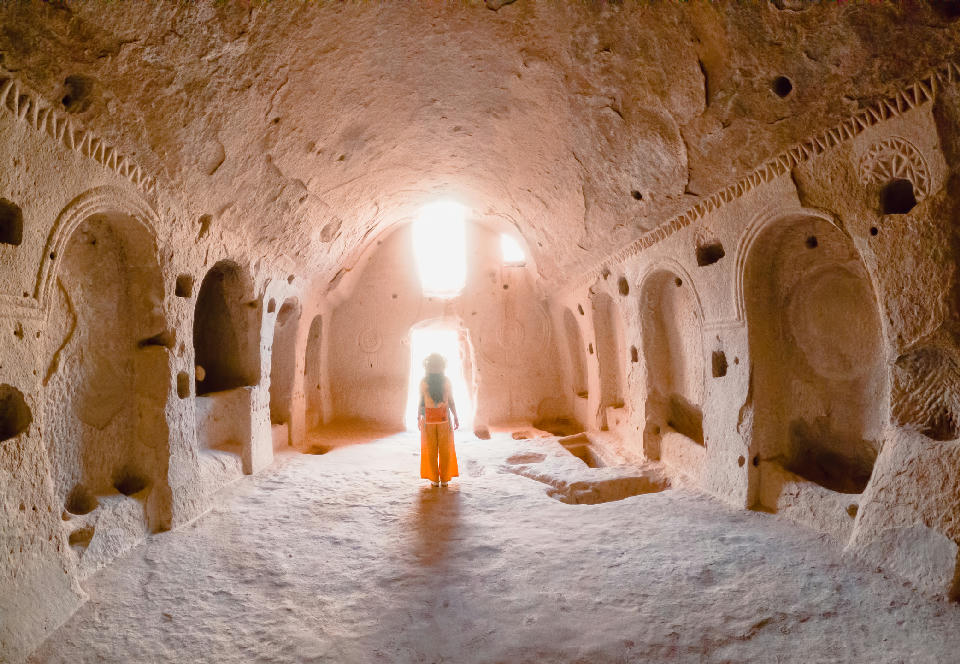
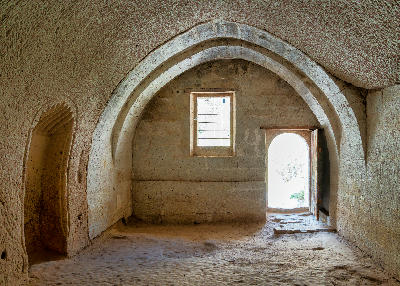
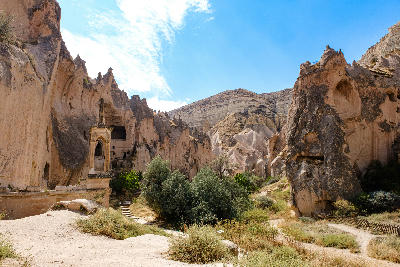
A visitor stands inside one of the ancient rock-cut churches at Zelve Open Air Museum, where early Christian communities carved chapels, homes, and monasteries directly into Cappadocia's soft volcanic rock.
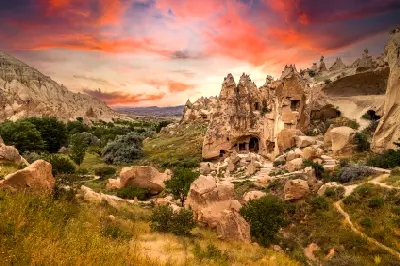
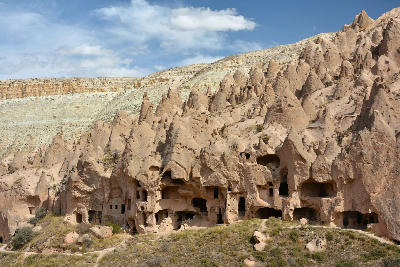
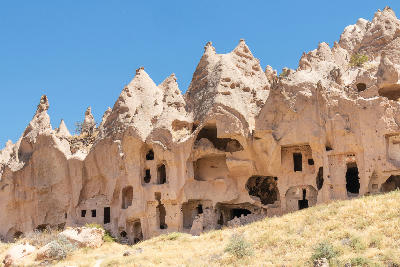
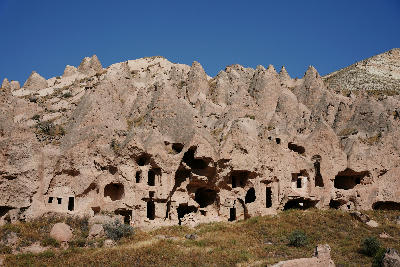
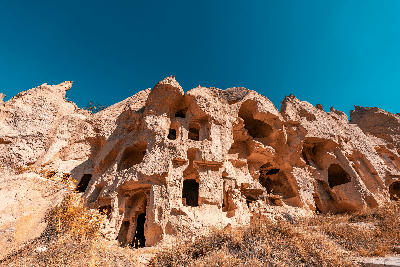
Zelve Open Air Museum preserves an abandoned settlement carved into the volcanic cliffs and valleys of Cappadocia. Rock-cut houses, churches, storage rooms and passages are spread across three adjoining valleys, reflecting centuries of occupation within the region's soft volcanic tuff. The settlement was inhabited by Christian and Muslim communities before being abandoned in the 20th century as erosion made parts of the site unsafe. Today, the remaining cave structures are integrated into a dramatic landscape of weathered cliffs, pinnacles and fairy chimneys.
38.66574, 34.86529
Gallery
Quick Facts
Access
Visitor Access
45–90 min
Elevation Gain
100 m
Best Light
Low-angle light reveals the texture of the volcanic cliffs and carved dwellings while creating depth between the surrounding rock formations.
Why This Light
Crowds
Often Busy
Restrictions
Zelve Open Air Museum is reached by road and explored on established walking paths through the interconnected valleys. An entrance fee applies, and some caves and rock-cut structures may be closed because erosion and unstable volcanic rock make access unsafe.