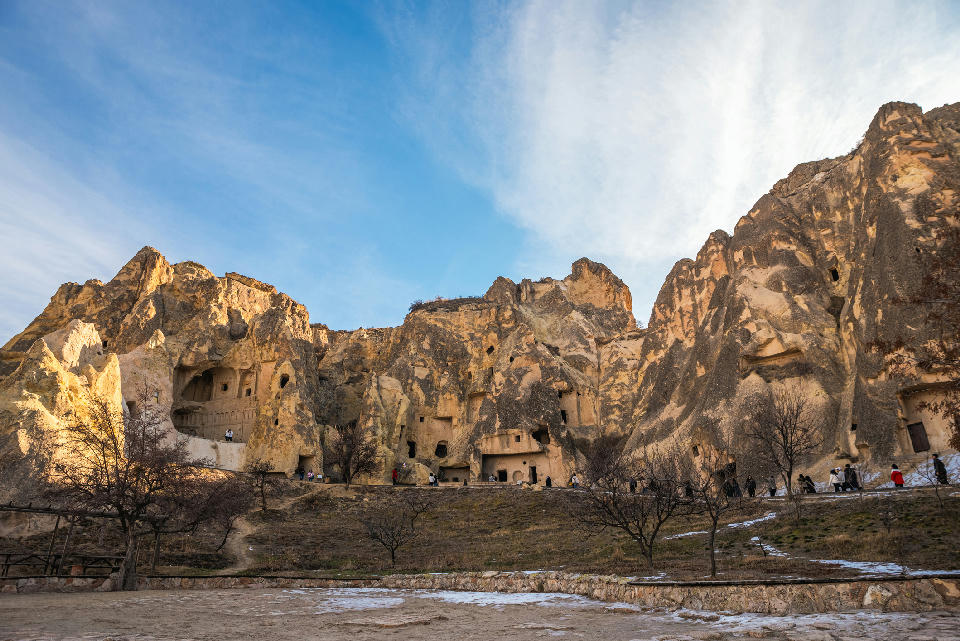
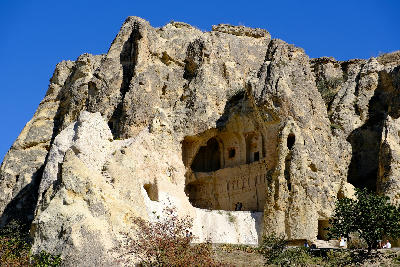
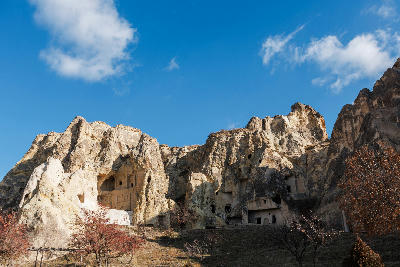
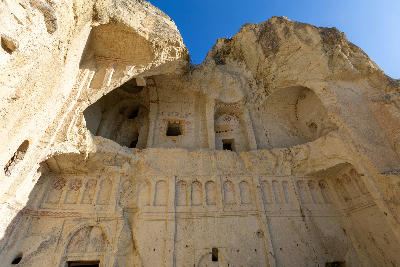
The rock-cut churches and monastic dwellings of Göreme Open Air Museum reveal one of Cappadocia's most remarkable early Christian settlements, carved directly into the region's soft volcanic cliffs.
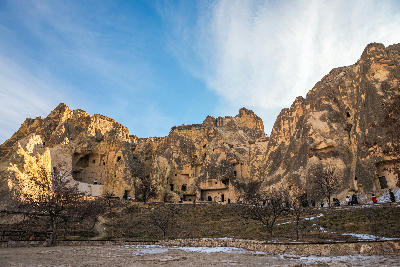
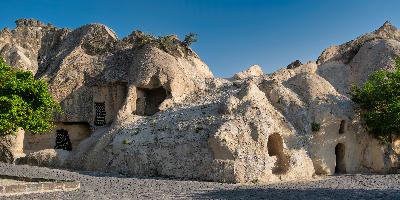
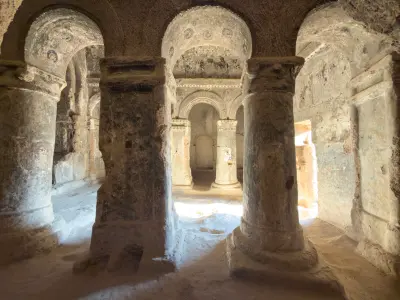
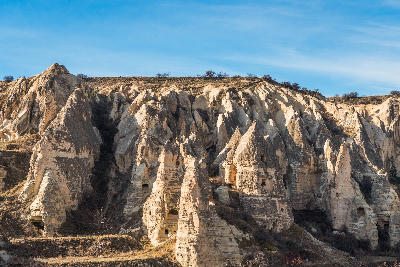
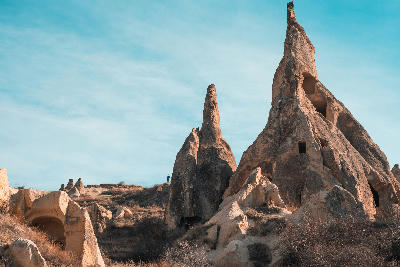
Göreme Open Air Museum is a historic monastic complex carved into Cappadocia's volcanic landscape, containing rock-cut churches, chapels and living spaces dating primarily from the Byzantine period. The site developed as an important religious centre between the 10th and 12th centuries and preserves some of the region's finest surviving frescoes. Churches and monasteries are cut directly into the soft volcanic tuff, creating an unusual combination of architecture, archaeology and natural geology. The complex forms part of the Göreme National Park and Rock Sites of Cappadocia UNESCO World Heritage Site.
38.63906, 34.84558
Gallery
Quick Facts
Access
Visitor Access
45–90 min
Elevation Gain
50 m
Best Light
Low-angle light reveals the texture of the volcanic rock, while softer light helps balance contrast around entrances and carved interiors.
Why This Light
Season
Year-Round Stable
Spring and autumn generally bring mild temperatures and comfortable conditions for exploring the outdoor complex. Winter can bring snow across the surrounding volcanic landscape, while summer is typically hot, dry and considerably busier.
Crowds
Often Busy
Restrictions
Göreme Open Air Museum is reached directly by road from Göreme and explored on established paths and stone steps. An entrance fee applies, and photography restrictions may apply inside individual churches, particularly around the historic frescoes.