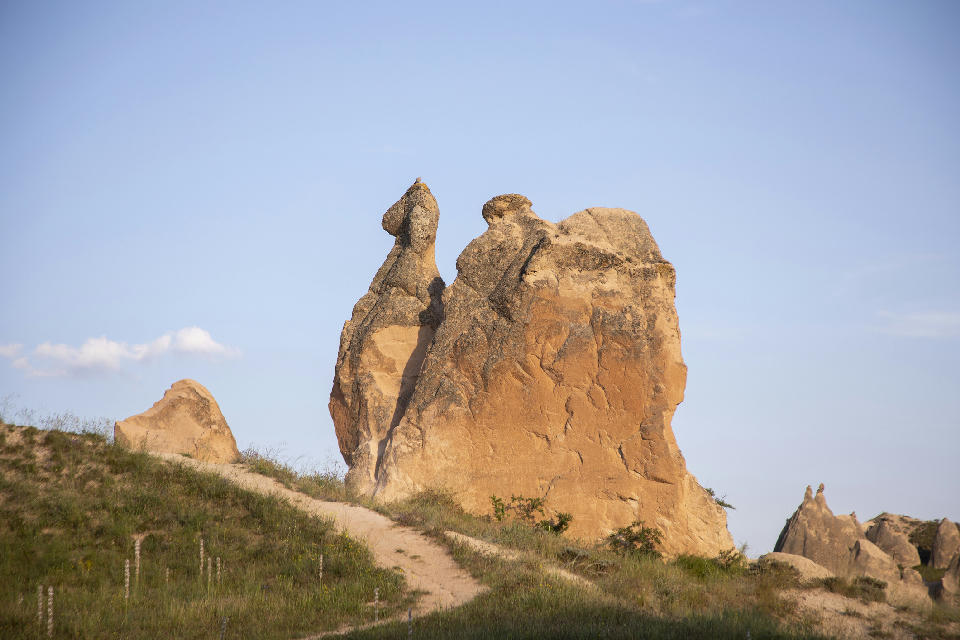
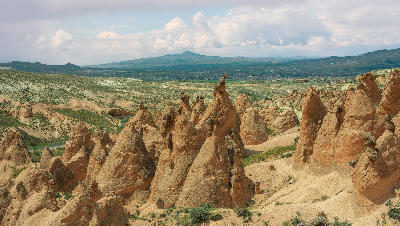
The famous Camel Rock formation in Devrent Valley (Imagination Valley), Cappadocia, Central Anatolia, Turkey.
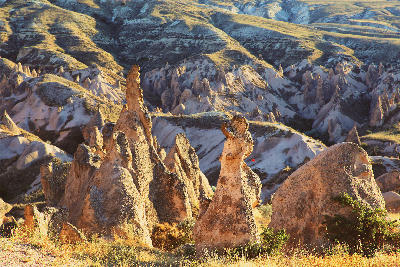
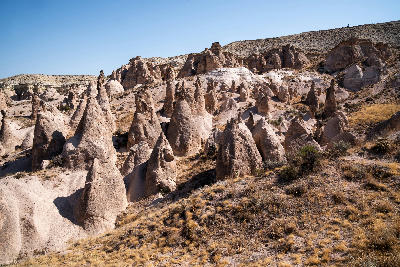
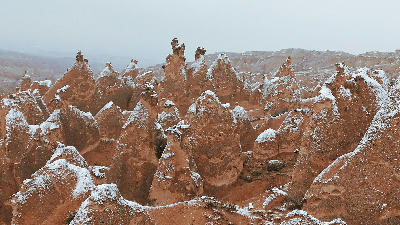
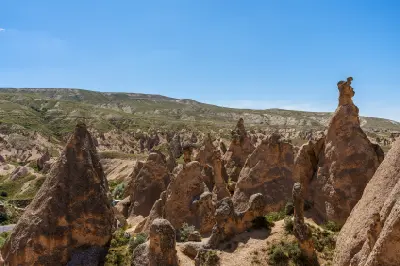
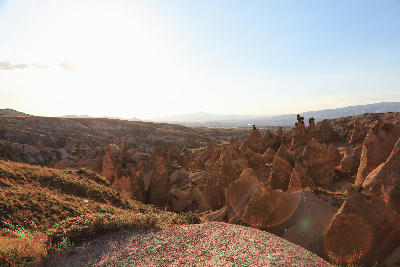
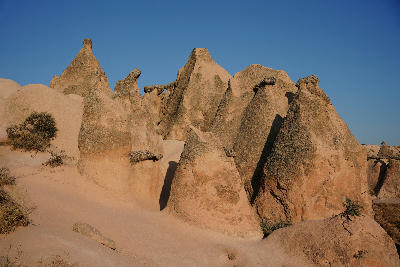
Devrent Valley, also known as Imagination Valley, is an eroded volcanic landscape in Cappadocia characterised by unusual rock formations sculpted from soft volcanic tuff. Wind and water erosion have produced pinnacles, ridges and isolated formations, several of which are commonly interpreted as resembling animals and other familiar shapes. Unlike many of Cappadocia's valleys, Devrent contains few significant cave dwellings or historic structures, leaving the natural geology as its defining feature.
38.67508, 34.88434
Gallery
Quick Facts
Access
Short Walk
15–45 min
Elevation Gain
50 m
Best Light
Low-angle light reveals the contours and surface textures of the eroded rock formations, creating greater separation and depth across the valley.
Why This Light
Season
Year-Round Stable
Spring and autumn generally provide mild temperatures and comfortable conditions for exploring the exposed valley. Winter can bring snow across the volcanic formations, while summer is typically hot, dry and characterised by stronger midday contrast.
Crowds
Often Busy
Restrictions
Devrent Valley is reached directly by road and can be explored on informal paths extending into the surrounding formations. The terrain is exposed and uneven in places, and visitors should avoid climbing fragile formations where erosion has left the volcanic tuff unstable.