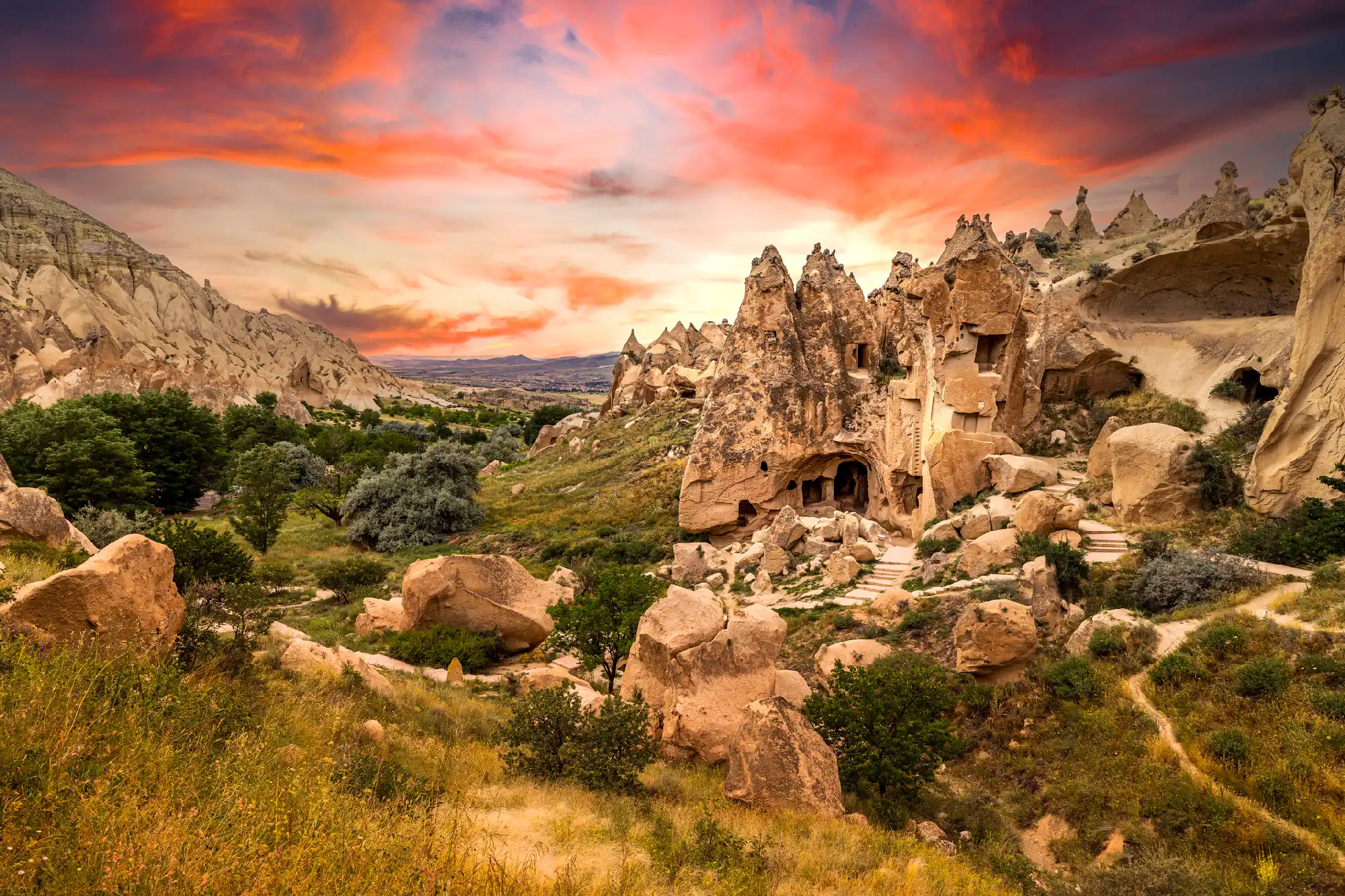
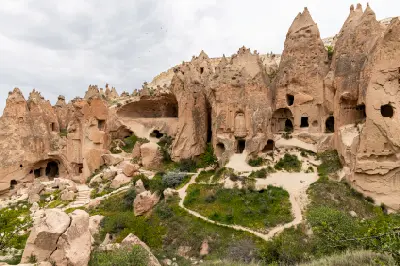
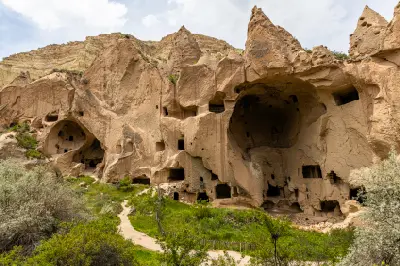
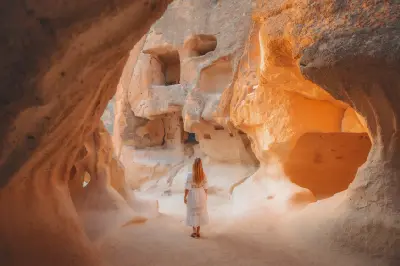
Rock-cut cave houses and ancient monastic dwellings at Zelve Open Air Museum in Cappadocia, Central Anatolia, Turkey.
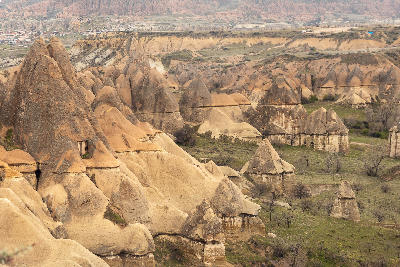
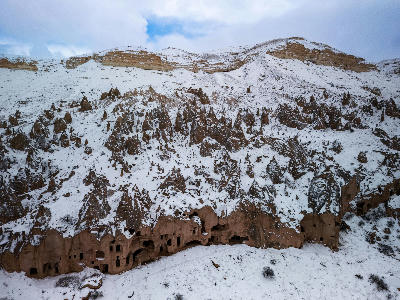
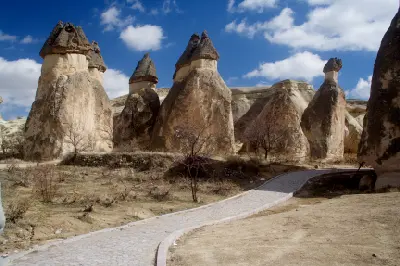
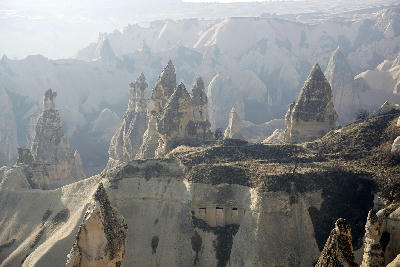
Paşabağ and Zelve contain some of Cappadocia’s most remarkable concentrations of fairy chimneys, rock-cut architecture, and historic cave settlements. Set within a landscape of eroded volcanic valleys northeast of Göreme, the area combines distinctive geological formations with some of the region’s clearest evidence of communities adapting directly to the surrounding rock. Paşabağ is particularly known for its towering multi-capped fairy chimneys, where resistant layers of rock protect softer volcanic material beneath. Nearby Zelve developed among a network of steep-sided valleys filled with cave houses, churches, tunnels, storage spaces, and communal structures carved directly into the cliffs. Devrent Valley extends the landscape eastward with a different character, dominated by naturally sculpted rock formations and open, sparsely settled terrain. Together, Paşabağ, Zelve, and Devrent reveal both the geological forces that shaped Cappadocia and the ways people subsequently occupied its unusual volcanic landscape.
Gallery
Key POIs in Paşabağ & Zelve
Nearby Places
View all on mapRose Valley
landmark — 2.0 km
Cappadocia & Central Anatolia
Red Valley
landmark — 2.4 km
Cappadocia & Central Anatolia
Love & Red Valleys
area district — 2.6 km
Cappadocia & Central Anatolia
Love Valley
landmark — 3.0 km
Cappadocia & Central Anatolia
Göreme Open Air Museum
landmark — 3.8 km
Cappadocia & Central Anatolia
Göreme
area district — 4.0 km
Cappadocia & Central Anatolia
Göreme Town
landmark — 4.0 km
Cappadocia & Central Anatolia
White Valley
landmark — 4.3 km
Cappadocia & Central Anatolia
Overview
The landscape developed from thick deposits of volcanic ash and other material laid down by ancient eruptions across central Anatolia. Over millions of years, wind, water, frost, and temperature changes eroded the softer volcanic tuff, leaving harder rock layers standing above columns and pinnacles. At Paşabağ, this process produced some of Cappadocia’s most recognisable mushroom-shaped and multi-capped fairy chimneys. Human settlement transformed the neighbouring valleys further. At Zelve, dwellings, churches, chapels, storage chambers, passages, and communal spaces were excavated directly into the rock, creating an extensive settlement across several interconnected valleys. The surviving structures illustrate how communities incorporated the natural formations into everyday life over many centuries. Photographically, the area offers a combination of geological form, architectural detail, and broad volcanic landscapes. Paşabağ provides strong compositions around isolated fairy chimneys, while Zelve offers layered cliff faces, cave openings, paths, and abandoned structures. Devrent adds more open formations and unusual eroded shapes, with low morning and evening light revealing texture and depth across the pale volcanic rock.
Key photography subjects
- Multi-capped fairy chimneys and volcanic rock towers
- Zelve's cave dwellings, churches, and abandoned settlement
- Sculpted formations and open landscapes of Devrent Valley
- Rock-cut chambers, passages, windows, and architectural details
- Narrow valleys, cliffs, pathways, and layered volcanic terrain
- Erosion patterns, rock textures, and unusual geological forms
- Golden-hour light, long shadows, and warm volcanic colours
Workshops in Paşabağ & Zelve
No upcoming workshops scheduled for Paşabağ & Zelve at this time.
Check back soon or explore other destinations.