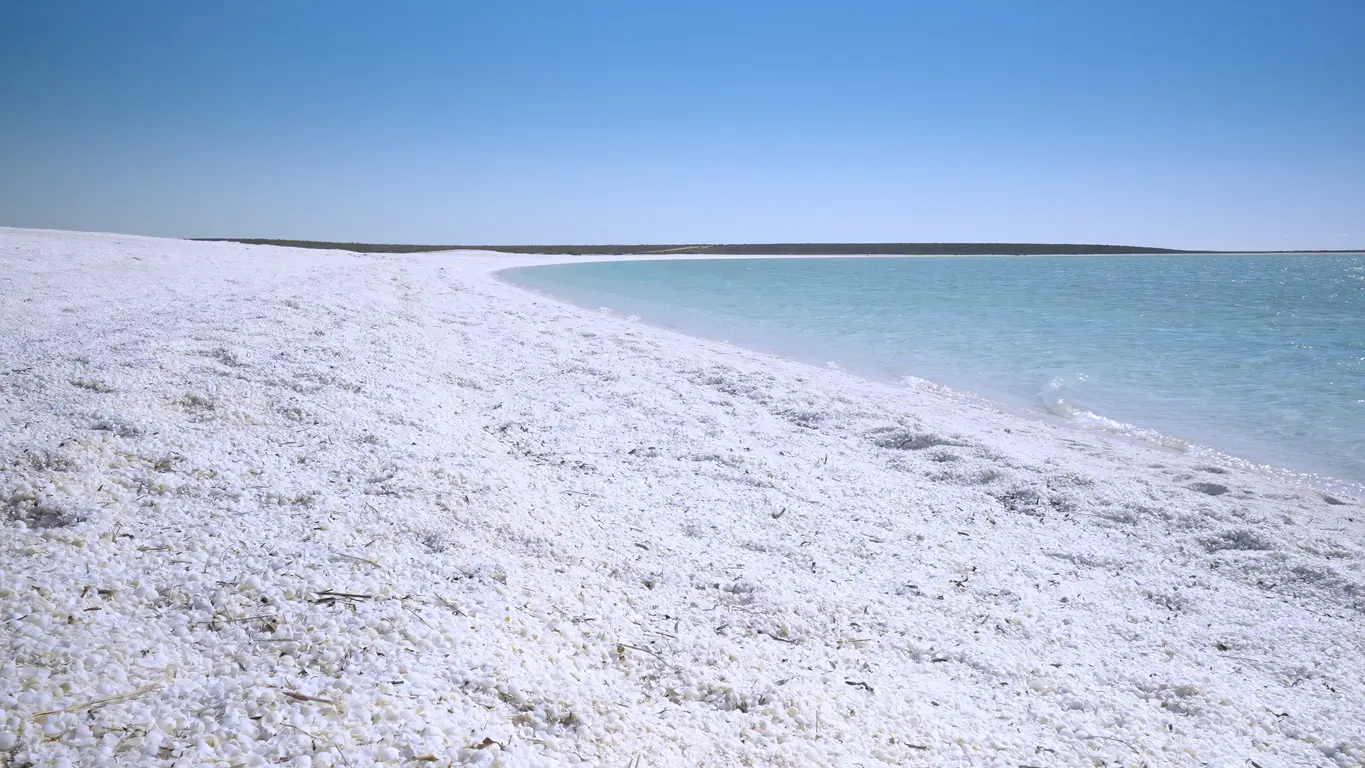
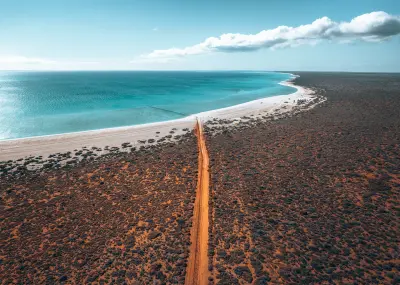
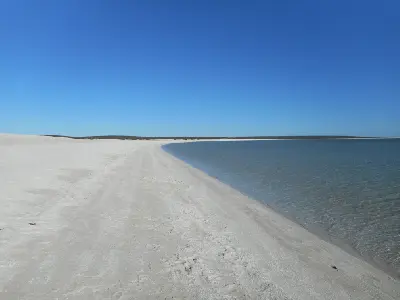
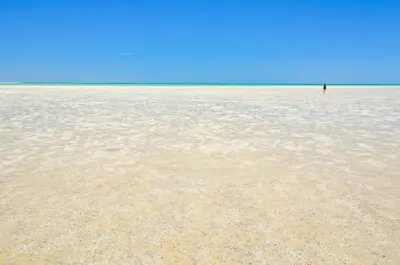
Shell-covered shoreline and turquoise waters at Shell Beach in Shark Bay, Western Australia.
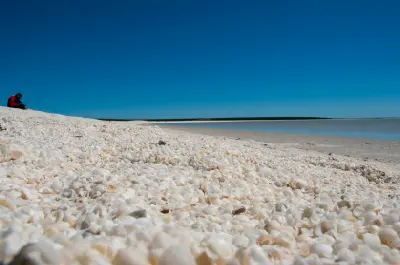
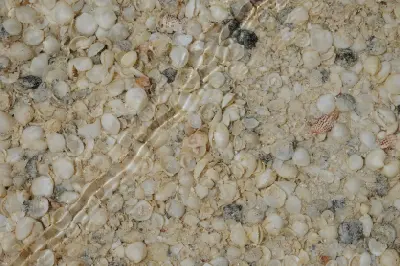
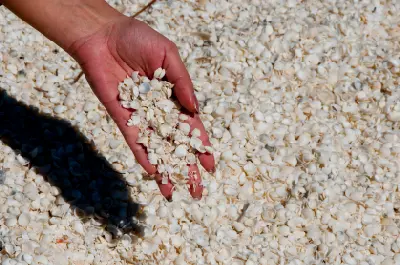
Shell Beach is a long shoreline in the Shark Bay World Heritage Area formed almost entirely from billions of tiny white cockle shells rather than sand. The shell deposits extend along the shallow waters of L'Haridon Bight, creating a stark white coast against clear turquoise water. Repeating shell textures, sweeping shoreline curves and the contrast between white beach and blue-green water provide distinctive opportunities for coastal and abstract photography.
-26.21499, 113.77361
Gallery
Quick Facts
Access
Short Walk
0–5 min
Elevation Gain
0 m
Best Light
Low-angle light reveals texture across the shell-covered beach, while calm shallow water can produce subtle reflections and colour transitions.
Why This Light
Season
Year-Round Stable
Summer brings intense heat, bright coastal light and stronger turquoise colour across the shallow water on clear days. Winter brings milder conditions, lower-angle light and softer colour across the shells and surrounding bay.
Crowds
Often Busy
Restrictions
Shell Beach is reached from Shark Bay Road by a short sealed access road and walk from the parking area. The beach lies within the Shark Bay World Heritage Area and conservation estate, and normal park regulations apply. Visitors should avoid removing shells or disturbing the shoreline and check current local access information before travel.