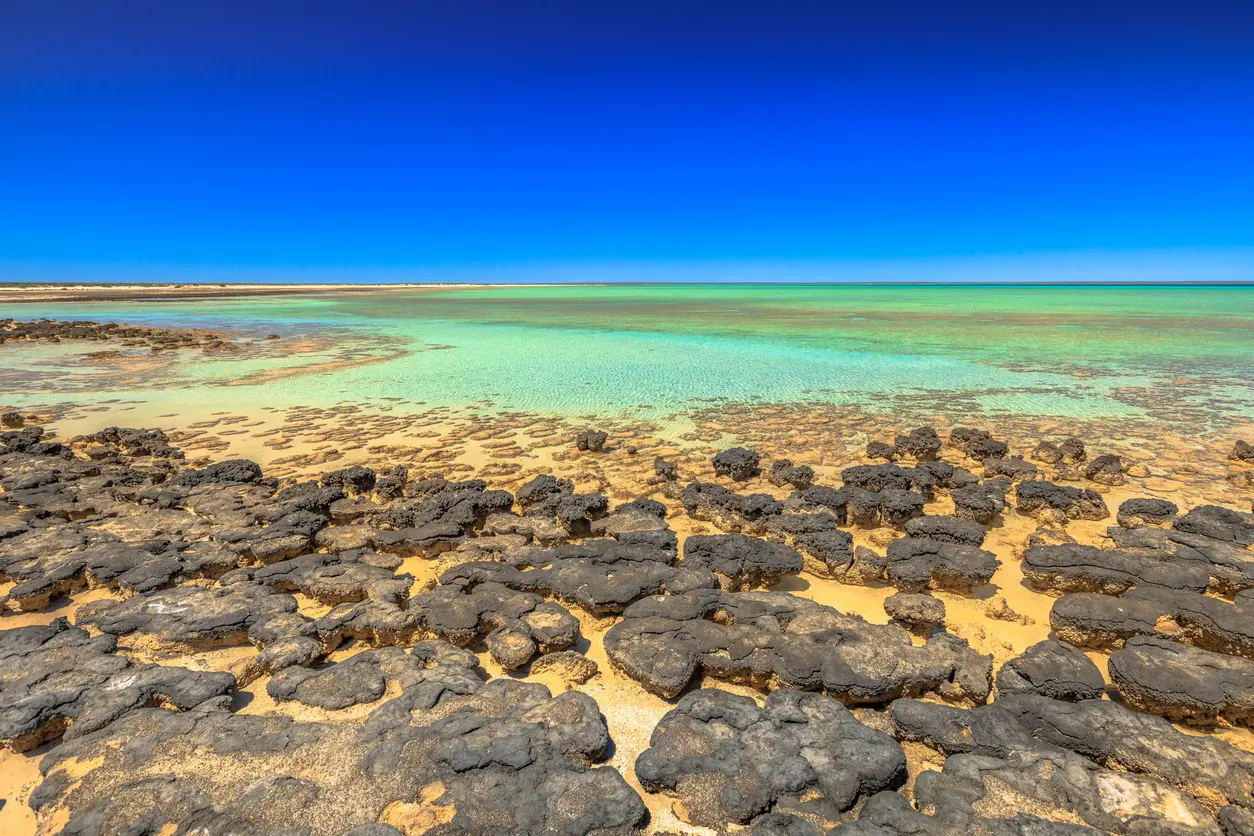
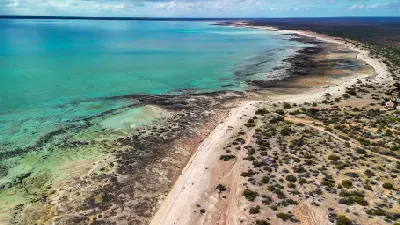
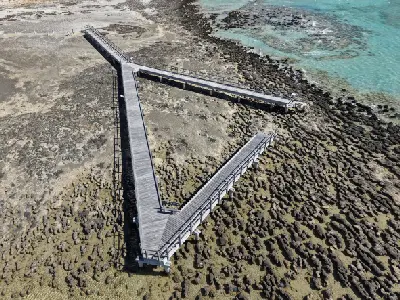
Stromatolites at Hamelin Pool in Shark Bay, Western Australia.
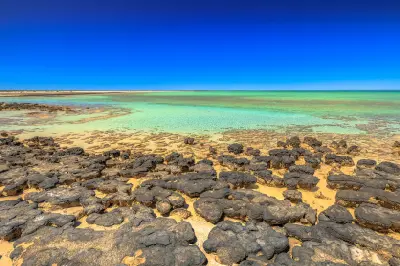
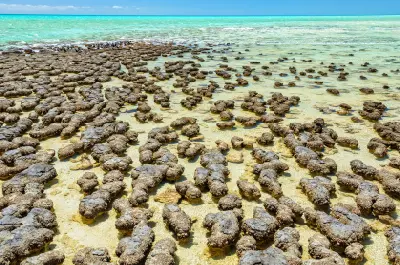
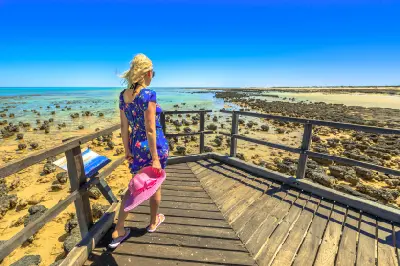
Hamelin Pool is a hypersaline inlet within the Shark Bay World Heritage Area containing extensive living stromatolites formed by microbial communities. The rock-like structures occur across the shallow shoreline, where unusually saline water has allowed these ancient forms of microbial life to persist. Repeating stromatolite formations, shallow water and the stark shoreline provide opportunities for geological, documentary and abstract landscape photography.
-26.40043, 114.15913
Gallery
Quick Facts
Access
Short Walk
5–15 min
Elevation Gain
0 m
Best Light
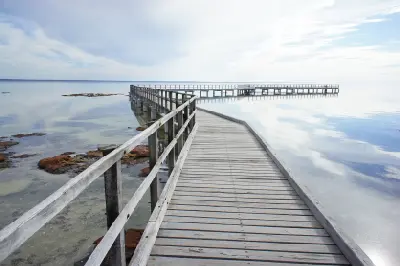
Low-angle light reveals the texture and relief of stromatolite formations, while calm shallow water can produce subtle reflections around exposed structures.
Why This Light
Season
Year-Round Stable
Summer brings intense heat, bright light and stronger colour across the shallow hypersaline water and exposed shoreline. Winter brings milder conditions and lower-angle light, while the stromatolite formations and predominantly arid surrounding landscape remain visually consistent.
Crowds
Usually Quiet
Restrictions
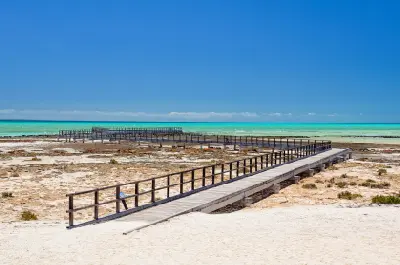
The stromatolite viewing boardwalk remains closed after damage from Cyclone Seroja, and access to the immediate shoreline is restricted. Stromatolites can currently be viewed from behind the temporary fence, with low tide providing the best visibility. Walking below the high-water mark and swimming or snorkelling within the reserve are prohibited to protect the microbial mats and stromatolites. The 1.4 km Boolagoorda Trail remains open, and entry to Hamelin Pool Marine Nature Reserve is free.