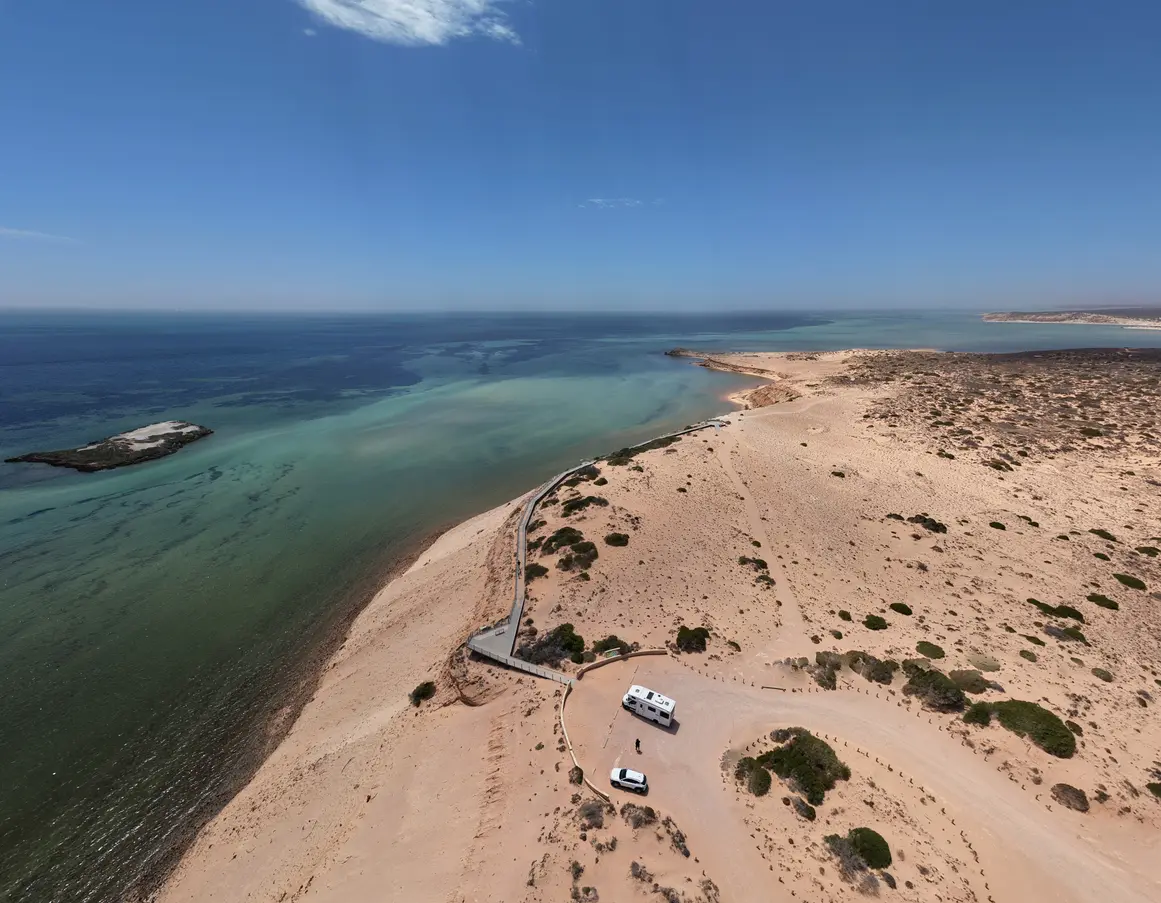
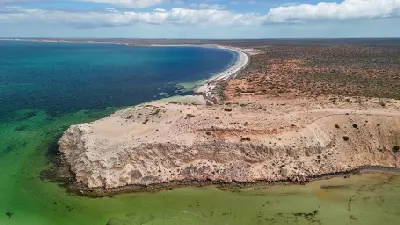
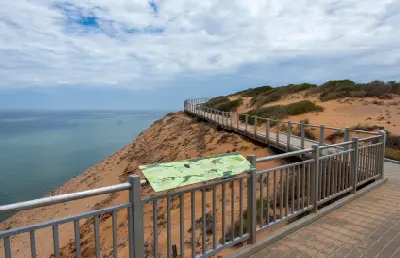
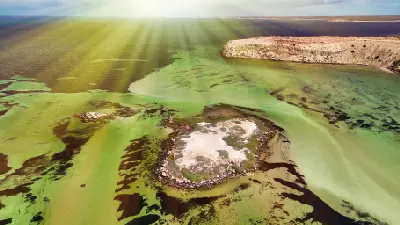
Aerial view of Eagle Bluff Lookout and boardwalk above Henri Freycinet Harbour in Shark Bay, Western Australia.
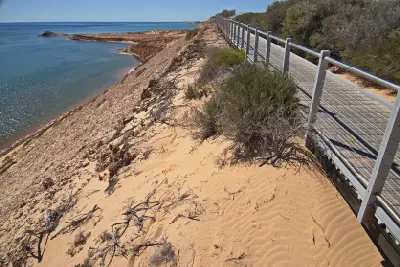
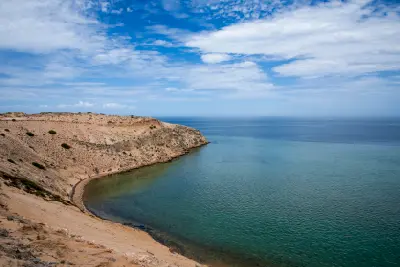
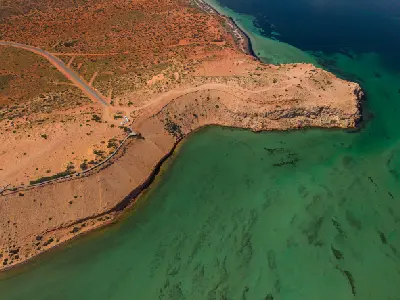
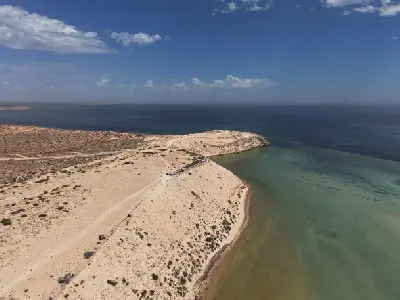
Eagle Bluff is an elevated coastal viewpoint overlooking the shallow waters of Denham Sound within the Shark Bay World Heritage Area. A boardwalk follows the edge of the bluff above seagrass beds, sandbanks and clear water where rays, sharks and other marine animals can sometimes be seen from above. The elevated perspective, patterned shallows and broad bay provide opportunities for coastal, wildlife and abstract landscape photography.
-26.09222, 113.58057
Gallery
Quick Facts
Access
Short Walk
5–15 min
Elevation Gain
10 m
Best Light
Directional light reveals sandbanks and shallow-water patterns, while calmer conditions improve visibility of marine life and subtle reflections across the bay.
Why This Light
Season
Year-Round Stable
Summer brings intense light and stronger turquoise colour across the shallow water, with exposed coastal vegetation appearing dry and muted. Winter brings softer light, milder conditions and lower-angle illumination across the bay, while the surrounding vegetation remains predominantly arid.
Crowds
Often Busy
Restrictions
Eagle Bluff is reached from Shark Bay Road via a short access road south of Denham. A boardwalk provides the main viewpoints along the elevated coastline, with minimal walking required from the parking area. Visitors should remain on designated paths and viewing platforms around the fragile coastal environment and exposed bluff edges. Current local access and park information should be checked before travel.