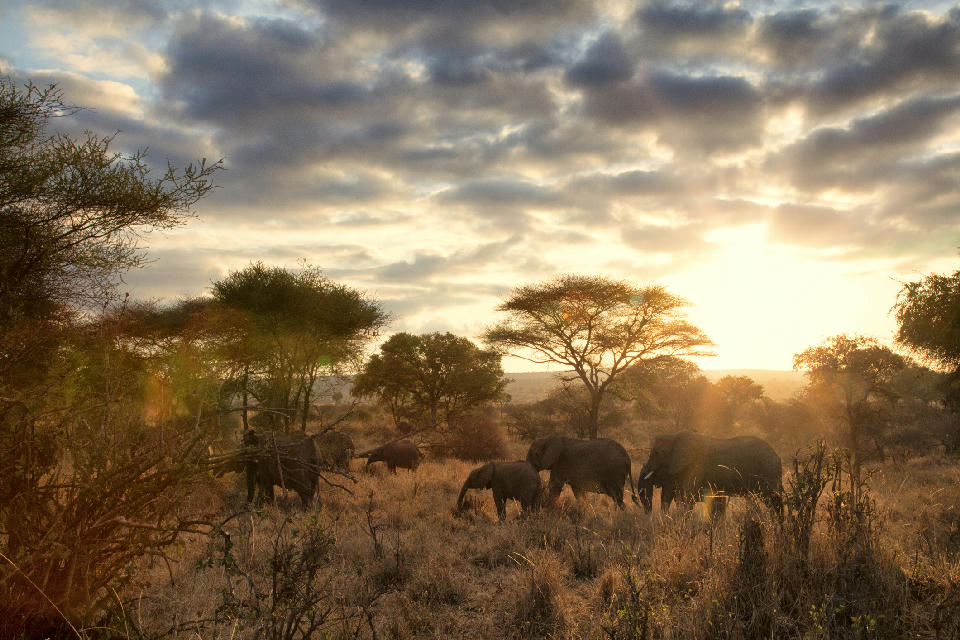
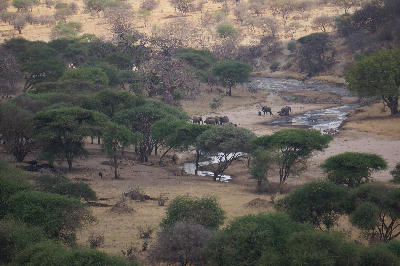
A family of African bush elephants at sunrise in Tarangire National Park, Tanzania.
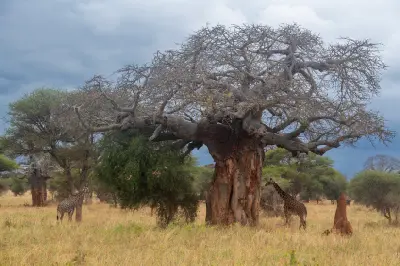
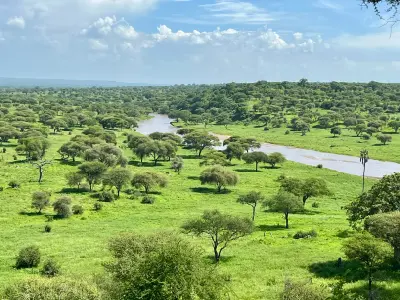
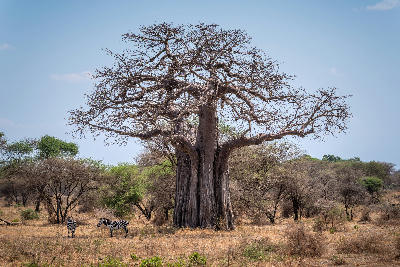
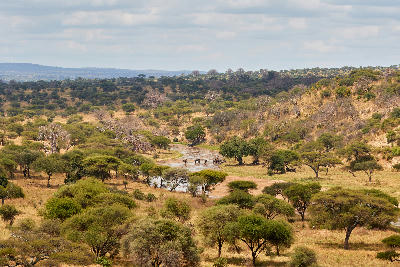
Tarangire National Park is one of Tanzania's most distinctive wildlife landscapes, where ancient baobab trees, rolling acacia savannas, seasonal wetlands and the life-giving Tarangire River combine to create one of East Africa's most iconic safari destinations. Covering nearly 2,900 km² in northern Tanzania, the park forms an important part of the Northern Safari Circuit and is internationally renowned for its enormous elephant herds, ancient baobabs and dramatic dry-season wildlife concentrations. The landscape is centred on the permanent Tarangire River, which flows north through the park before disappearing into the Rift Valley basin. During the long dry season, this river becomes one of the region's few reliable water sources, drawing wildlife from far beyond the park boundaries. Vast acacia woodlands, open grasslands, granite outcrops, seasonal swamps and scattered baobab-covered hills create a remarkable diversity of habitats that support exceptional numbers of mammals, birds and predators throughout the year. Seasonal rainfall continually transforms Tarangire. The green season blankets the plains in fresh grass and fills seasonal marshes with waterbirds, while migrating herbivores disperse across the surrounding ecosystem. As the dry season progresses, wildlife returns to the Tarangire River in extraordinary numbers, creating one of Africa's greatest concentrations of elephants and providing outstanding opportunities for wildlife photography beneath warm golden skies.
Gallery
Key POIs in Tarangire National Park
Nearby Places
View all on mapLake Manyara
landmark — 63.9 km
Northern Safari Circuit
Lake Manyara National Park
area district — 69.1 km
Northern Safari Circuit
Groundwater Forest
landmark — 86.3 km
Northern Safari Circuit
Lake Natron & Rift Valley
area district — 119.5 km
Northern Safari Circuit
Ngorongoro Crater
landmark — 119.5 km
Northern Safari Circuit
Overview
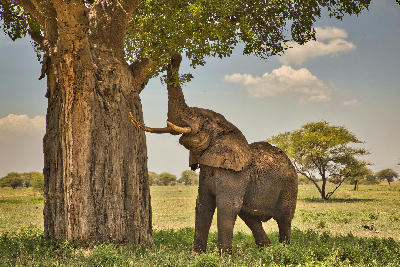
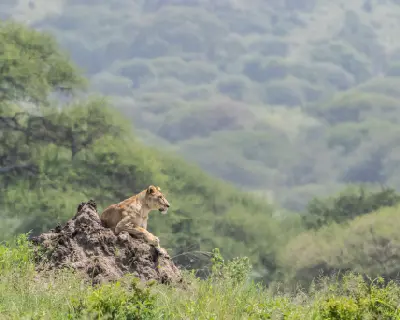
Tarangire National Park is structured around the Tarangire River, the ecological lifeline that shapes the park's wildlife movements and vegetation. Ancient baobab-covered ridges overlook broad acacia savannas, while seasonal floodplains, riverine woodland and the Silale Swamp create important habitats that support wildlife throughout the year. Granite kopjes, winding river valleys and scattered termite mounds add further diversity to a landscape that changes dramatically with the seasons. Each habitat contributes its own photographic character. Towering baobab trees dominate the skyline and provide some of the park's most recognisable compositions, while riverine woodland offers shade for elephants, giraffes and buffalo during the hottest months. Open grasslands support zebra, wildebeest and numerous antelope species, attracting lions, leopards and cheetahs, while seasonal wetlands become important feeding areas for elephants, waterbirds and migratory species. Together these habitats create one of northern Tanzania's richest wildlife environments. The visual character of Tarangire National Park is defined by monumental baobab trees rising above golden grasslands, winding river channels lined with acacia woodland and enormous elephant herds moving through dusty savannas beneath expansive African skies. Morning mist, dust illuminated by low-angle sunlight and dramatic afternoon thunderstorms continually transform the landscape, producing some of East Africa's most iconic safari photography.
Key photography subjects
- Ancient baobab trees and iconic African landscapes
- Large elephant herds along the Tarangire River
- Acacia woodland, rolling savannas and granite kopjes
- Lions, leopards, giraffes and abundant plains wildlife
- Silale Swamp and seasonal wetland birdlife
- River crossings, wildlife behaviour and dry-season gatherings
- Golden sunrise light, dust-filled sunsets and dramatic storm skies
Workshops in Tarangire National Park
No upcoming workshops scheduled for Tarangire National Park at this time.
Check back soon or explore other destinations.