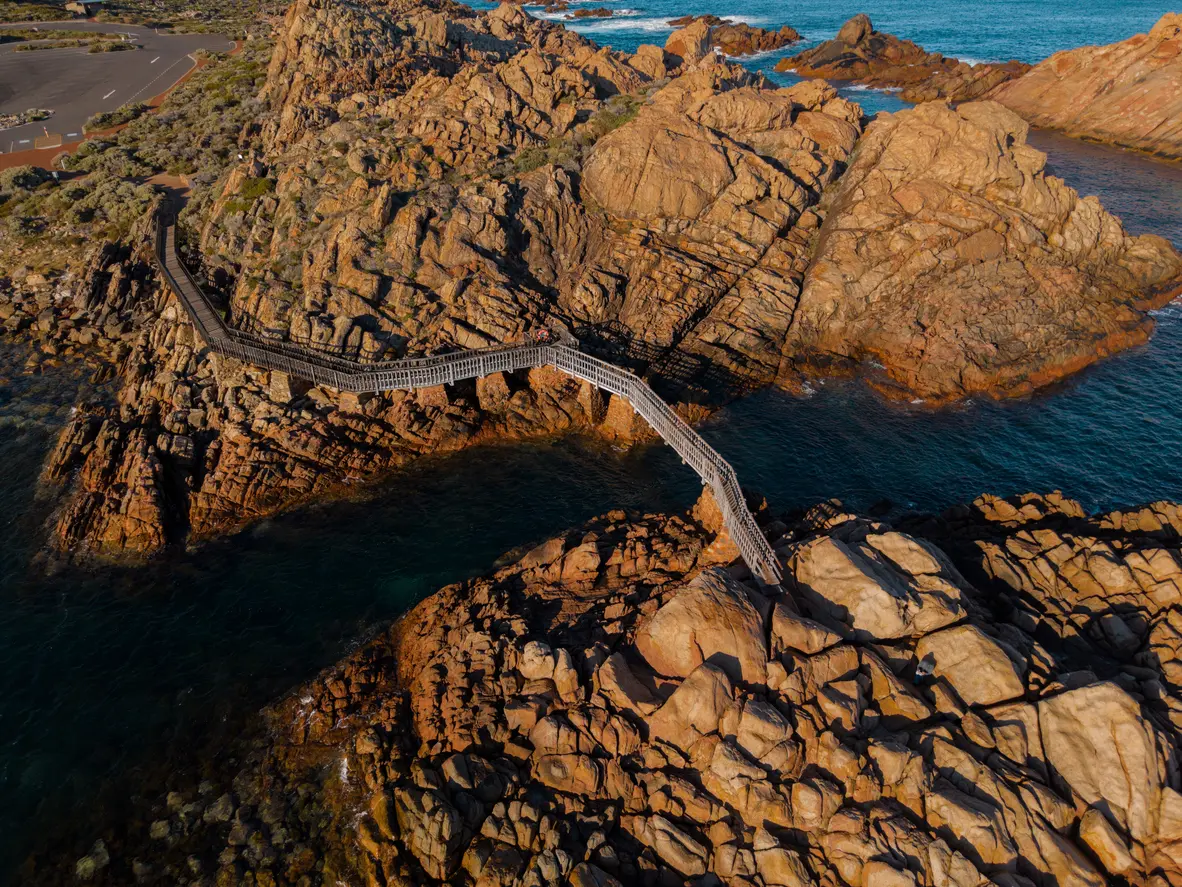
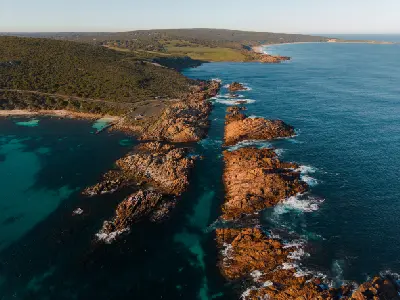
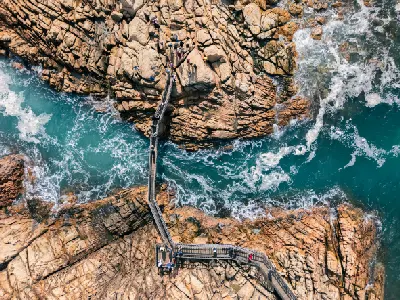
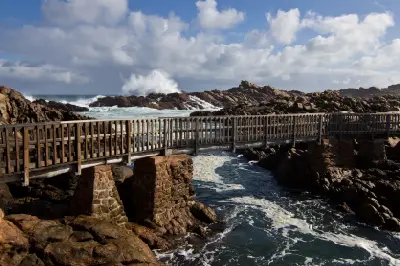
An aerial view of the Canal Rocks boardwalk winding across massive granite formations near Yallingup, linking the rocky shoreline above narrow channels of clear ocean water.
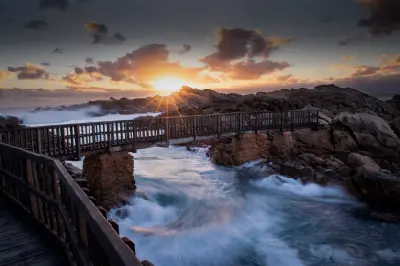
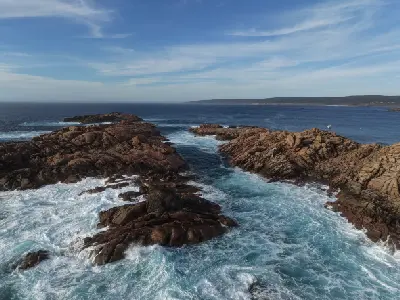
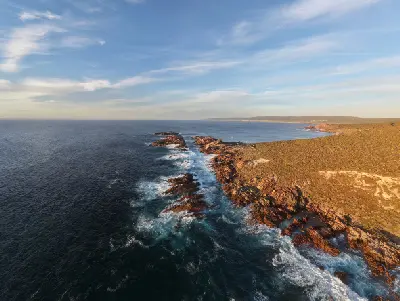
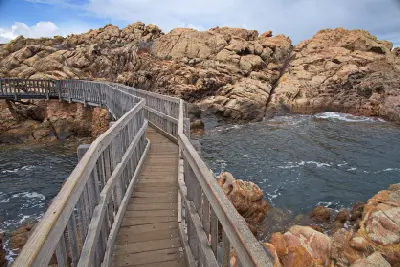
Canal Rocks is a series of granite outcrops on the coast near Yallingup, where narrow channels separate large rock formations exposed to the Indian Ocean. A footbridge crosses one of the main channels, with waves and surging water moving through gaps between the surrounding rocks. The fractured granite, moving water and exposed coastal setting provide opportunities for seascape, geological and long-exposure photography.
-33.66923, 114.99455
Gallery
Quick Facts
Access
Short Walk
5–15 min
Elevation Gain
10 m
Best Light
Low-angle light reveals texture across the granite outcrops, while late light adds definition to the channels and moving water between the rocks.
Why This Light
Season
Seasonally Distinct
Summer brings drier coastal vegetation, clearer skies and generally calmer ocean conditions around the granite channels. Winter brings greener vegetation, larger swells and more changeable skies, with stronger wave action through the gaps between the rocks.
Crowds
Often Busy
Restrictions
Canal Rocks is reached by sealed road, with parking close to the coast and a short established walking route leading to the footbridge and granite formations. The exposed rocks can become wet and slippery, while large swells can send water across lower sections of the shoreline. Visitors should remain clear of exposed rock edges and avoid low coastal positions during rough ocean conditions.