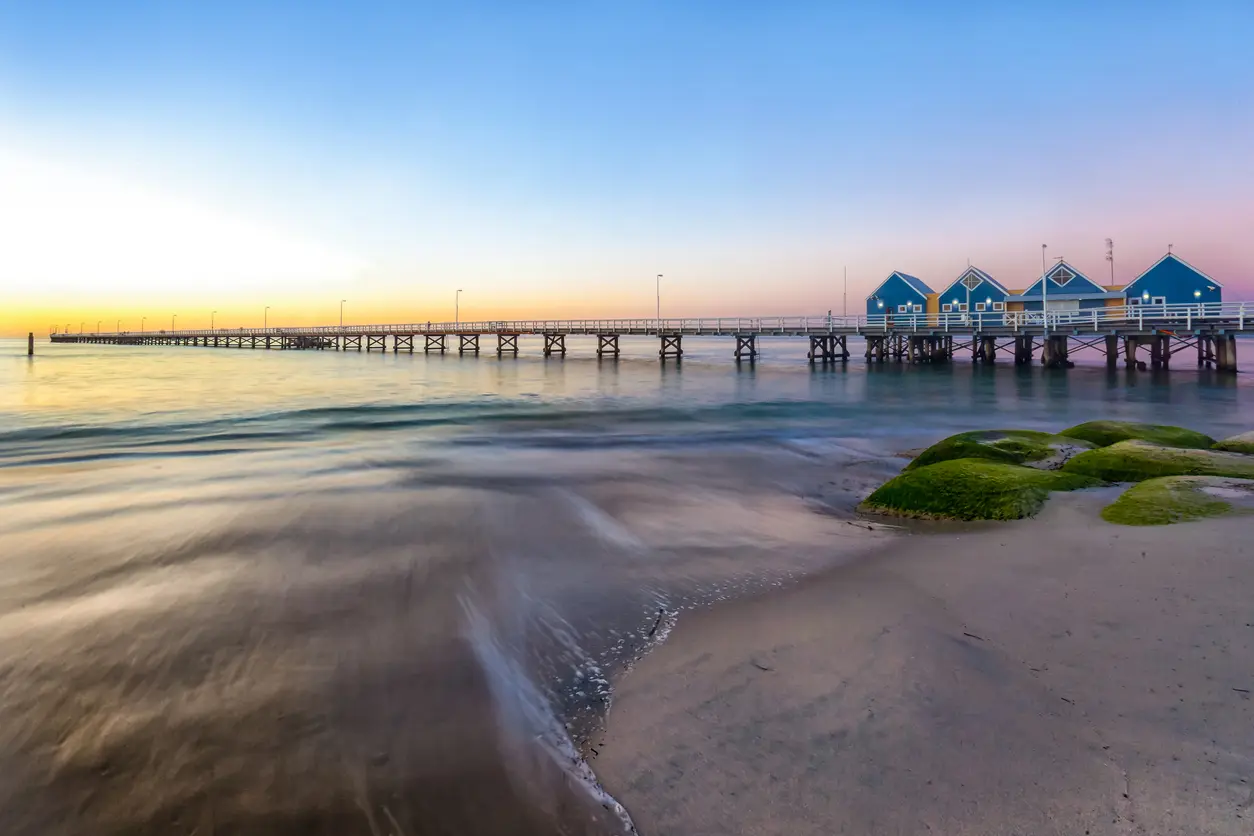
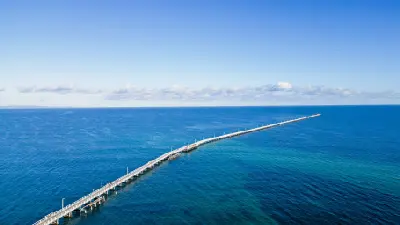
Busselton Jetty stretching across Geographe Bay at sunset, Western Australia.
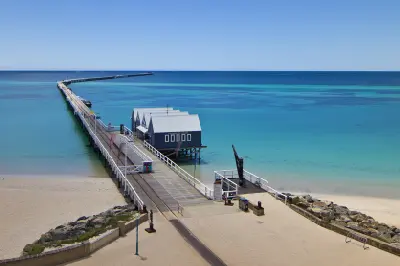
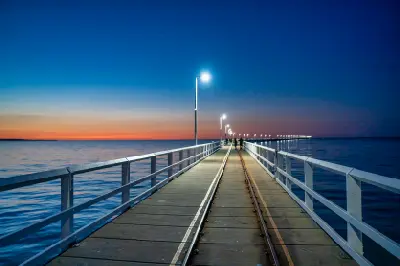
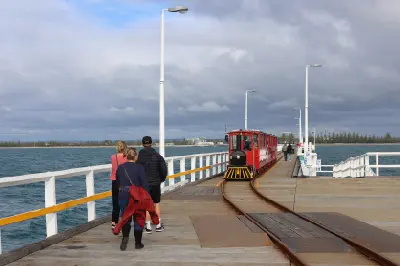
Busselton Jetty is a historic timber jetty extending approximately 1.8 km into the sheltered waters of Geographe Bay in southwest Western Australia. The long structure carries a narrow-gauge tourist train and terminates near an underwater observatory, with open water and coastline visible along its length. Repeating pylons, strong leading lines and the jetty's scale provide opportunities for architectural, coastal and long-exposure photography.
-33.63733, 115.34075
Gallery

Quick Facts
Access
Short Walk
45–90 min
Elevation Gain
0 m
Best Light
Low-angle light defines the repeating pylons and timber structure, while calm conditions can produce reflections and softer tonal transitions across Geographe B
Why This Light
Season
Year-Round Stable
Summer brings brighter water, clearer skies and busier beach activity along the surrounding Geographe Bay shoreline. Winter brings softer light, more changeable skies and rougher water, while the jetty and sheltered coastal setting remain visually consistent.
Crowds
Often Busy
Restrictions
Busselton Jetty is reached directly from the Busselton foreshore, with parking and visitor facilities nearby. Walking access onto the jetty requires an admission ticket, while the jetty train and Underwater Observatory are separately ticketed experiences. The full return walk is approximately 3.6 km, although visitors can photograph the structure from the foreshore without walking its entire length. Opening and access conditions can change with weather and operational requirements.