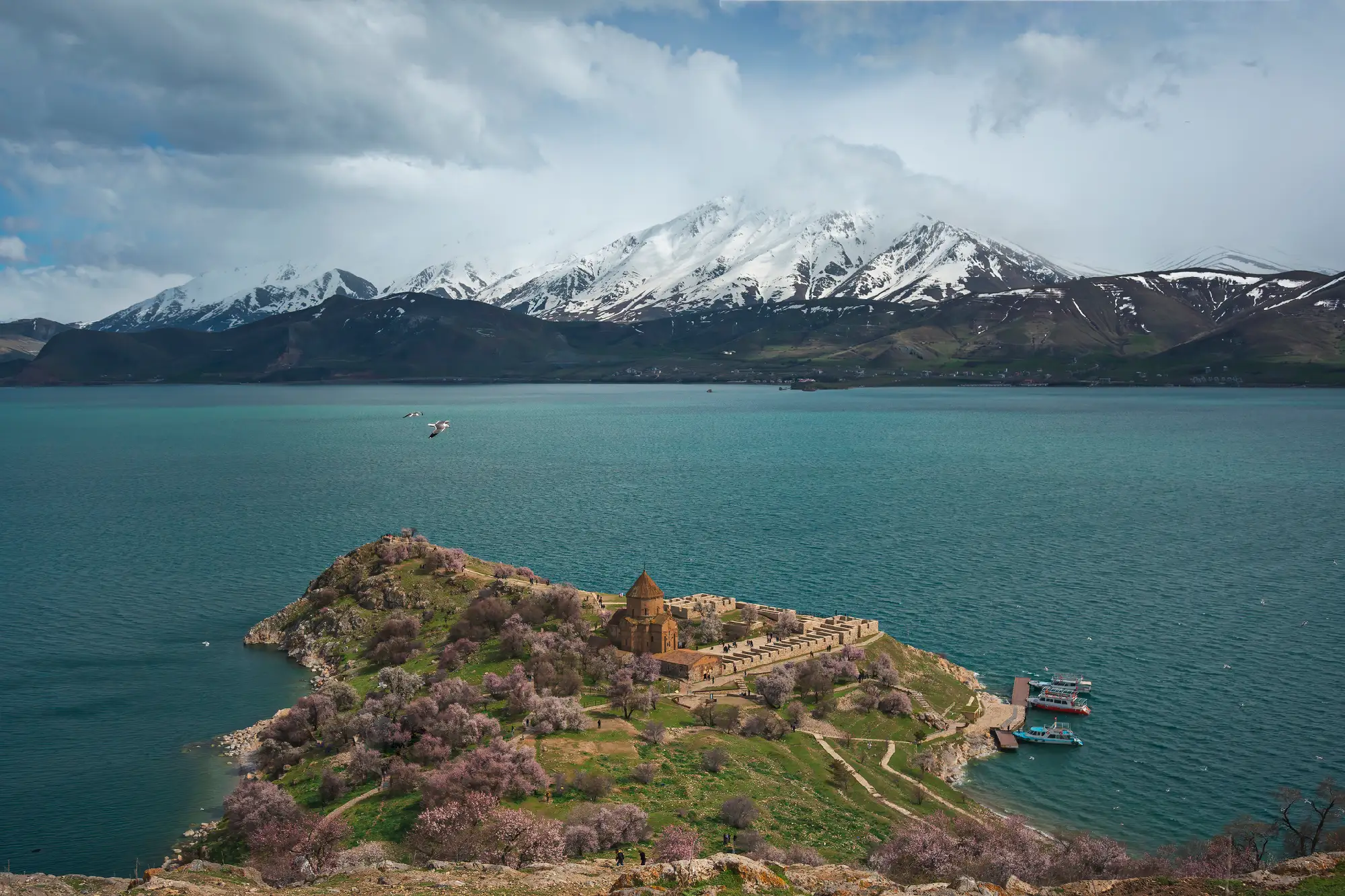
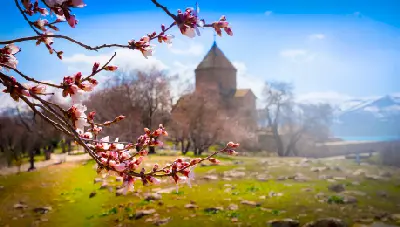
Akdamar Island and the Cathedral of the Holy Cross surrounded by Lake Van and snow-covered mountains in eastern Turkey.
Lake Van is Turkey’s largest lake, occupying an immense high-altitude basin surrounded by volcanic mountains and broad plateaus in Eastern Anatolia. Its intensely blue alkaline waters, long undeveloped shorelines, islands, wetlands, and distant snow-covered peaks create one of the country’s most expansive inland landscapes. The lake lies within a region shaped by powerful geological forces. Volcanic activity associated with Mount Nemrut helped form the modern basin, while volcanic peaks and lava landscapes continue to dominate much of the surrounding terrain. Along the shoreline, historic settlements, fortresses, churches, and cemeteries preserve evidence of the many cultures that have occupied this strategic highland region. Strong seasonal contrasts continually change the appearance of the lake and surrounding mountains. Winter snow covers the higher ranges, spring brings greener slopes and wildflowers, and dry summers emphasise the stark volcanic terrain. Clear high-altitude air, rapidly changing weather, and the enormous scale of the lake produce exceptionally varied light and atmospheric conditions.
Gallery
Key POIs in Lake Van
Overview
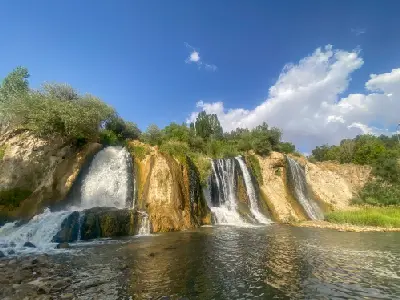
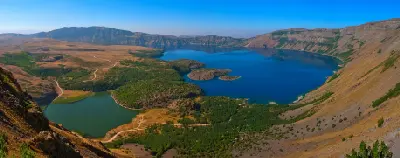
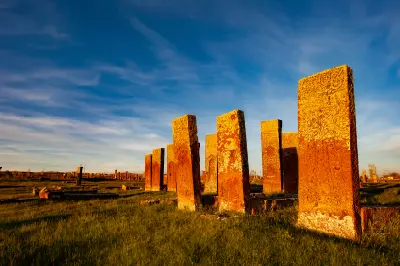
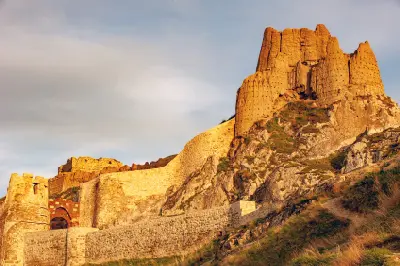
Lake Van lies within a vast tectonic basin whose outlet was blocked by volcanic activity from nearby Mount Nemrut, creating the saline and alkaline lake seen today. Mountain ranges rise around much of its shoreline, while volcanic terrain, open plateaus, wetlands, islands, and long stretches of sparsely developed coast create a dramatic high-altitude environment. Nemrut Crater Lake immediately west of the basin provides a striking contrast, occupying the immense caldera of the volcano that helped shape the wider landscape. Human settlement around Lake Van extends back thousands of years. Van Castle rises above the eastern shore on an ancient Urartian stronghold, while Akdamar Island preserves the medieval Armenian Church of the Holy Cross against a backdrop of open water and mountains. Further north, the monumental Seljuk cemetery at Ahlat and the waterfalls and fertile valleys around Muradiye add further layers of architecture, history, and landscape to the region. Photographically, Lake Van is defined by scale, water, mountains, and the interaction between cultural landmarks and an expansive natural setting. Wide shorelines provide views across intensely blue water towards distant peaks, while islands, castles, gravestones, churches, waterfalls, and volcanic formations create strong focal subjects. Snow-covered mountains, changing weather, reflections, mist, sunrise and sunset continually transform the lake, producing compositions that range from minimal waterscapes to richly layered cultural landscapes.
Key photography subjects
- Lake Van's expansive blue waters and mountainous shorelines
- Akdamar Island and the Church of the Holy Cross
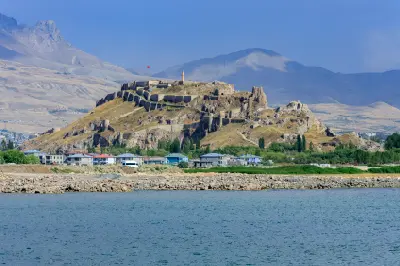
- Van Castle, Urartian remains, and historic landscapes
- Ahlat Seljuk Cemetery and monumental stonework
- Nemrut Crater Lake and surrounding volcanic terrain
- Muradiye Waterfall, wetlands, islands, and highland scenery
- Snow, reflections, dramatic skies, sunrise, and sunset light
Workshops in Lake Van
No upcoming workshops scheduled for Lake Van at this time.
Check back soon or explore other destinations.