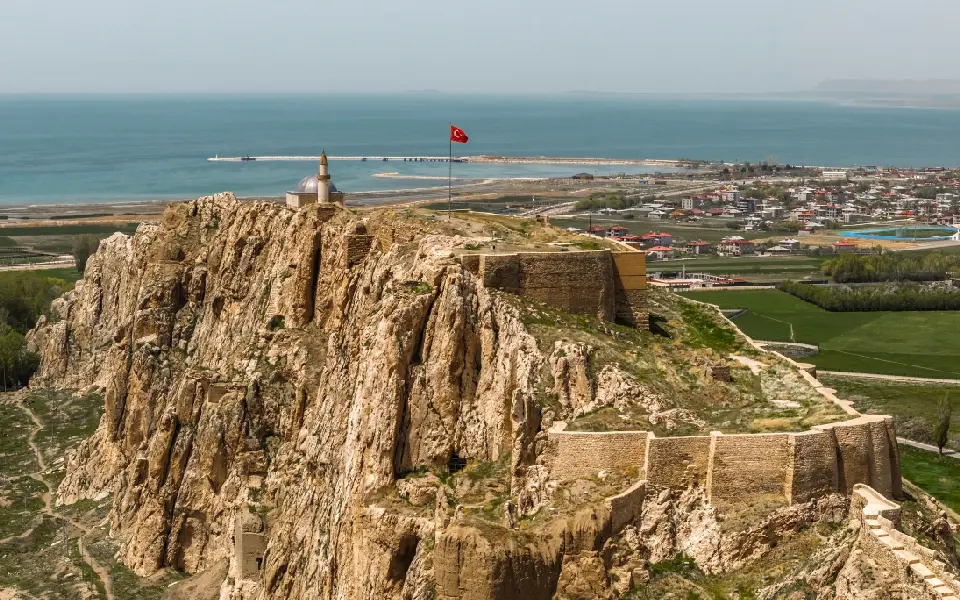
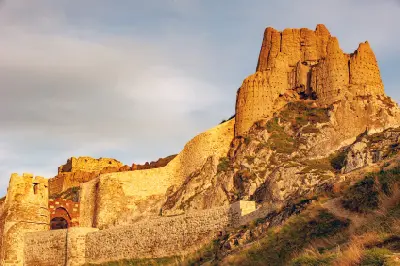
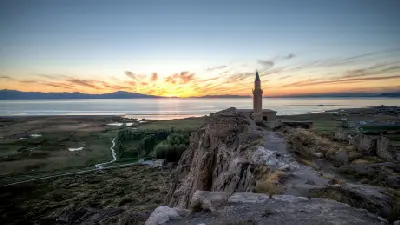
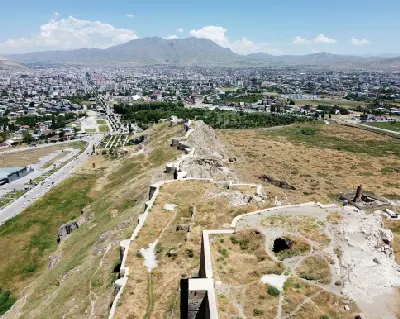
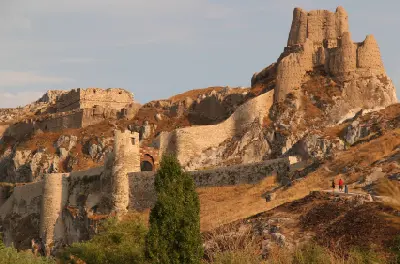
Van Castle rising above the lakeshore, with sweeping views across Lake Van and the modern city below.
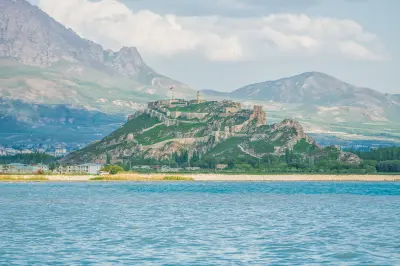
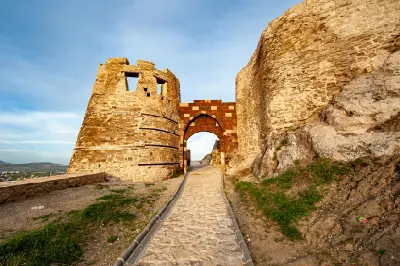
Van Castle is a monumental Urartian fortress built across a massive rocky ridge overlooking the city of Van and the eastern shore of Lake Van. Established in the 9th century BC as part of the Urartian capital of Tushpa, the citadel contains rock-cut chambers, ancient inscriptions, tombs and remains from later periods. Sheer stone cliffs rise above the surrounding plain, while the summit provides expansive views across Lake Van, the modern city and the mountains beyond.
38.50307, 43.33850
Gallery
Quick Facts
Access
Visitor Access
15–45 min
Elevation Gain
100 m
Best Light
Why This Light
Season
Seasonally Distinct
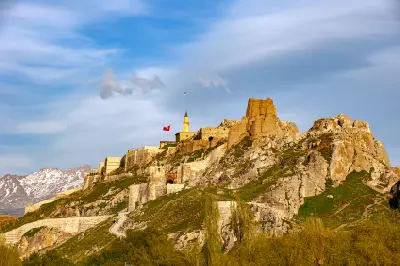
Spring brings greener surroundings and snow on distant mountains, while summer produces a dry, ochre landscape. Autumn offers softer conditions and warmer tones, while winter can bring snow across the fortress and surrounding plains.
Crowds
Often Busy
Restrictions
Van Castle is reached from roads on the western edge of the city, with established visitor access around the archaeological site. Reaching higher sections involves a sustained climb on steep paths, steps and uneven rocky terrain, requiring considerably more effort than viewing the fortress from below.