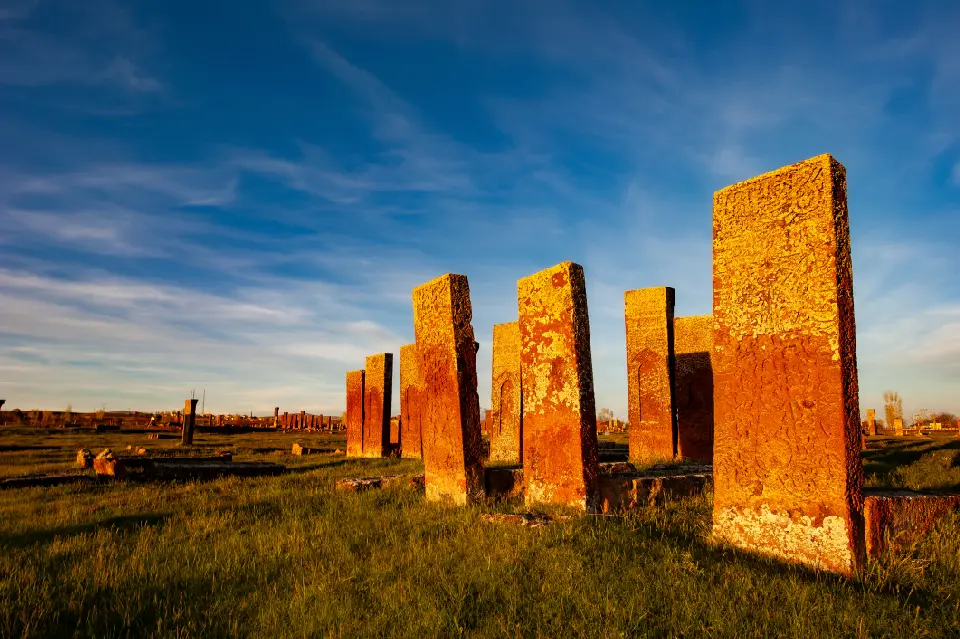
Medieval gravestones of Ahlat glow in warm evening light near the western shore of Lake Van, eastern Turkey.
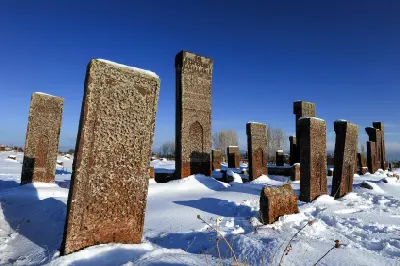
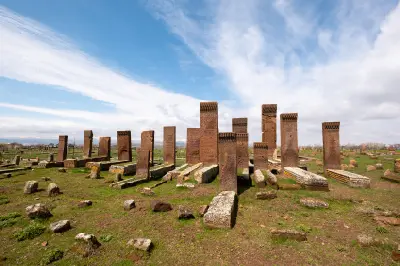
Ahlat Seljuk Cemetery is an extensive medieval burial ground near the northwestern shore of Lake Van, containing thousands of historic tombstones dating principally from the 12th to 15th centuries. Tall stone grave markers rise individually and in clusters across an open landscape, many covered with intricate geometric patterns, inscriptions and ornamental carving. The surrounding mountains and volcanic terrain provide a dramatic setting for one of eastern Turkey's most important medieval archaeological landscapes.
38.74068, 42.45892
Gallery

Quick Facts
Access
Visitor Access
5–15 min
Elevation Gain
10 m
Best Light
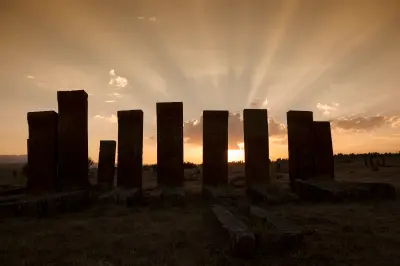
Low directional light reveals carved inscriptions and patterns while creating long shadows that separate individual tombstones across the open landscape.
Why This Light
Season
Seasonally Distinct
Spring brings greener ground around the tombstones, while summer creates a dry, ochre landscape. Autumn introduces warmer vegetation tones, while winter snow can dramatically isolate the dark stone monuments against a white landscape.
Crowds
Usually Quiet
Restrictions
The cemetery lies near Ahlat and is reached by road, with established visitor access through the archaeological site. Paths cross generally open terrain between the historic graves, although visitors should remain respectful around burial structures and avoid climbing on monuments.