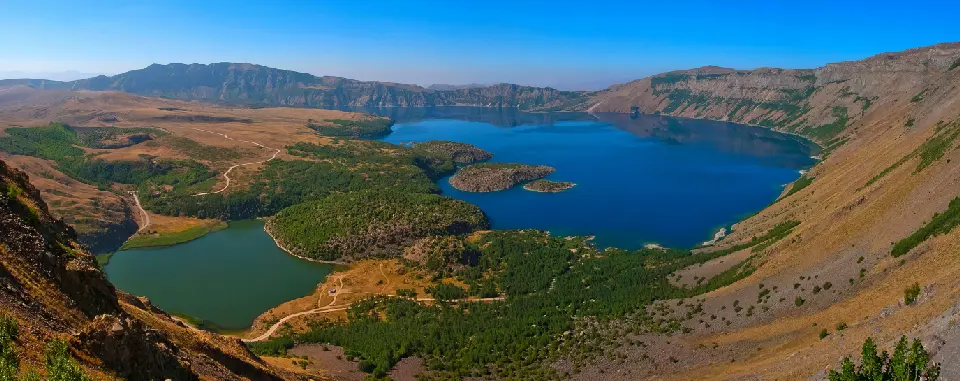
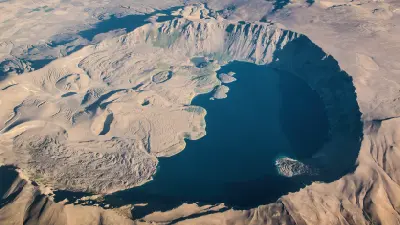
Nemrut Crater Lake fills the vast volcanic caldera of Mount Nemrut near Tatvan, surrounded by steep crater walls and smaller lakes.
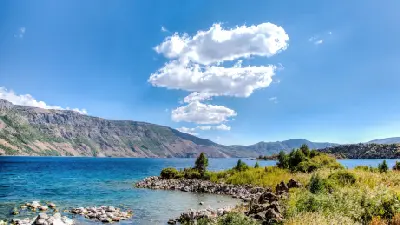
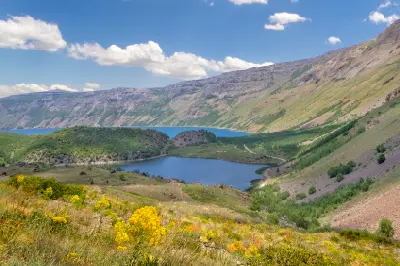
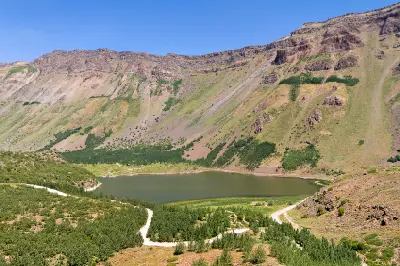
Nemrut Crater Lake lies within the vast caldera of Nemrut Volcano immediately west of Lake Van in eastern Turkey. The volcanic basin contains several lakes surrounded by steep crater walls, open grassland and patches of woodland, with the main lake occupying a substantial part of the caldera floor. Smaller lakes, geothermal features and seasonal snow add variety to the landscape. Elevated positions around the crater rim reveal the immense scale and volcanic structure of the landscape.
38.62499, 42.22407
Gallery
Quick Facts
Access
Roadside / Step-out
5–15 min
Elevation Gain
30 m
Best Light
Low-angle light reveals the caldera walls and volcanic relief, while calm conditions can produce reflections across the crater lakes.
Why This Light
Season
Seasonally Distinct
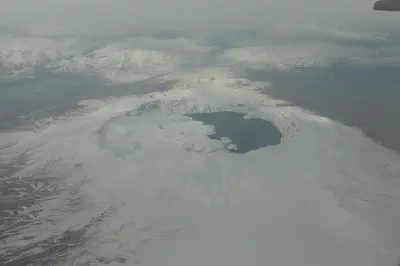
Late spring and summer provide the easiest access, with green vegetation contrasting against the blue crater lakes. Autumn introduces warmer tones across the caldera, while winter brings substantial snow and can make road access difficult or impossible.
Crowds
Usually Quiet
Restrictions
Mountain roads from the Tatvan area provide seasonal vehicle access into the Nemrut caldera, with short walks reaching lakeshores and viewpoints. Road conditions vary considerably, and snow can restrict access during winter and into the transitional seasons.