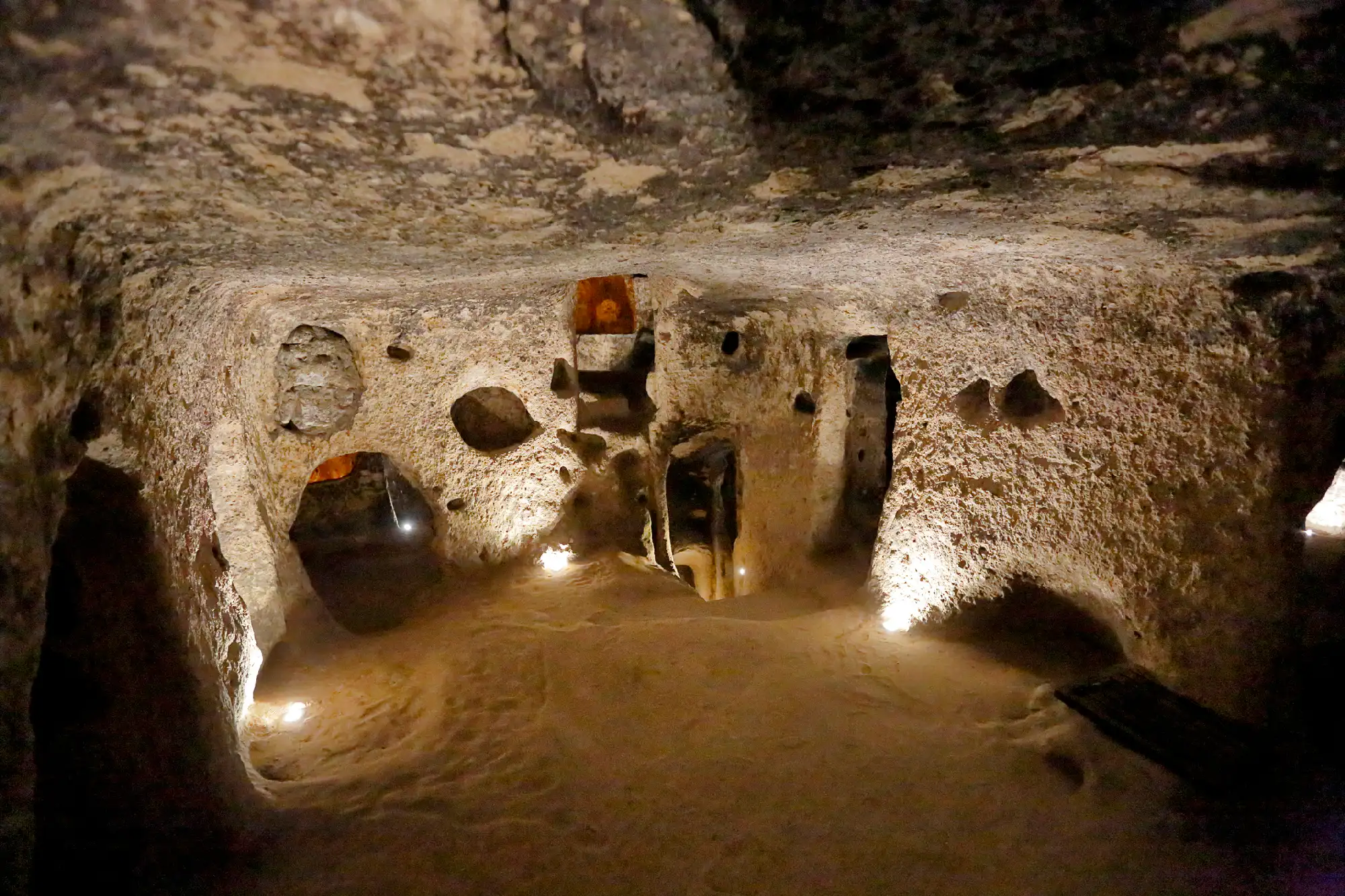
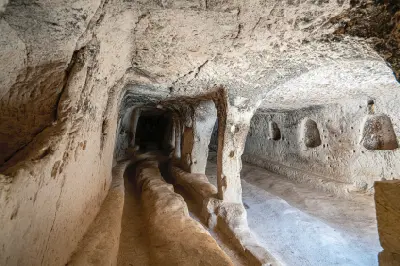
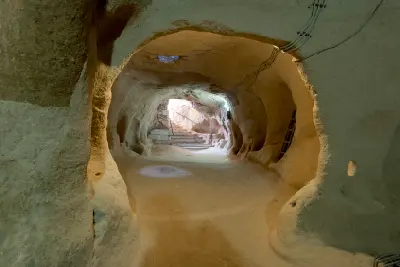
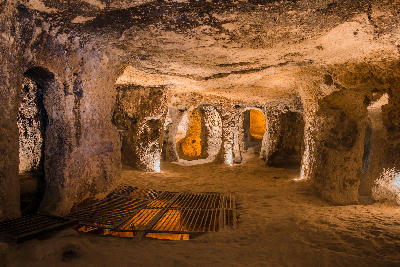
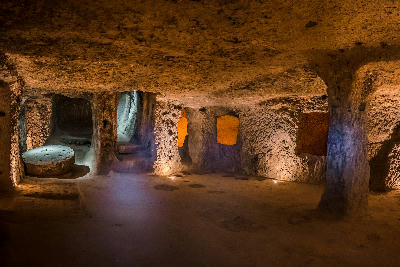
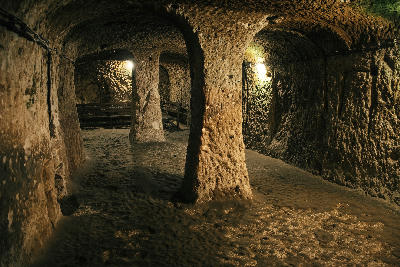
Rock-cut chamber inside Derinkuyu Underground City, Cappadocia, Turkey.
Cappadocia’s underground cities form an extraordinary subterranean landscape of tunnels, chambers, ventilation shafts, storage rooms, and communal spaces carved deep into the region’s volcanic rock. Large complexes such as Derinkuyu and Kaymaklı reveal some of the most remarkable surviving examples of underground settlement in the ancient world. The soft volcanic tuff of Cappadocia could be excavated using relatively simple tools, allowing communities to extend natural caves into increasingly complex networks of rooms and passageways. Some settlements developed across numerous underground levels connected by narrow tunnels and stairways. These spaces served many purposes over centuries, providing storage, shelter, places of worship, food preparation areas, and protected living spaces during periods of insecurity.
Gallery
Key POIs in Underground Cities
Nearby Places
View all on mapUçhisar
area district — 25.0 km
Cappadocia & Central Anatolia
Uçhisar Castle
landmark — 25.0 km
Cappadocia & Central Anatolia
Pigeon Valley
landmark — 25.1 km
Cappadocia & Central Anatolia
Göreme
area district — 26.7 km
Cappadocia & Central Anatolia
Göreme Open Air Museum
landmark — 26.8 km
Cappadocia & Central Anatolia
Göreme Town
landmark — 26.8 km
Cappadocia & Central Anatolia
White Valley
landmark — 26.9 km
Cappadocia & Central Anatolia
Love & Red Valleys
area district — 28.1 km
Cappadocia & Central Anatolia
Overview
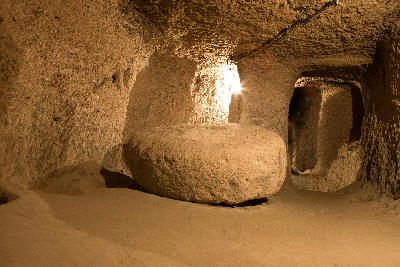
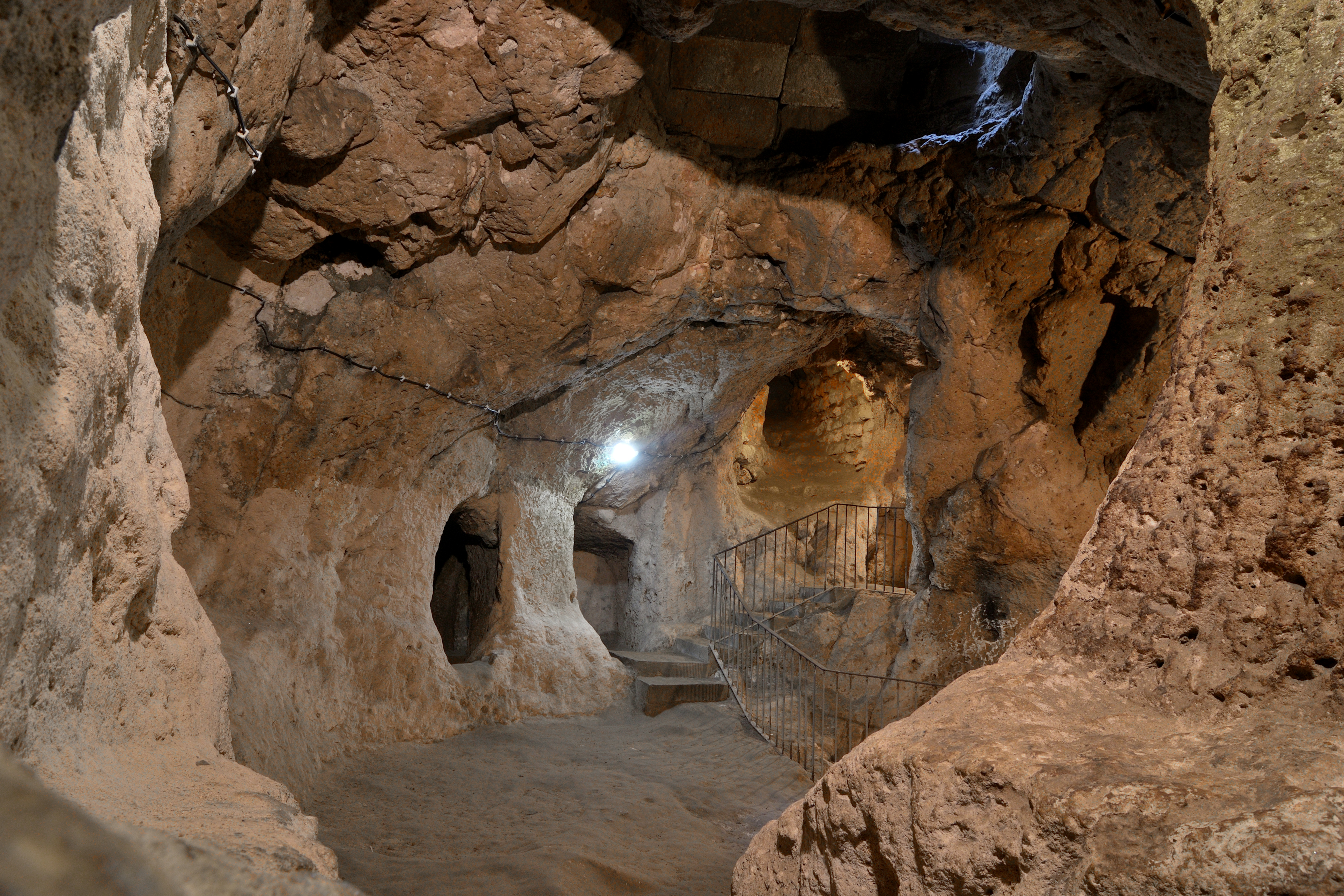
Cappadocia contains numerous underground settlements developed through successive periods of occupation and expansion. Their exact origins and chronology vary, but many were enlarged substantially during the Byzantine era, when communities used subterranean complexes as protected refuges. Derinkuyu and Kaymaklı are among the largest and best-known examples accessible today. Internally, the cities are organised around networks of chambers, corridors, stairways, shafts, and vertical ventilation systems. Living areas were accompanied by kitchens, storerooms, wells, churches, animal shelters, and other communal spaces. Heavy circular stone doors could be rolled across strategic passageways, allowing sections of the complexes to be sealed from within. Visually, the underground cities contrast completely with Cappadocia’s open valleys and eroded rock formations. Photography is defined by confined spaces, carved surfaces, repeating tunnels, architectural details, and the interaction between artificial light and volcanic stone. Narrow passages and interconnected chambers reveal both the scale and ingenuity of a landscape largely hidden beneath the surface.
Key photography subjects
- Subterranean tunnels and carved passageways
- Rock-cut chambers and communal spaces
- Circular stone doors and defensive architecture
- Stairways, shafts, and multi-level structures
- Ventilation systems and carved volcanic rock
- Churches, storerooms, and historic living spaces
- Artificial light, shadows, and confined interiors
Workshops in Underground Cities
No upcoming workshops scheduled for Underground Cities at this time.
Check back soon or explore other destinations.