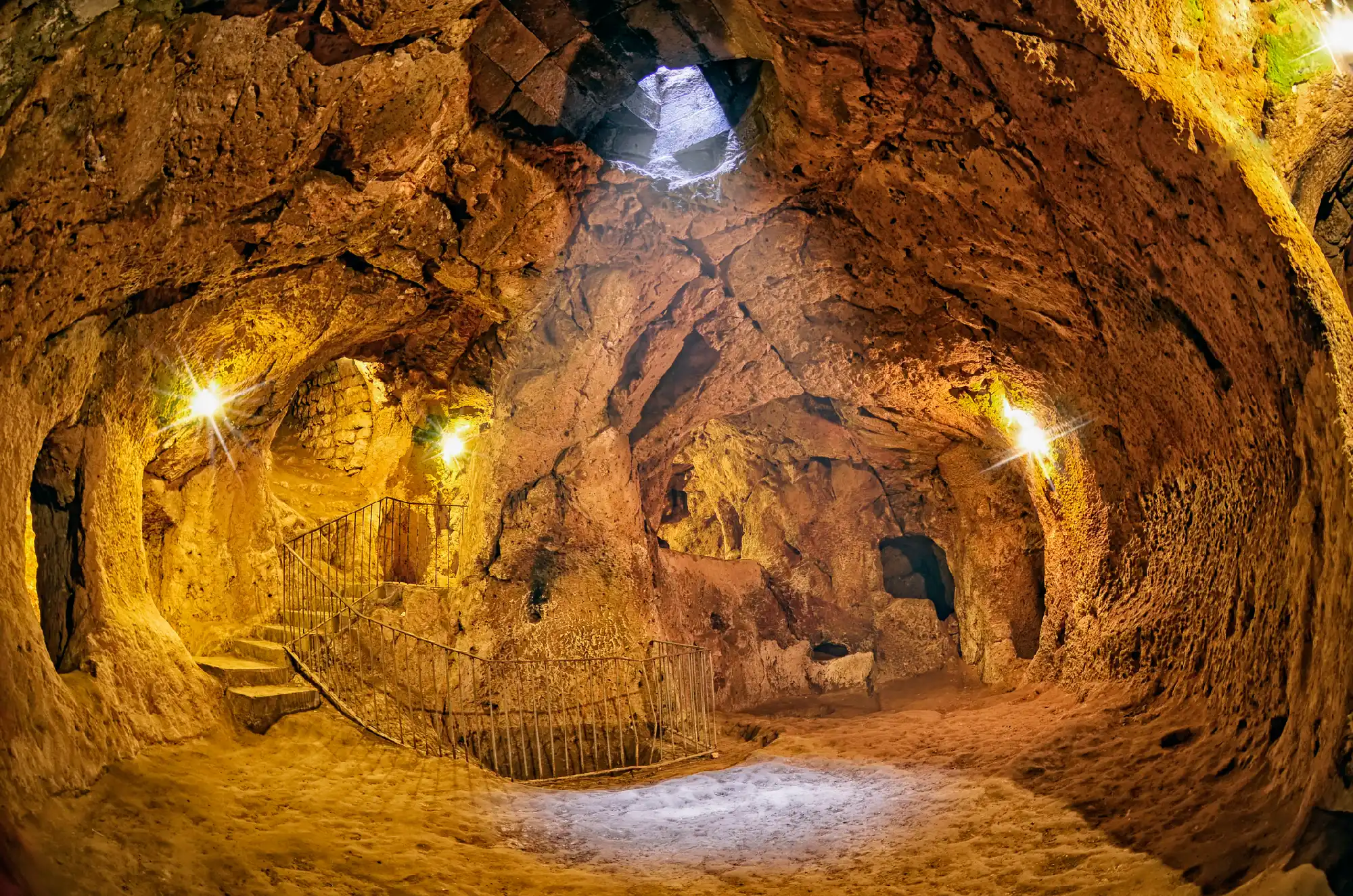
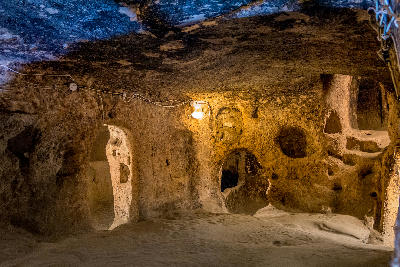
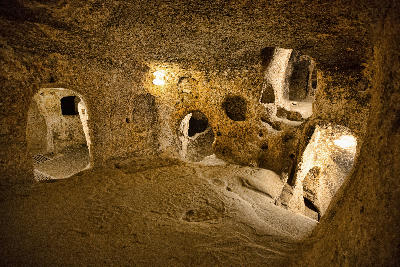
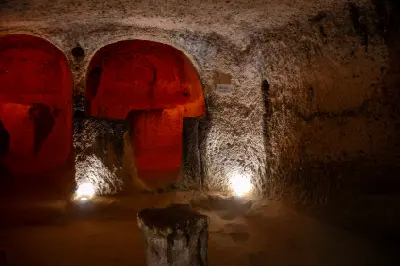
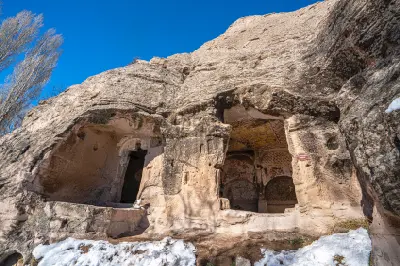
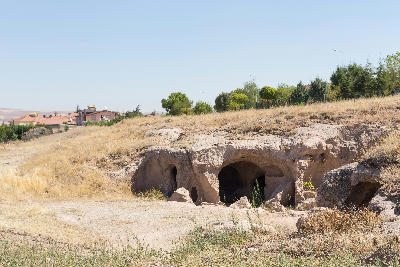
Rock-cut chambers, tunnels and stairways reveal the subterranean architecture of Derinkuyu Underground City in Cappadocia.
Derinkuyu Underground City is an extensive subterranean settlement carved into the soft volcanic rock beneath southern Cappadocia. Developed and expanded over centuries, the complex descends through multiple underground levels containing living quarters, storage rooms, kitchens, wells, ventilation shafts and places of worship. Narrow passages and heavy circular stone doors allowed sections of the city to be isolated during periods of danger. It is the deepest of Cappadocia's major underground cities accessible to visitors.
38.37358, 34.73512
Gallery
Quick Facts
Access
Visitor Access
45–90 min
Elevation Gain
50 m
Season
Year-Round Stable
Underground conditions remain relatively stable throughout the year, making seasonal changes far less significant than at Cappadocia's outdoor sites. Summer can bring heavier visitor numbers, while winter generally provides a quieter experience despite colder conditions above ground.
Crowds
Often Busy
Restrictions
Derinkuyu is entered through managed visitor access and explored along a designated underground route containing narrow passages, steep stairs and confined spaces. Some sections may be unsuitable for visitors uncomfortable with enclosed spaces, and tripods can be impractical or restricted where passages are congested.