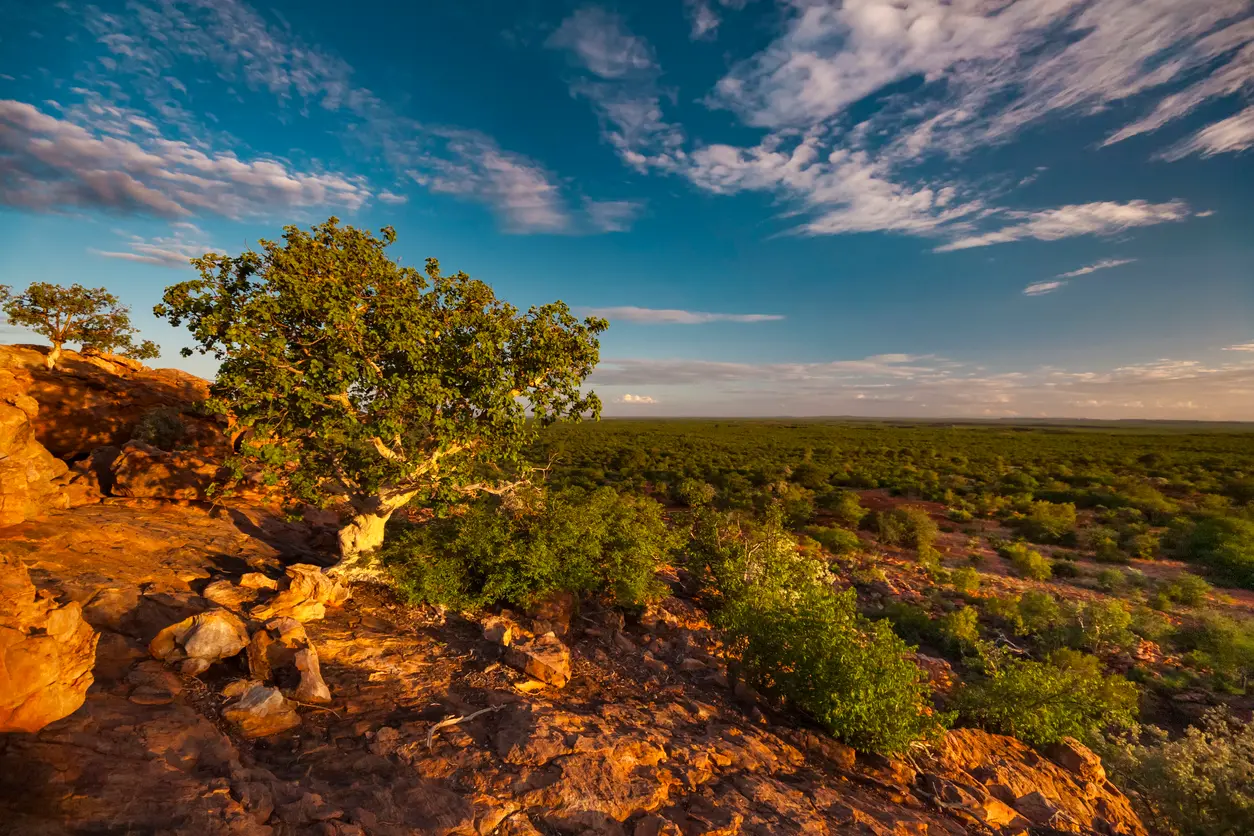
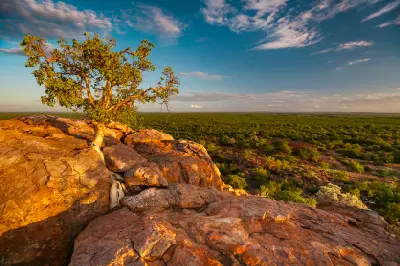
Golden evening light illuminates a rock fig tree growing from sandstone cliffs overlooking the Limpopo Valley near the Mapungubwe Cultural Landscape, South Africa.
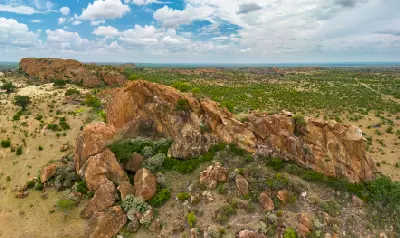
The Tuli Block & Eastern Botswana form one of the country's most geologically distinctive landscapes, where sandstone ridges, granite kopjes, river valleys and ancient baobab trees create a dramatic contrast to the flatter wilderness regions found elsewhere in Botswana. Stretching along the Limpopo River on the borders of South Africa and Zimbabwe, the region combines rugged terrain, rich wildlife and striking rock formations within one of southern Africa's oldest landscapes. The landscape is shaped by Precambrian granite, sandstone outcrops and the deeply incised Limpopo Valley, creating elevated ridges, rocky hillsides and broad river corridors that differ markedly from the wetlands of the Okavango or the open plains of the Kalahari. Ancient baobabs, mopane woodland and scattered acacia trees dominate the vegetation, while the river supports diverse wildlife within an otherwise semi-arid environment. Together these geological features create one of Botswana's most visually distinctive wilderness regions. Seasonal variation influences vegetation, river flow and atmospheric conditions throughout the year. Winter provides dry conditions, exceptional visibility and warm golden light across the rocky landscapes, while summer transforms the valleys with lush vegetation, dramatic thunderstorms and renewed river systems that bring life back to the surrounding bush.
Gallery



Key POIs in Tuli Block & Eastern Botswana
Nearby Places
View all on mapOverview
The Tuli Block & Eastern Botswana are structured around the Limpopo River and a series of ancient sandstone ridges, granite kopjes and elevated plateaus that extend along Botswana's southeastern frontier. Unlike much of the country, where expansive plains dominate the landscape, this region is characterised by rugged relief, rocky escarpments and deeply weathered geological formations that have evolved over hundreds of millions of years. Each landscape contributes to the region's distinctive identity. Mashatu is renowned for its remarkable wildlife and giant baobabs set among sandstone hills, while the wider Tuli Block preserves extensive wilderness areas, dramatic rock formations and secluded river valleys. The Limpopo Valley links these landscapes together, creating natural corridors that support elephants, predators and a rich diversity of birdlife throughout the year. The visual structure of the region is defined by rugged topography rising above broad river valleys and semi-arid woodland. Massive baobabs stand silhouetted against expansive skies, weathered sandstone formations create elevated viewpoints and winding river channels provide strong compositional elements through the landscape. Together these features produce one of Botswana's most distinctive photographic environments.
Key photography subjects
- Ancient baobab trees and iconic silhouettes
- Sandstone ridges, granite kopjes and rocky outcrops
- The Limpopo River and river valley landscapes
- Elephants, leopards and diverse wildlife
- Mopane woodland and semi-arid bushveld
- Elevated viewpoints overlooking rugged wilderness
- Golden light, dramatic skies and seasonal thunderstorms