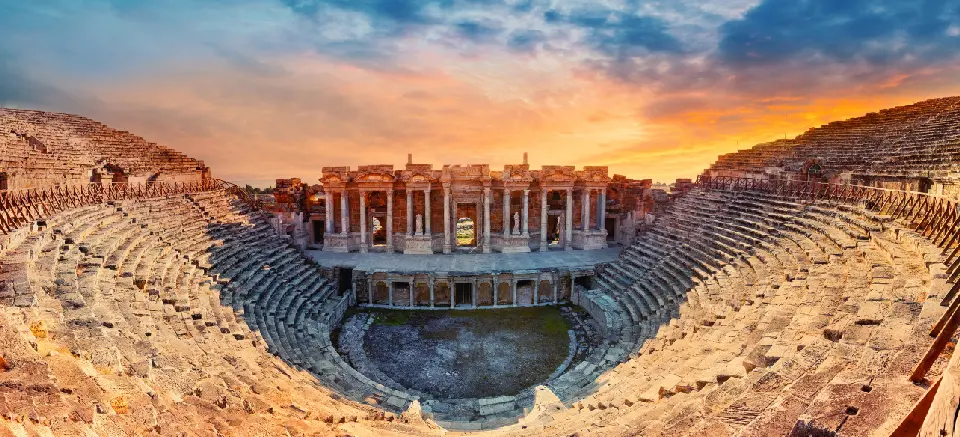
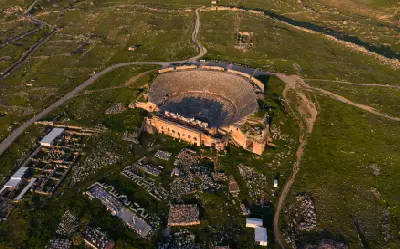
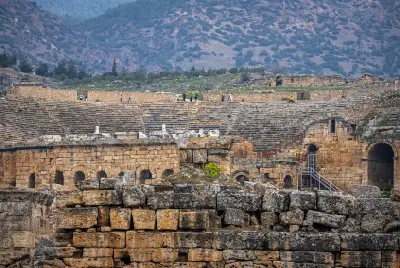
Roman Theatre of Hierapolis at sunset, Pamukkale, Turkey.
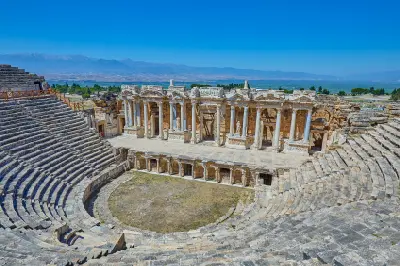
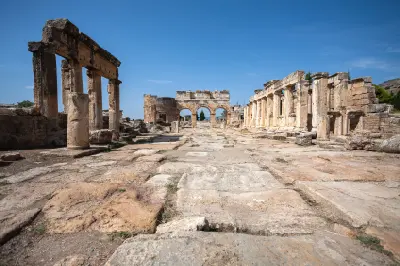
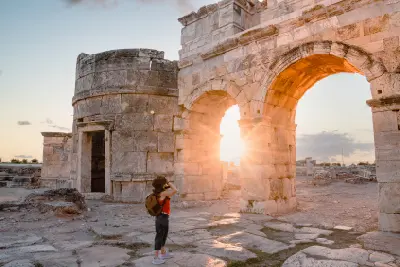
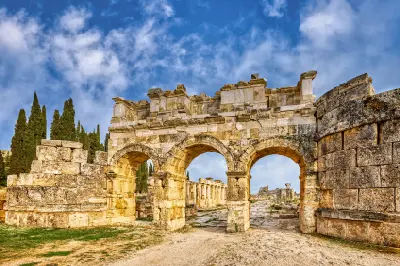
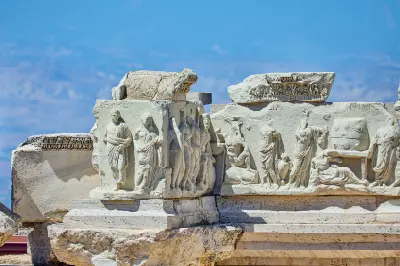
Hierapolis is an extensive ancient city occupying the plateau directly above the Pamukkale Travertines. Established in the Hellenistic period and later developed under Roman rule, the city grew around the area's thermal springs and became an important spa and religious centre. Surviving structures include a large Roman theatre, monumental gateways, temples, baths and one of Anatolia's most extensive ancient necropolises. The ruins spread across an open plateau overlooking the surrounding landscape.
37.92491, 29.12324
Gallery
Quick Facts
Access
Visitor Access
5–15 min
Elevation Gain
30 m
Best Light
Low-angle light reveals texture and depth across the pale stone ruins, columns and theatre while creating separation across the archaeological landscape.
Why This Light
Season
Seasonally Distinct
Spring brings green vegetation and wildflowers around the ruins, while summer leaves the surrounding landscape dry and exposed. Autumn brings warmer vegetation tones, while winter can produce mist, rain and occasional snow across the site.
Crowds
Often Busy
Restrictions
Hierapolis forms part of the managed Pamukkale-Hierapolis archaeological complex and is explored along established paths across a large open site. Although initial access is straightforward, reaching the theatre, necropolis and more distant ruins involves considerably more walking.