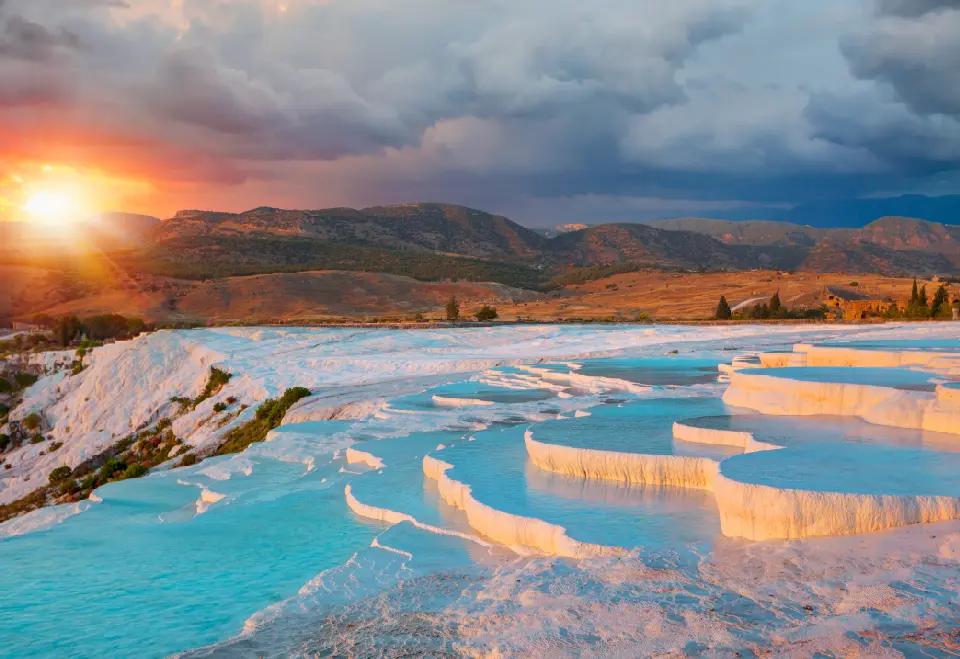
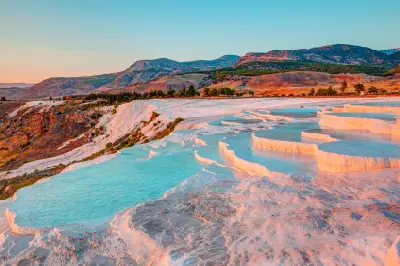
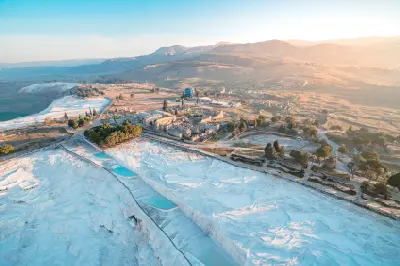
Pamukkale’s brilliant white travertine terraces and turquoise thermal pools glow beneath a dramatic sunset.
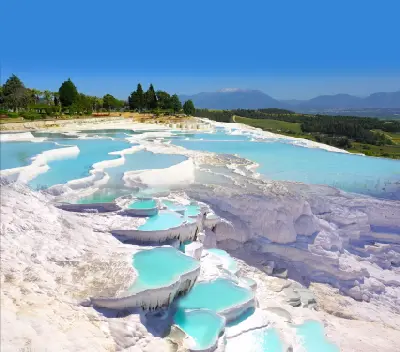
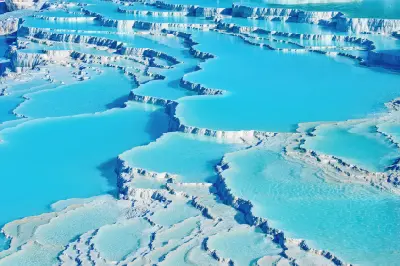
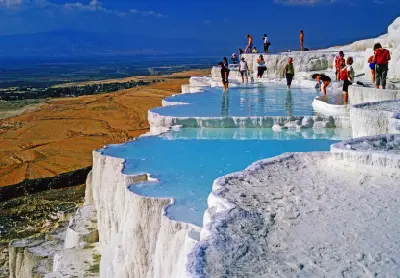
Pamukkale Travertines are a series of brilliant white calcium-carbonate terraces formed by mineral-rich thermal water flowing down the hillside above the town of Pamukkale. Over thousands of years, deposits from the springs have created stepped pools, channels and sculpted surfaces across the slope. Shallow water covers sections of the terraces, producing turquoise pools and reflections against the white mineral formations. The ruins of ancient Hierapolis occupy the plateau immediately above.
37.92448, 29.11901
Gallery
Quick Facts
Access
Visitor Access
5–15 min
Elevation Gain
50 m
Best Light
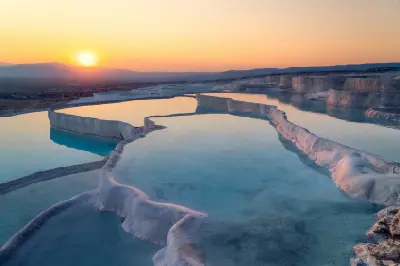
Low-angle light reveals texture across the white terraces, while shallow pools reflect changing colour from the sky around sunrise and sunset.
Why This Light
Season
Seasonally Distinct
Summer brings bright white terraces, intense sunlight and the highest visitor numbers, while spring and autumn provide milder conditions and softer light. Winter can bring rain, mist and occasional snow, creating a markedly different appearance across the terraces.
Crowds
Often Busy
Restrictions
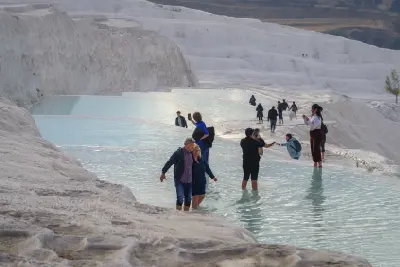
The travertines form part of the managed Pamukkale-Hierapolis archaeological site and require an entrance ticket. Visitors follow designated routes across accessible sections, with footwear prohibited on parts of the travertines to protect the mineral surface. Some terraces are closed to public access.