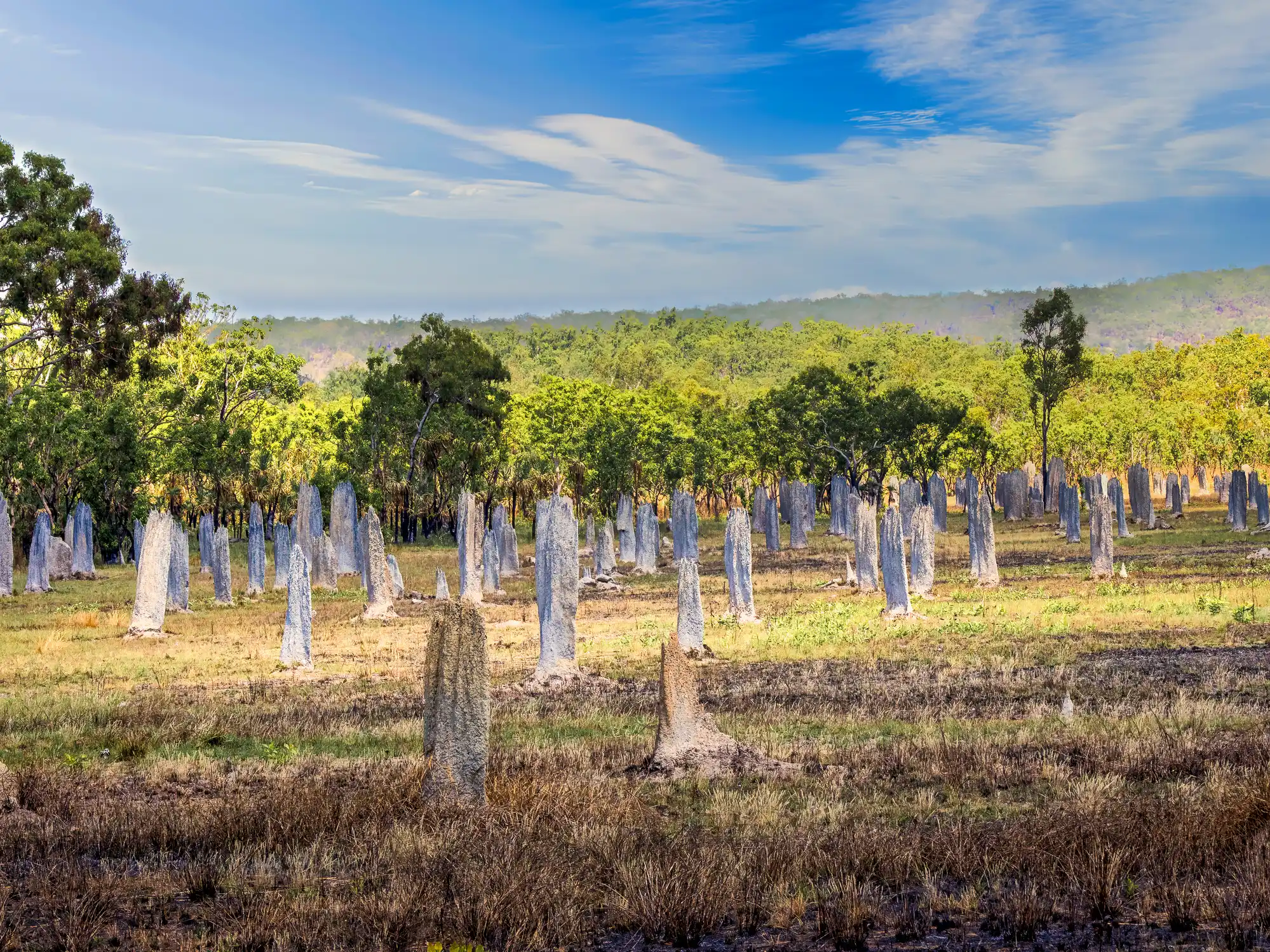
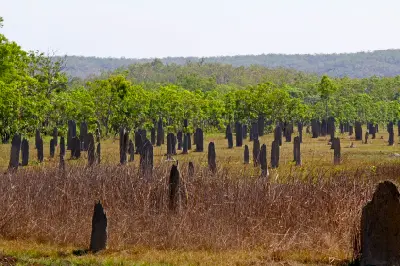
Hundreds of slender magnetic termite mounds rise from the open savanna of Australia's Northern Territory, their distinctive blade-like shapes aligned approximately north–south to help regulate temperatures inside the colonies.
Magnetic Termite Mounds are distinctive, blade-shaped termite structures found in the seasonally flooded grasslands of Litchfield National Park, Northern Territory. Built by termites, the tall, narrow mounds are aligned approximately north–south, helping regulate internal temperatures by controlling exposure to the sun. Their unusual geometry, repeating forms and open tropical grassland setting provide opportunities for landscape, nature and abstract photography.
-12.44582, 130.67170
Gallery
Quick Facts
Access
Roadside / Step-out
0–5 min
Elevation Gain
0 m
Best Light
Low-angle sunlight reveals the ridged surfaces and narrow profiles of the mounds, casting long shadows across the surrounding grassland.
Why This Light
Season
Seasonally Distinct
Summer brings monsoon rainfall, greener grasses and occasionally waterlogged ground around the termite mounds, with dramatic tropical cloud formations overhead. Winter brings dry golden grasses, clearer skies and stronger visual contrast between the grey mounds and surrounding savanna.
Crowds
Often Busy
Restrictions
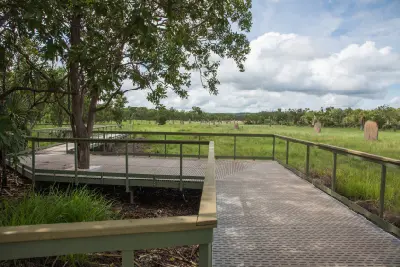
The Magnetic Termite Mounds viewing area is reached by sealed road within Litchfield National Park, with parking beside a short boardwalk overlooking the grassland. Visitors should remain on designated paths and viewing platforms to protect the fragile termite structures and surrounding habitat. Heavy wet-season rainfall can affect access and ground conditions, although the main road is generally accessible for much of the year. The mounds should not be climbed or touched.