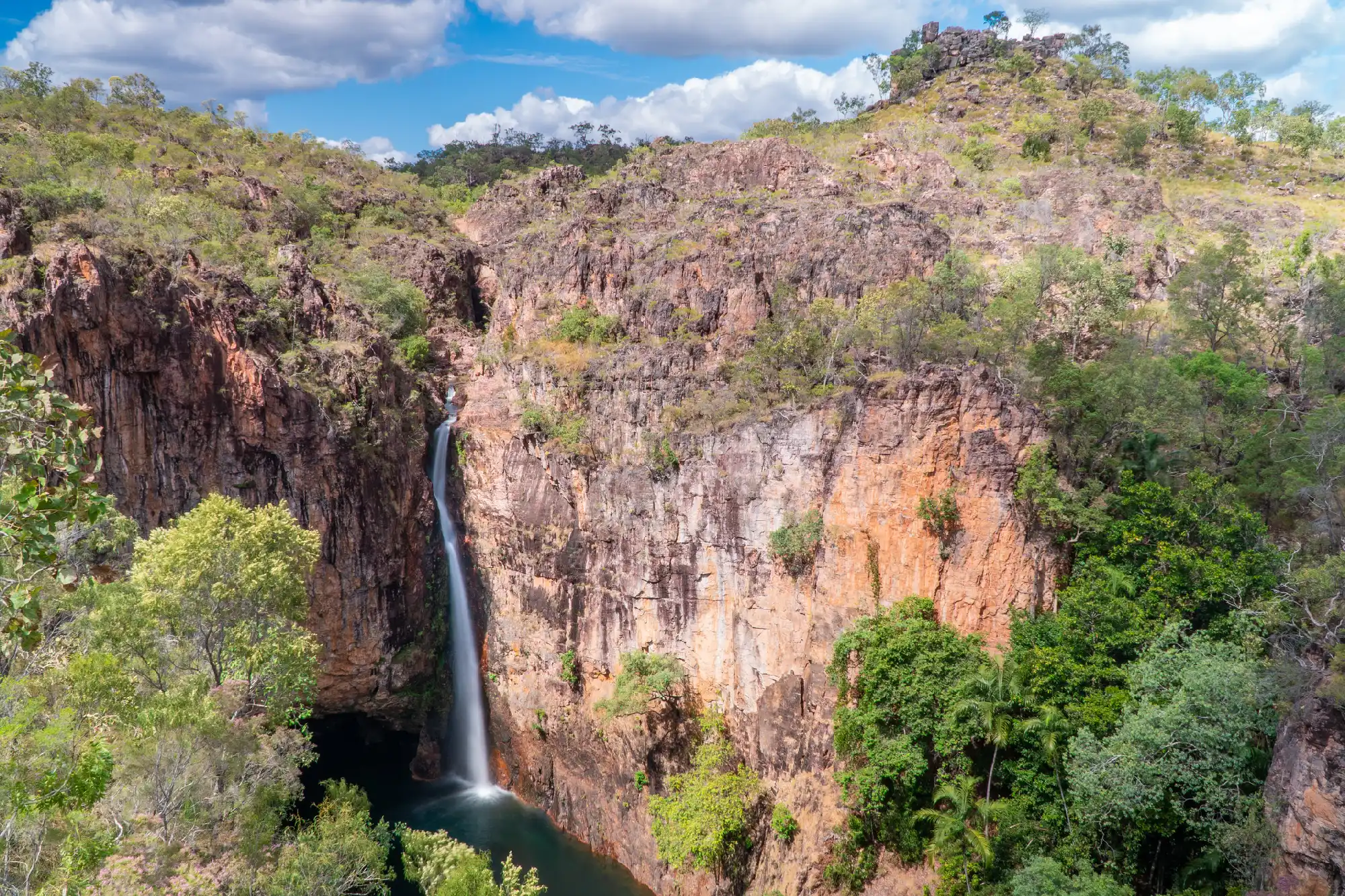
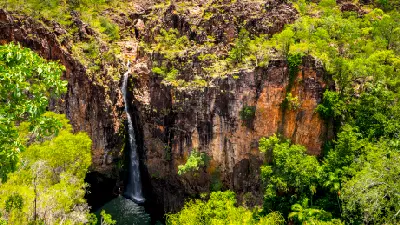
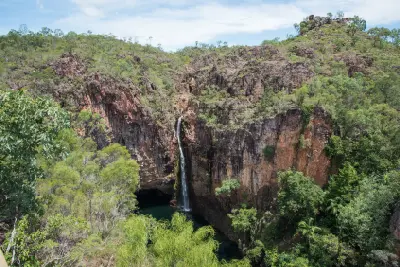
Tolmer Falls plunges over a sheer sandstone escarpment into a secluded plunge pool in Litchfield National Park, where rugged orange cliffs and tropical woodland frame one of the Northern Territory's most dramatic waterfalls.
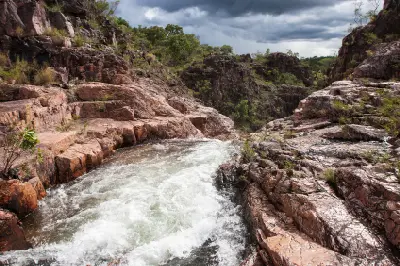
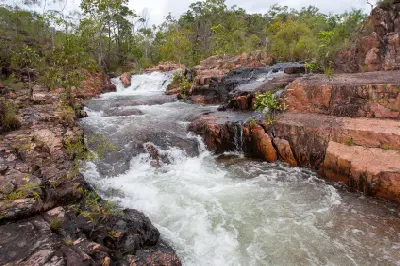
Tolmer Falls is a waterfall in Litchfield National Park, Northern Territory, where water plunges over a sandstone escarpment into a deep, narrow gorge. A short walking track leads to elevated lookouts overlooking the falls, with steep rock walls, tropical vegetation and a sheltered plunge pool below. The vertical waterfall, layered sandstone cliffs and enclosed gorge provide opportunities for landscape, geological and waterfall photography.
-13.20557, 130.71507
Gallery
Quick Facts
Access
Short Walk
5–15 min
Elevation Gain
10 m
Best Light
Soft light reduces contrast between the bright sandstone cliffs and shaded gorge, retaining detail in the waterfall, rock walls and vegetation.
Why This Light
Season
Seasonally Distinct
Summer brings monsoon rainfall, stronger waterfall flow and greener vegetation along the gorge, with wet sandstone surfaces and occasional mist around the plunge pool. Winter brings reduced flow, drier surrounding woodland and more exposed rock surfaces, while the shaded gorge retains pockets of green vegetation.
Crowds
Often Busy
Restrictions
Tolmer Falls is reached by sealed road within Litchfield National Park, with parking near a short walking track leading to the main viewing platforms. A longer walking circuit provides additional views across the surrounding sandstone landscape. Access to the gorge floor and plunge pool is prohibited to protect sensitive bat habitat, so the waterfall must be viewed from designated lookouts. Visitors should remain behind barriers and follow park signage. Drone operations require appropriate authorisation.