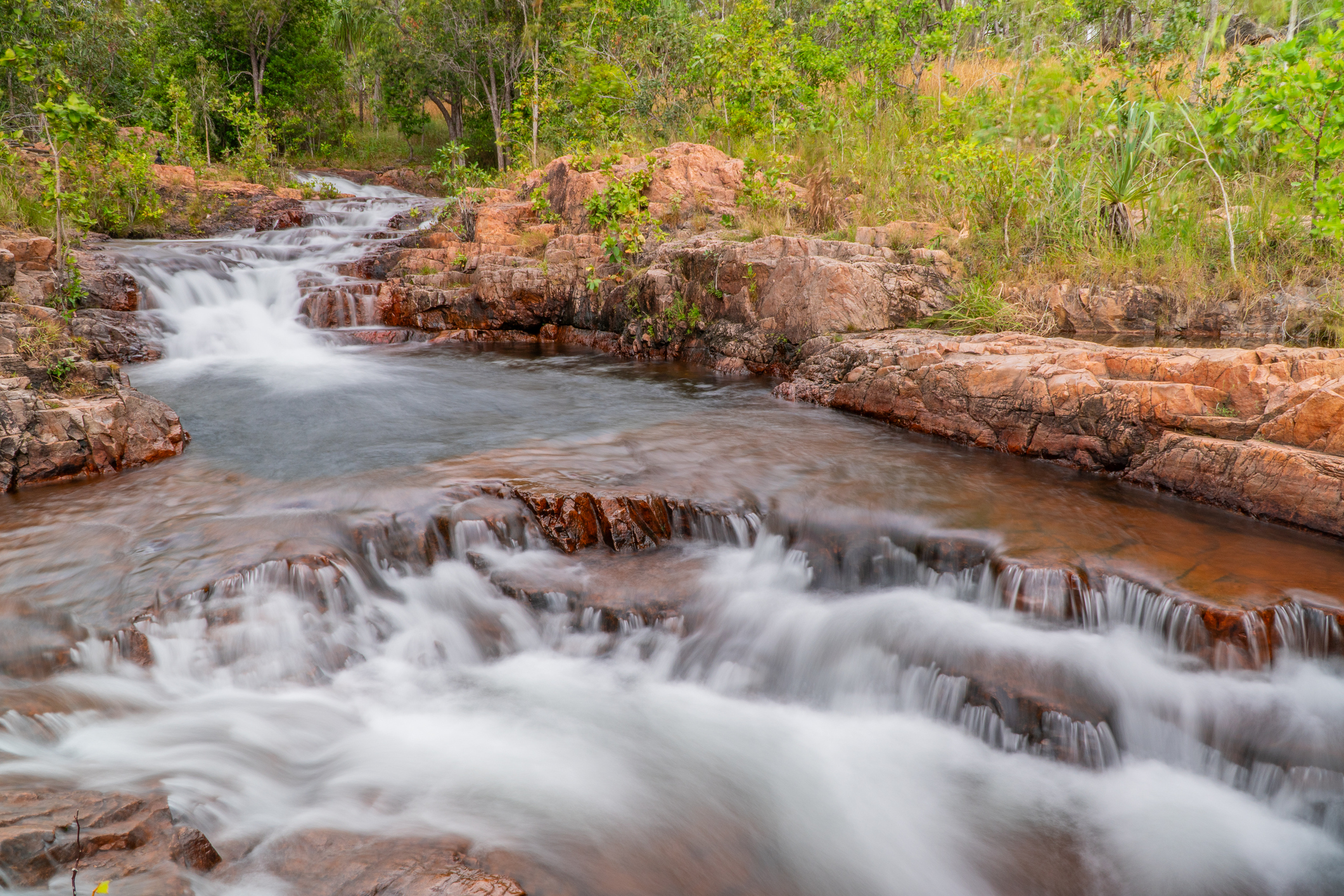
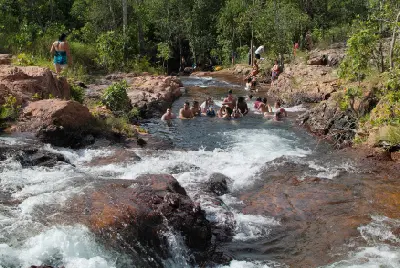
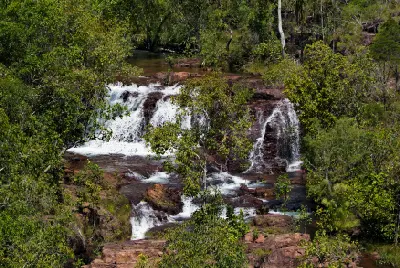
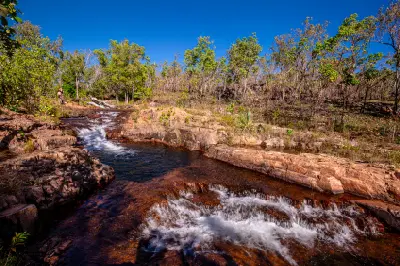
Water cascades over a series of reddish sandstone ledges into natural rock pools at Buley Rockhole in Litchfield National Park, one of the Northern Territory's popular freshwater swimming destinations.
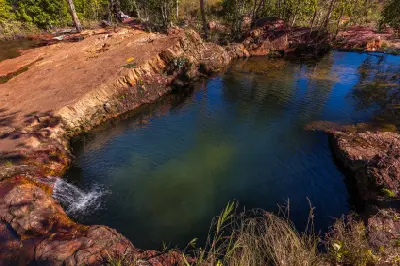
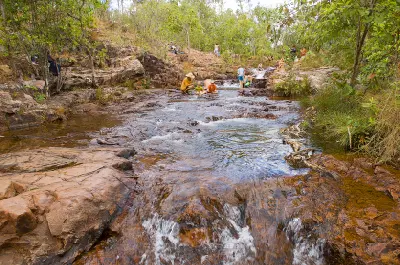
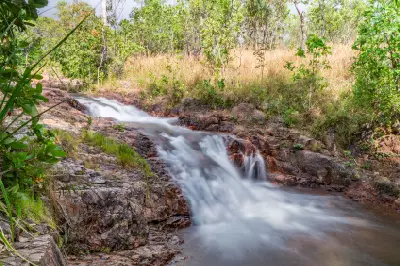
Buley Rockhole is a series of natural rock pools and small cascades along Florence Creek in Litchfield National Park, Northern Territory. Water flows over weathered sandstone ledges between interconnected pools, surrounded by tropical woodland and low vegetation. The stepped cascades, clear pools and textured rock formations provide opportunities for landscape, water and long-exposure photography.
-13.11283, 130.78580
Gallery
Quick Facts
Access
Short Walk
5–15 min
Elevation Gain
10 m
Best Light
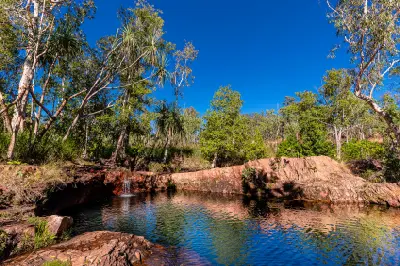
Soft light reduces glare on wet sandstone and balances bright flowing water against shaded pools, while calm sections can reflect surrounding vegetation.
Why This Light
Season
Seasonally Distinct
Summer brings monsoon rainfall, stronger cascades and higher water levels across the rock pools, with greener vegetation along Florence Creek. Winter brings gentler flows, more exposed sandstone ledges and clearer pools, while the surrounding woodland becomes progressively drier.
Crowds
Often Busy
Restrictions
Buley Rockhole is reached by sealed road within Litchfield National Park, with parking close to the pools and a short walking path providing access to several cascades. Rocks can be extremely slippery, particularly after rainfall, and strong currents may make swimming unsafe during periods of high flow. Swimming is permitted only when the site is officially open, with seasonal closures possible during the wet season. Visitors should follow park signage and avoid entering fast-moving water.