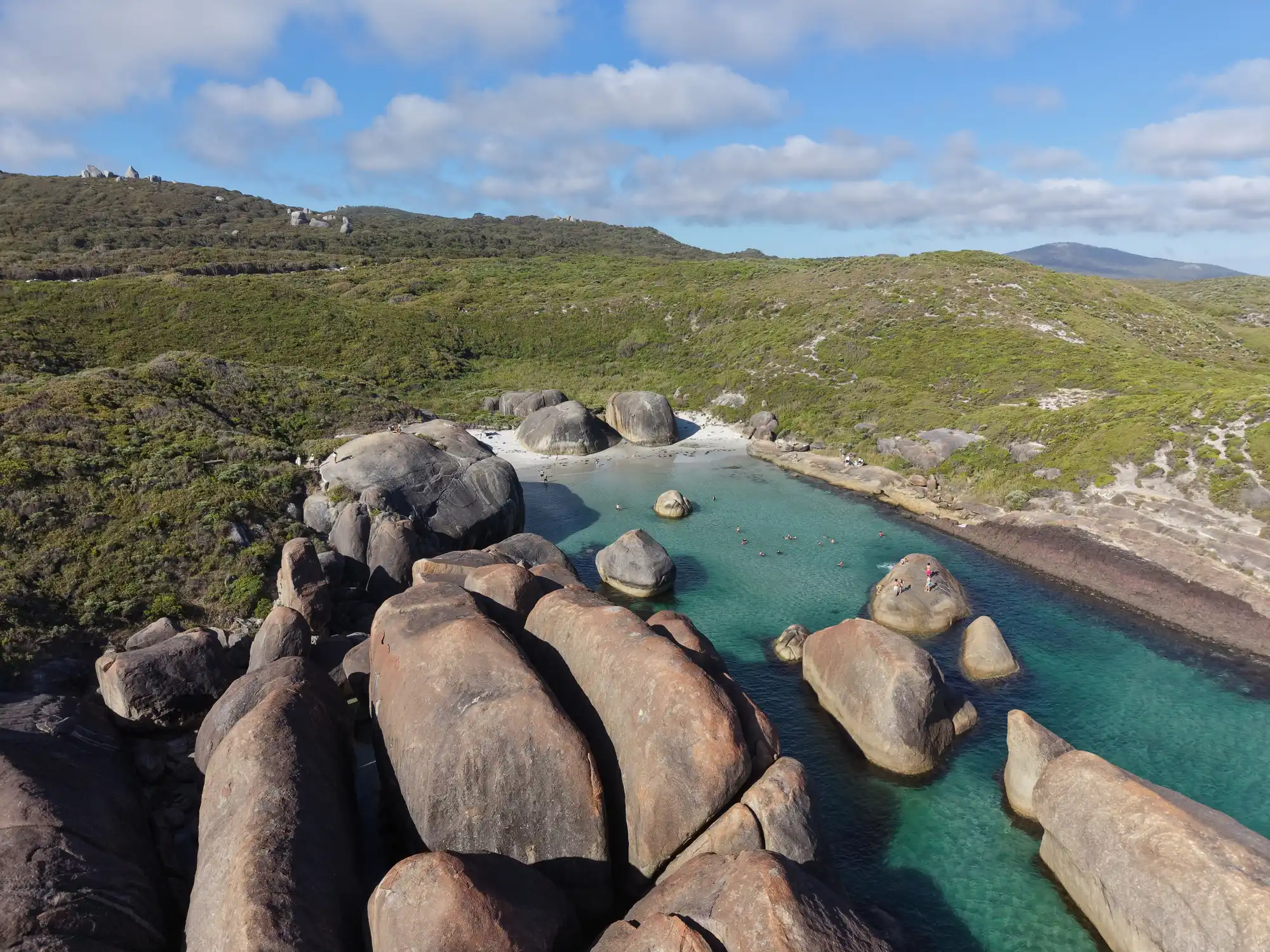
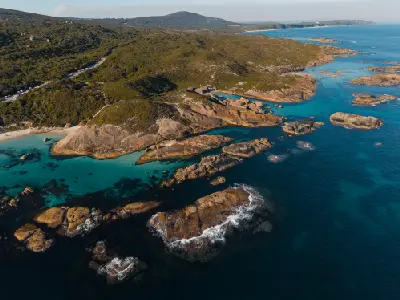
Aerial view of turquoise water, white sand, and massive boulders at Elephant Rocks in William Bay National Park, Western Australia, Australia.
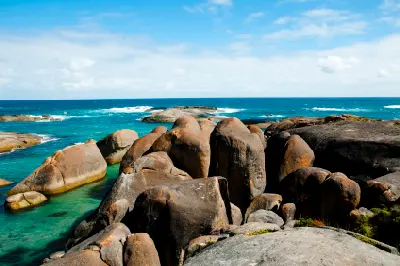
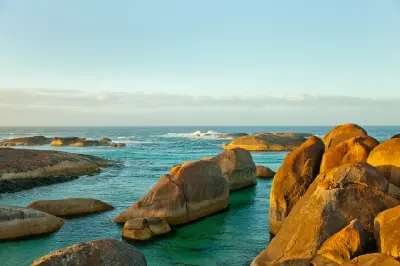
Elephant Rocks is a coastal granite formation in William Bay National Park, about 15 km west of Denmark in Western Australia’s Great Southern region. Large rounded granite boulders extend around a sheltered cove, with a strip of darker dolerite along the eastern side of the bay. The combination of rounded rock forms, sheltered water, coastal vegetation, and open Southern Ocean views provide varied landscape and coastal photography opportunities.
-35.02628, 117.23767
Gallery

Quick Facts
Access
Short Walk
5–15 min
Elevation Gain
20 m
Best Light
Low-angle light reveals texture and form across the granite, while overcast conditions reduce contrast between rocks, water, and darker coastal vegetation.
Why This Light
Season
Seasonally Distinct
Summer generally brings drier coastal vegetation, clearer conditions and stronger contrast between the pale granite, sheltered water, and surrounding vegetation. Winter brings wetter conditions, more variable cloud and swell, while spring adds flowering coastal vegetation across the wider William Bay area.
Crowds
Busy Sunrise/Sunset
Restrictions
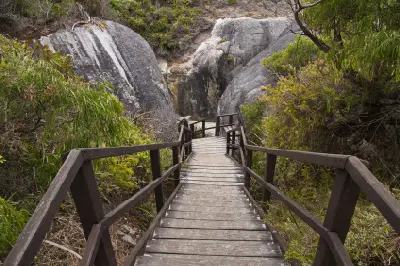
William Bay National Park currently has no entry fee and does not allow pets. Elephant Rocks is accessed by road from Denmark via South Coast Highway and William Bay Road, with parking near the site. A short trail leads from the parking area to a lookout before descending between the granite boulders to the sheltered cove. The coast outside sheltered areas can have strong currents, large swells, and slippery rocks. Current DBCA works at William Bay National Park may result in temporary path closures and changed access routes, so check park alerts before visiting.