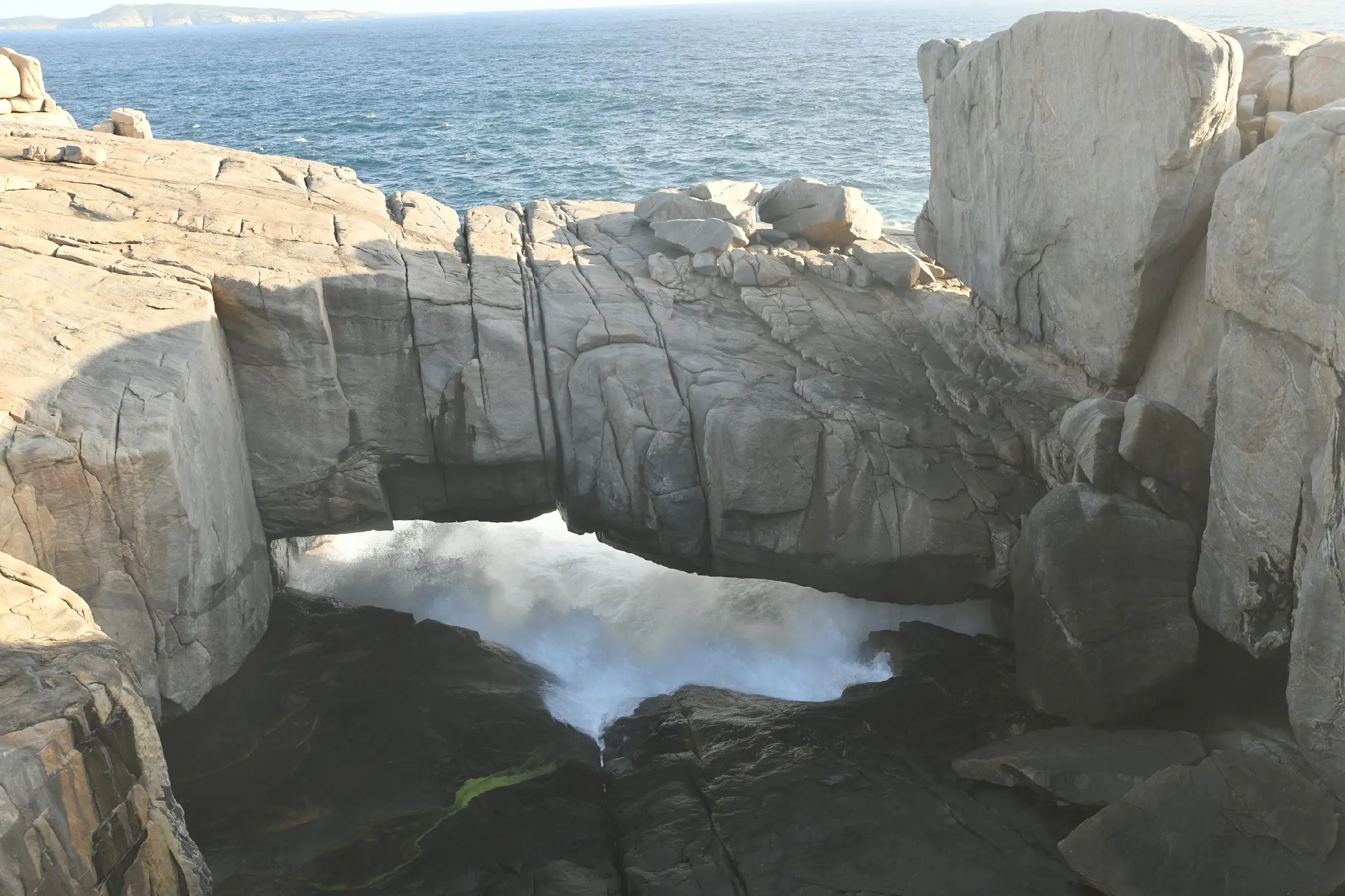
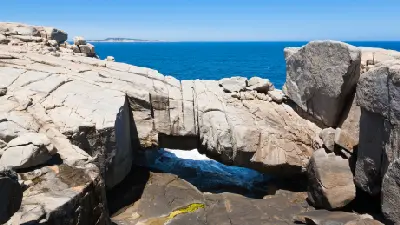
Natural Bridge spans a wave-cut opening in the granite coast of Torndirrup National Park, where Southern Ocean swells surge beneath the weathered rock formation.
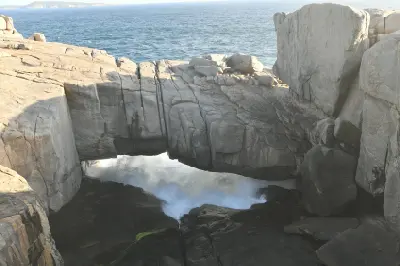
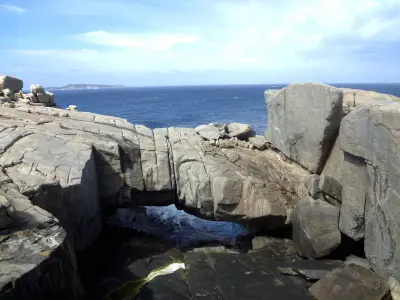
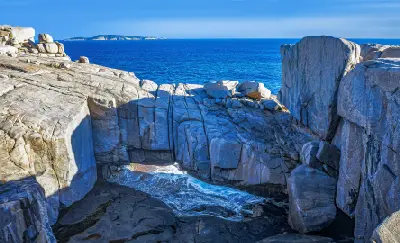
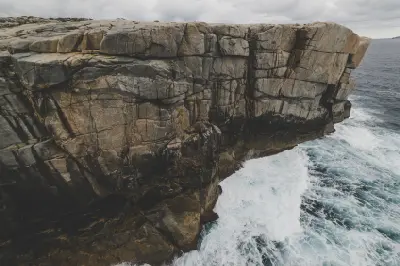
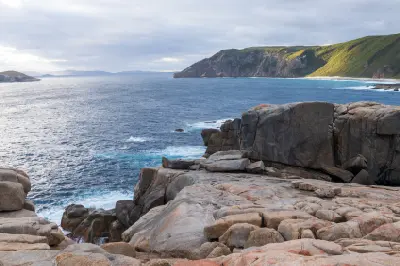
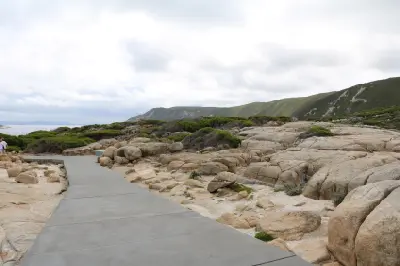
Natural Bridge is a granite rock formation on the exposed Southern Ocean coast within Torndirrup National Park near Albany. Erosion has opened a large arch through the coastal granite, with waves surging beneath the formation and steep rock platforms extending around the surrounding headland. The natural arch, textured granite and powerful ocean setting provide opportunities for coastal, geological and long-exposure photography.
-35.11776, 117.89168
Gallery
Quick Facts
Access
Short Walk
5–15 min
Elevation Gain
20 m
Best Light
Low-angle light reveals the shape and coarse texture of the granite arch while adding depth across the surrounding cliffs and rock platforms.
Why This Light
Season
Seasonally Distinct
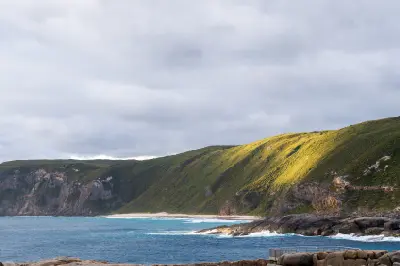
Summer brings drier coastal vegetation, clearer skies and generally calmer ocean conditions around the granite headland. Winter brings greener vegetation, larger Southern Ocean swells and more changeable skies, with stronger wave action around the arch and surrounding cliffs.
Crowds
Often Busy
Restrictions
Natural Bridge is reached by sealed road within Torndirrup National Park, with parking and an established walking path leading to the viewing area. A national park entry fee applies. The coastline is highly exposed, with large Southern Ocean swells and potentially dangerous conditions around cliff edges and lower rock platforms. Visitors should remain on designated paths and viewing areas and observe current park warnings.