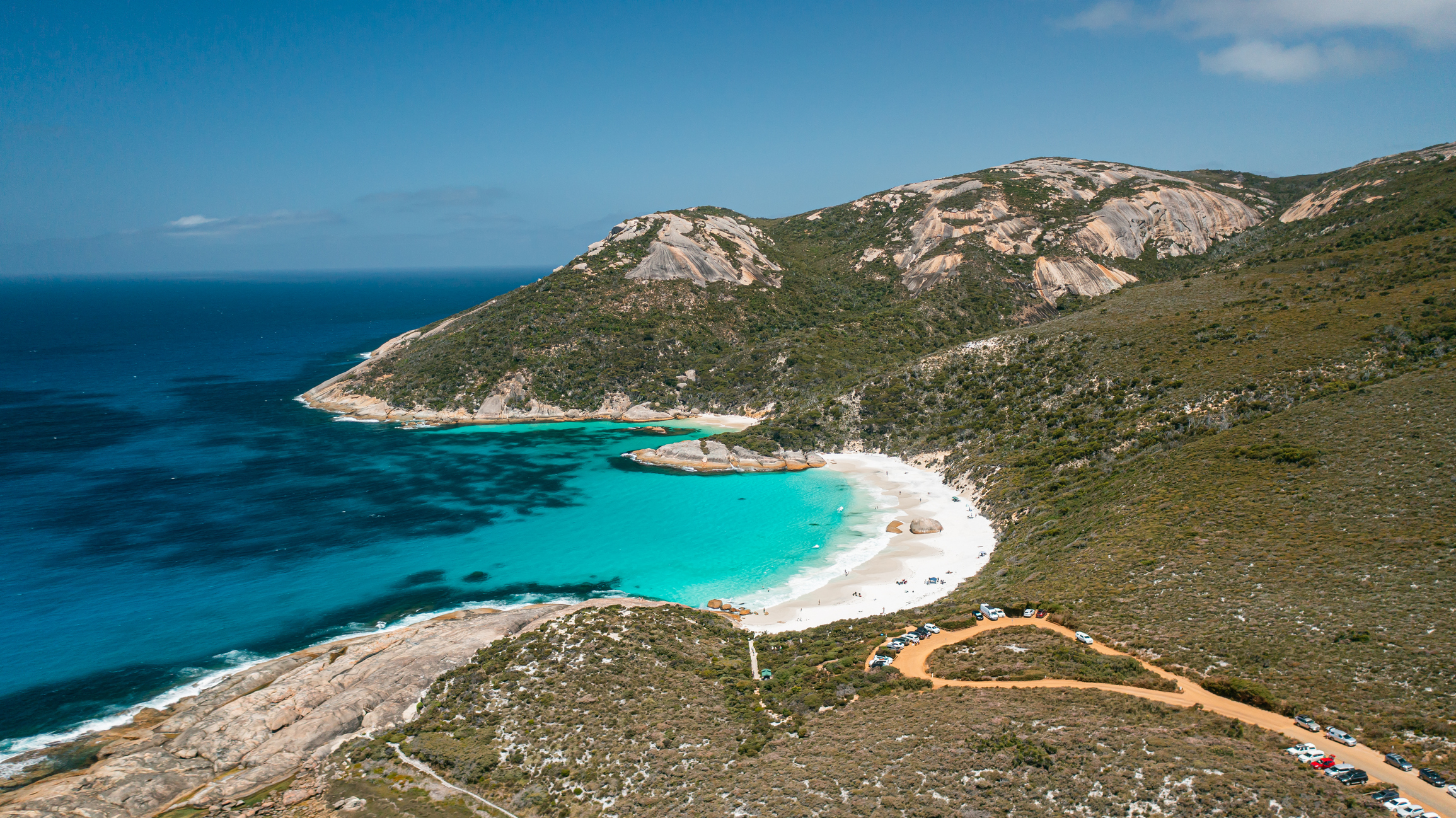
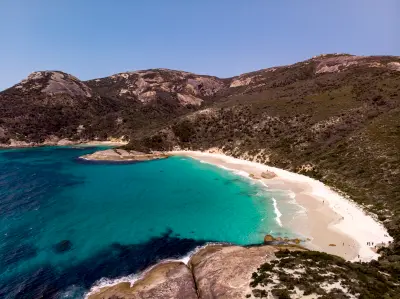
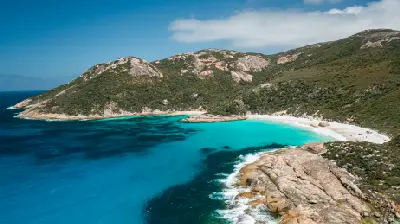
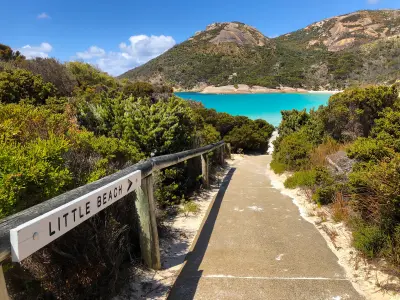
Little Beach forms a brilliant white crescent beneath the granite hills of Two Peoples Bay Nature Reserve, with turquoise shallows opening into the deep blue Southern Ocean.
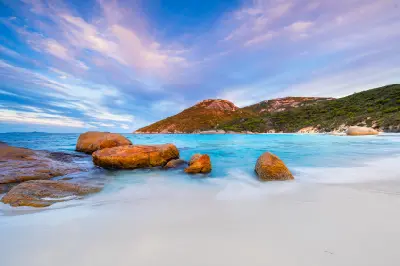
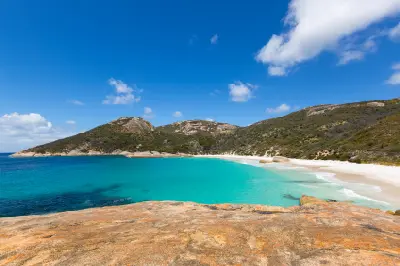
Little Beach is a sheltered white-sand beach within Two Peoples Bay Nature Reserve east of Albany, enclosed by granite headlands and rounded boulders. A short path descends from the visitor area to pale sand and clear turquoise water, with granite formations extending into the bay at either end. The compact shoreline, coloured water and sculpted granite provide opportunities for coastal, abstract and long-exposure photography.
-34.97407, 118.19577
Gallery
Quick Facts
Access
Short Walk
5–15 min
Elevation Gain
20 m
Best Light
Low-angle light reveals texture across the granite and pale sand, while calm conditions strengthen colour and reflections in the sheltered shallows.
Why This Light
Season
Seasonally Distinct
Summer brings brighter turquoise water, drier coastal vegetation and stronger colour contrast between the white sand and surrounding granite. Winter brings greener vegetation, larger swells and more changeable skies, while the sheltered bay and granite formations remain visually prominent.
Crowds
Often Busy
Restrictions
Little Beach is reached by sealed road through Two Peoples Bay Nature Reserve, with parking above the beach and a short walking route descending to the shoreline. Access includes steps and uneven surfaces near the beach. Granite rocks can become slippery when wet, and swimming and shoreline conditions vary with swell, wind and weather. Temporary reserve closures or changed access conditions should be checked before travelling.