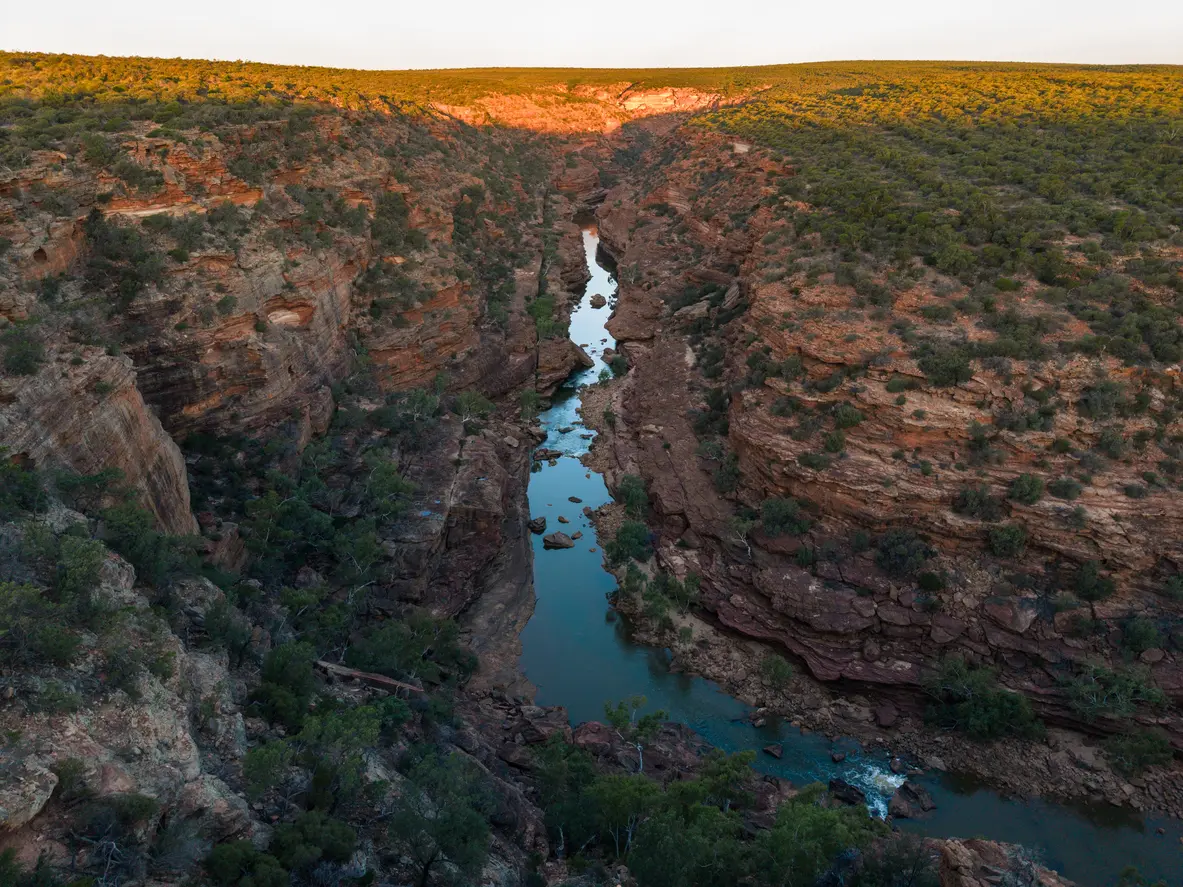
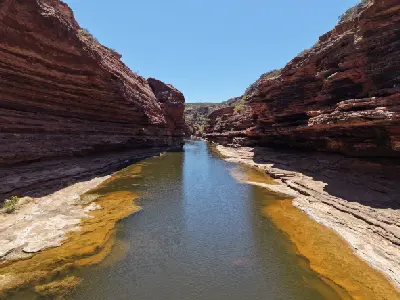
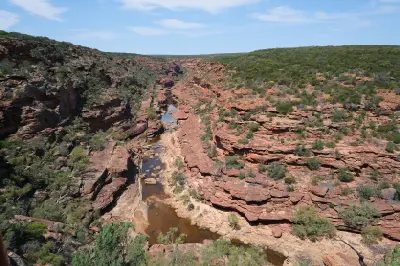
The Murchison River winding through the deep red-rock gorge at Z Bend in Kalbarri National Park, Western Australia.
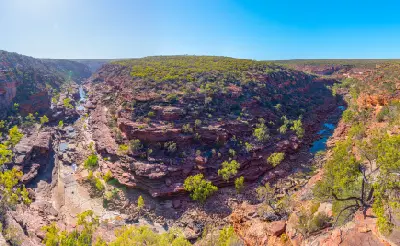
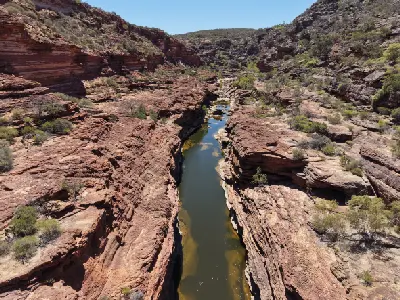
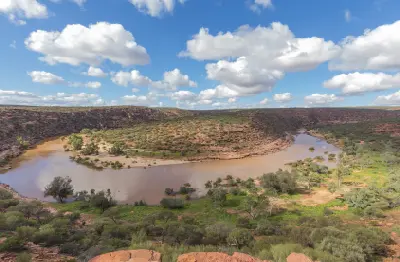
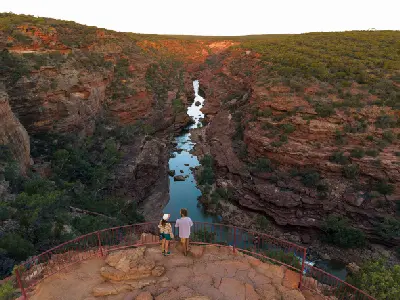
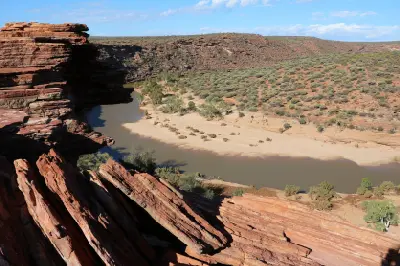
Z Bend is a deeply incised section of the Murchison River Gorge in Kalbarri National Park, named for the sharp bends made by the river through the sandstone landscape. A clifftop lookout overlooks the narrow gorge, exposed rock walls and river far below, with walking routes descending toward the gorge floor. The winding river, layered sandstone and elevated viewpoints provide opportunities for landscape and geological photography.
-27.65355, 114.45669
Gallery
Quick Facts
Access
Short Walk
15–45 min
Elevation Gain
30 m
Best Light
Low-angle light reveals the layered sandstone and creates shadow across the deeply incised gorge, strengthening the shape of the river corridor.
Why This Light
Season
Seasonally Distinct
Summer brings intense heat, dry vegetation and strong red and ochre tones across the exposed gorge walls. Winter brings cooler conditions, greener vegetation and seasonal wildflowers across the surrounding plateau and river corridor.
Crowds
Often Busy
Restrictions
Z Bend is reached by road within Kalbarri National Park, followed by a short walk from the parking area to the clifftop lookout. A national park entry fee applies. Longer trails descend into the gorge and involve substantially more difficult terrain than the main lookout walk. Extreme heat can make gorge walks dangerous during warmer periods, so current park conditions, closures and heat warnings should be checked before travel.