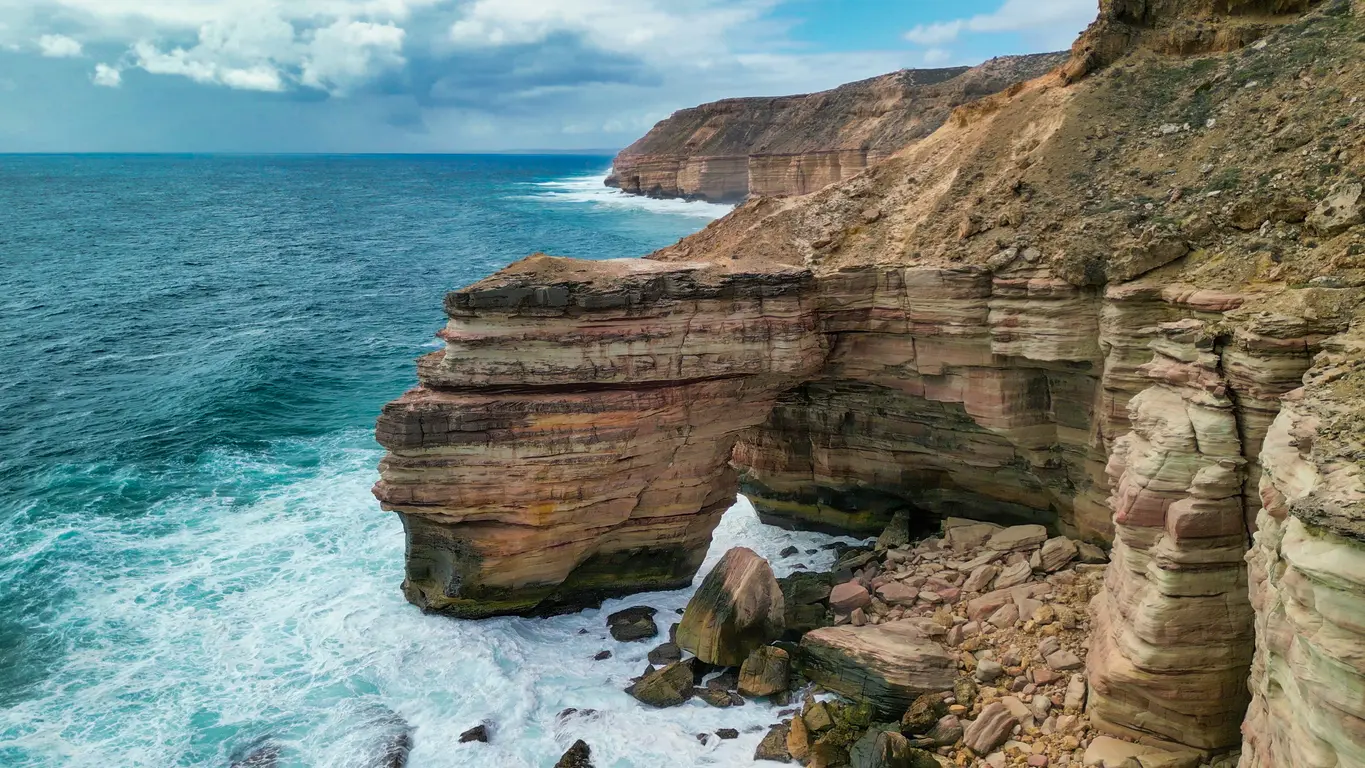
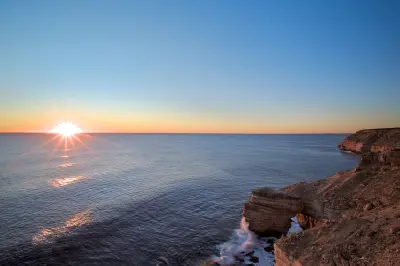
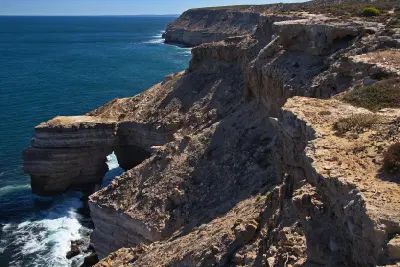
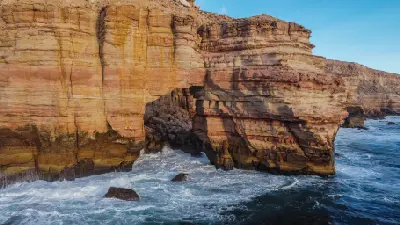
Natural Bridge rises above the Indian Ocean beneath the layered coastal cliffs of Kalbarri National Park, Western Australia.
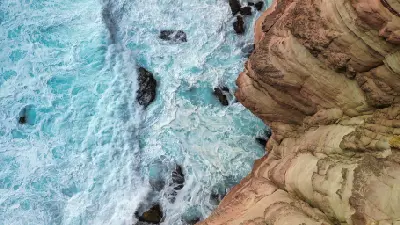
Natural Bridge is a coastal rock arch south of Kalbarri, formed where erosion has cut through the layered sandstone cliffs above the Indian Ocean. A clifftop lookout provides views of the arch, surrounding sea cliffs and waves breaking against the rock platforms below. The sculpted arch, horizontal sandstone layers and exposed ocean setting provide opportunities for coastal, geological and long-exposure photography.
-27.82885, 114.11084
Gallery
Quick Facts
Access
Short Walk
5–15 min
Elevation Gain
10 m
Best Light
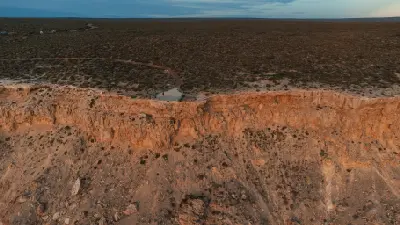
Low-angle light defines the layered sandstone and arch, while late light adds texture and separation across the surrounding cliffs and rock platforms.
Why This Light
Season
Seasonally Distinct
Summer brings dry coastal vegetation, intense light and clearer blue tones across the ocean and exposed sandstone cliffs. Winter brings greener vegetation, larger swells and more changeable skies, with seasonal wildflowers appearing along the coast.
Crowds
Often Busy
Restrictions
Natural Bridge lies within Kalbarri National Park and is reached by sealed road followed by a short walk to designated clifftop viewing areas. A national park entry fee applies. The coastline has high, exposed cliffs and powerful ocean conditions, so visitors should remain behind barriers and on marked paths. Current park access and weather conditions should be checked before travel.