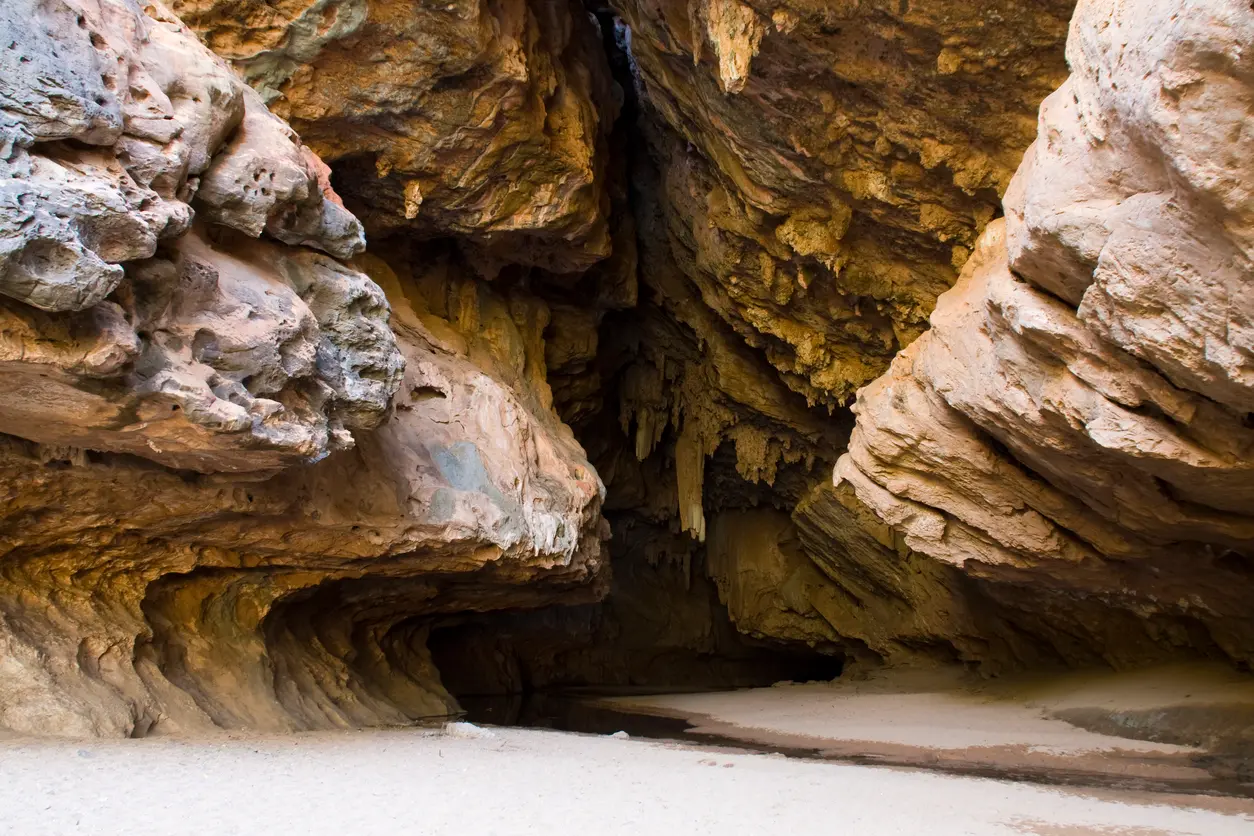
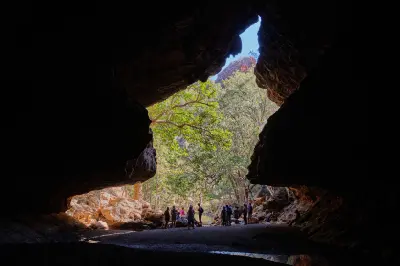
Entrance to Tunnel Creek in the Kimberley, Western Australia.
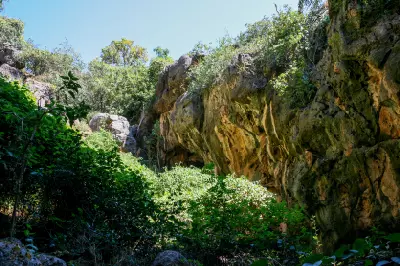
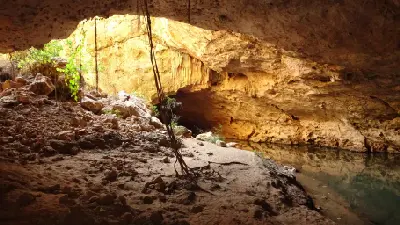
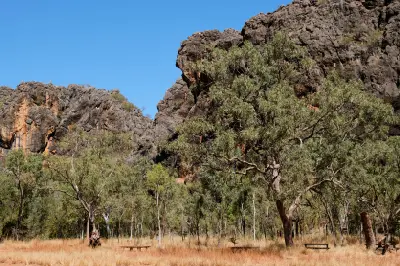
Tunnel Creek is a natural limestone tunnel through the Napier Range in the western Kimberley, formed where a creek passes beneath the ancient Devonian reef. Visitors walk through a dark cavern containing pools, limestone formations and openings where daylight reaches the creek bed. The combination of underground water, textured rock and shafts of natural light provides distinctive opportunities for cave and geological photography.
-17.60765, 125.14569
Gallery

Quick Facts
Access
Moderate Hike
45–90 min
Elevation Gain
20 m
Best Light
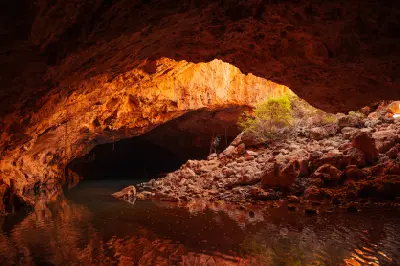
Daylight entering through cave openings creates pools of illumination against the dark limestone interior, with reflections possible across calmer water.
Why This Light
Season
Seasonally Distinct
Summer brings higher water levels, increased creek flow and wetter limestone through the Kimberley wet season. Winter brings lower water levels, drier rock surfaces and stronger contrasts between the dark tunnel interior and sunlit openings.
Crowds
Often Busy
Restrictions
Tunnel Creek is reached by unsealed roads through the western Kimberley, with access generally concentrated in the dry season. The route enters the cave over uneven rocks and continues through shallow water and dark sections requiring a torch or headlamp. Water depth and footing vary with seasonal conditions, and rocks can be slippery. Current road, park and cave conditions should be checked before travel.