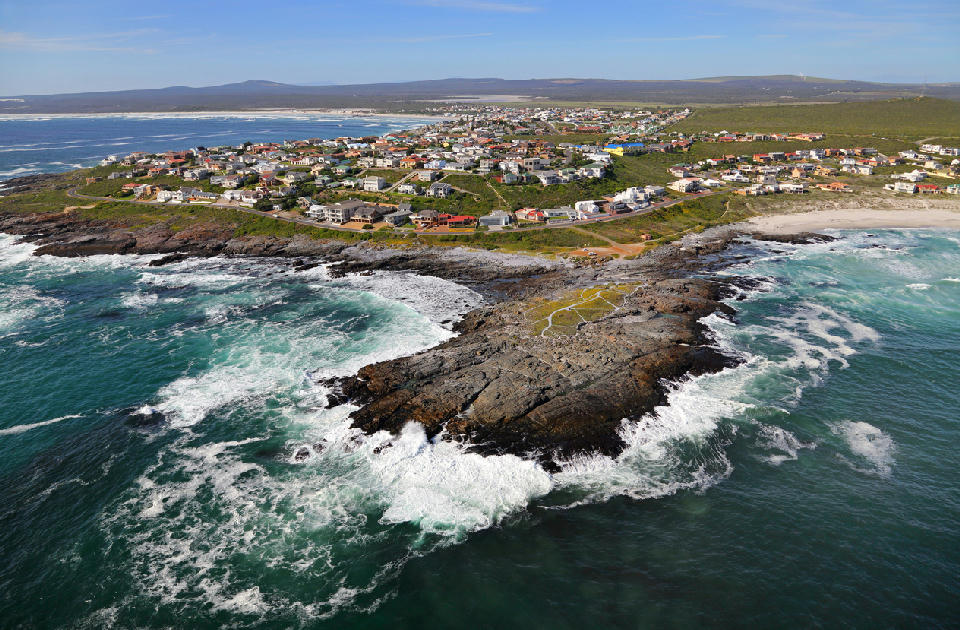
Aerial view of Yzerfontein on South Africa's West Coast, where granite headlands, sandy beaches and Atlantic Ocean scenery define the shoreline.
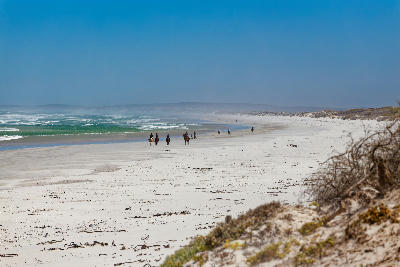
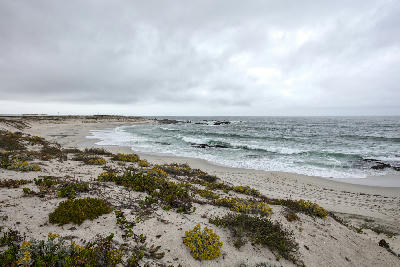
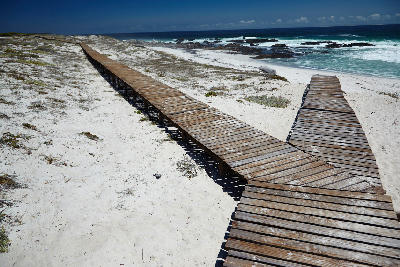
Yzerfontein and Sixteen Mile Beach form one of the most expansive coastal landscapes on South Africa's West Coast. The region is defined by long uninterrupted beaches, rolling dune systems, exposed Atlantic shorelines, and open coastal vistas stretching across a landscape shaped by wind, sand, and ocean currents. The landscape extends from the rocky shoreline and coastal settlement of Yzerfontein northwards along Sixteen Mile Beach, one of the longest continuous beaches in South Africa. Extensive dune fields, sandy coastal plains, low fynbos-covered ridges, and broad ocean horizons create a landscape characterised by openness, simplicity, and scale. Unlike the sheltered lagoon environments further north or the fishing villages of the central West Coast, this region is dominated by uninterrupted natural coastal scenery. The interaction between ocean, beach, dunes, and coastal vegetation creates a distinctly wild coastal environment where the landscape itself remains the primary visual subject.
Gallery
Key POIs in Yzerfontein & Sixteen Mile Beach
Nearby Places
View all on mapGeelbek
landmark — 15.6 km
West Coast
Langebaan Lagoon
water feature — 21.3 km
West Coast
Kraalbaai
water feature — 23.5 km
West Coast
Seeberg Viewpoint
landmark — 23.8 km
West Coast
West Coast National Park & Langebaan Lagoon
area district — 24.8 km
West Coast
Postberg Wildflower Reserve
landmark — 27.7 km
West Coast
Club Mykonos
landmark — 32.7 km
West Coast
Robben Island
landmark — 56.9 km
Cape Peninsula
Overview
The region is structured around a continuous coastal system extending along the Atlantic shoreline between Yzerfontein and the southern reaches of the West Coast National Park. Broad sandy beaches form the dominant landscape feature, while low dune systems, rocky outcrops, and coastal vegetation provide texture and variation across the terrain. The coastline remains largely undeveloped outside the settlement areas, reinforcing the strong sense of space and isolation. Marine influences shape the character of the region throughout the year. Atlantic swells, coastal winds, sea mist, and changing weather systems continually alter the appearance of the shoreline. Seasonal wildflowers may transform sections of the surrounding coastal plain during spring, while winter storms create dramatic seascapes and atmospheric coastal conditions. Photographically, the region is defined by scale, simplicity, and coastal atmosphere. Long beaches create powerful leading lines and minimalist compositions, while dune systems, textured shoreline formations, and changing ocean conditions provide structure within wider scenes. Light plays a major role, with sunrise, sunset, sea mist, and shifting weather producing constantly changing colour, texture, and mood along the coastline.
Key photography subjects
- Sixteen Mile Beach and uninterrupted coastal horizons
- Rolling dune systems and coastal vegetation
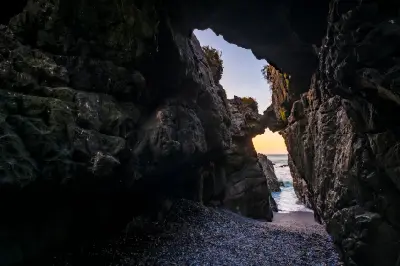
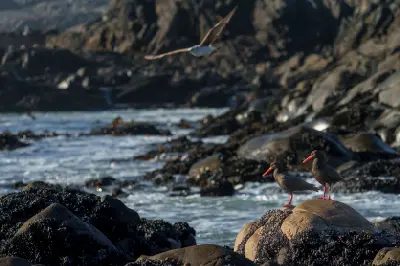
- Rocky shoreline formations and granite outcrops
- Atlantic Ocean swells, surf, and wave patterns
- Minimalist beach and seascape compositions
- Seasonal wildflowers across coastal plains
- Sea mist, coastal weather, and atmospheric light
Workshops in Yzerfontein & Sixteen Mile Beach
No upcoming workshops scheduled for Yzerfontein & Sixteen Mile Beach at this time.
Check back soon or explore other destinations.