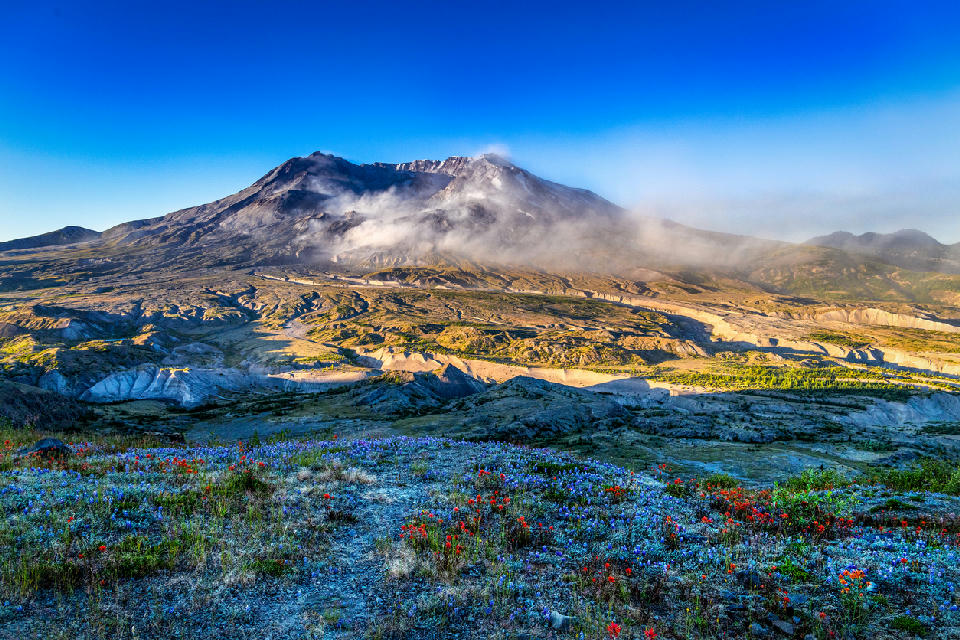
Mount St. Helens at sunrise, with mist drifting across the volcanic landscape and wildflowers in the foreground.
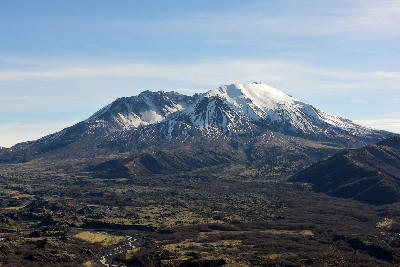
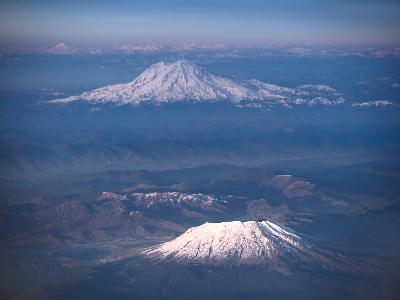
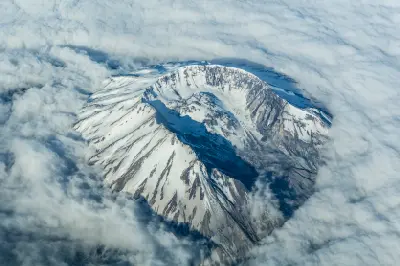
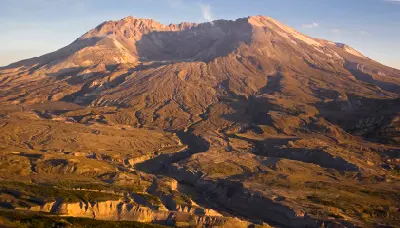
Mount St. Helens is an active stratovolcano defined by its truncated summit and open crater formed by the 1980 eruption. The mountain presents an asymmetrical profile with exposed rock, debris fields, and surrounding blast zone. The composition resolves through the relationship between the altered summit, surrounding terrain, and the broader volcanic landscape.
46.19139, -122.19553
Gallery
Quick Facts
Access
Roadside / Step-out
0–5 min
Elevation Gain
5 m
Best Light
Light works best when low-angle light strikes the crater and ridgelines from the side because it defines the truncated summit and increases texture across the l
Why This Light
Season
Seasonally Distinct
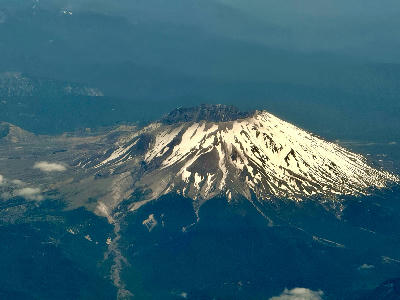
Summer has clearer visibility with exposed terrain and defined crater structure. Winter introduces snow coverage that simplifies the landscape and reduces visible detail across the blast zone.
Crowds
Often Busy
Restrictions
The mountain is viewed from designated viewpoints such as Johnston Ridge and surrounding areas; access varies by road conditions and seasonal closures.