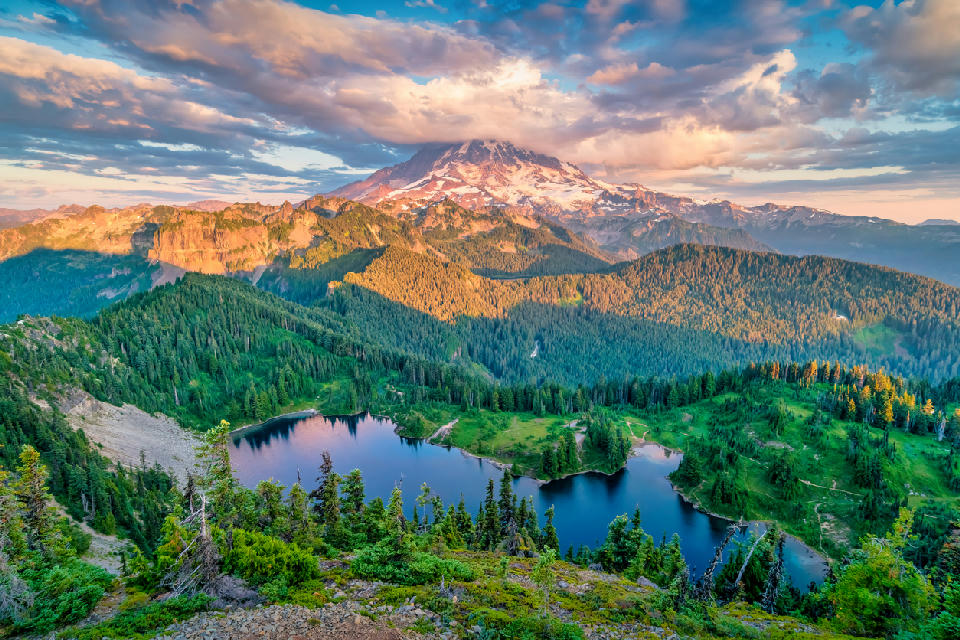
Mount Rainier above Eunice Lake from Tolmie Peak at sunset, Washington
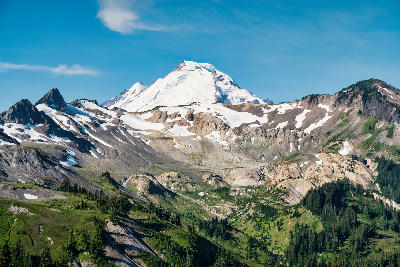
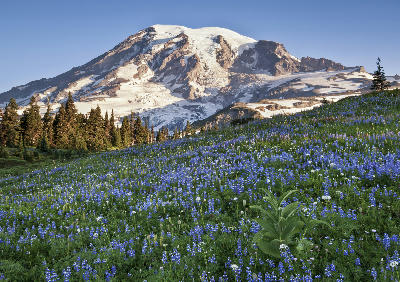
The Washington Cascades is a mountain region in the Pacific Northwest defined by volcanic peaks, glaciated terrain, and forested valleys extending across the Cascade Range. The landscape is shaped by volcanic activity and glacial processes, where prominent stratovolcanoes rise above surrounding forest systems. Its spatial identity is defined by vertical prominence and separation between dominant peaks and lower terrain. The terrain transitions between forested lowlands, alpine basins, volcanic slopes, and glaciated summits. Elevation rises from dense woodland into exposed alpine environments, with peaks forming distinct vertical structures above the surrounding landscape. Seasonal conditions influence snow cover, glacier visibility, and atmospheric clarity. Light interacts strongly with volcanic forms, defining shape and separation between peaks and surrounding terrain.
Gallery
Key POIs in Washington Cascades
Artist Point
landmark — 230.0 km
Johnston Ridge Observatory
landmark — 66.8 km
Mount Baker
landmark — 222.3 km
Mount Rainier
landmark — 8.3 km
Mount Shuksan
landmark — 228.5 km
Mount St. Helens
landmark — 74.0 km
Paradise
landmark — 0.9 km
Reflection Lakes
water feature — 1.2 km
Sunrise
landmark — 16.8 km
Tipsoo Lake
water feature — 19.7 km
Overview
The Washington Cascades are structured around a series of volcanic peaks distributed across the mountain range. Each peak functions as an individual mass rising above forested terrain, separated by valleys and lower ridgelines. Unlike continuous alpine systems, the landscape operates through vertical prominence. Peaks such as Mount Rainier and Mount Baker dominate their surroundings, creating compositions centred around singular elevated forms. The visual structure is defined by isolation within elevation. Volcanic peaks rise clearly above surrounding terrain, while forested valleys provide foreground and midground layers leading toward dominant summits.
Key photography subjects
- Volcanic peaks rising above forested terrain
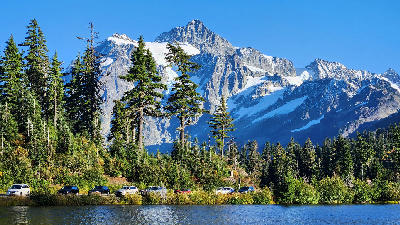
- Glaciated summits forming dominant vertical subjects
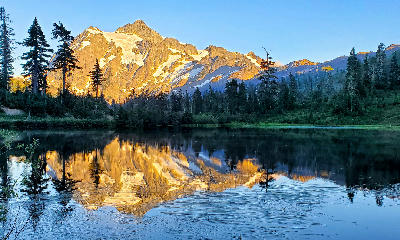
- Alpine lakes reflecting isolated mountain forms
- Forested foregrounds leading toward prominent peaks
- Snow-covered slopes defining mountain geometry
- Valley systems separating individual peaks
- Low cloud interacting with elevated volcanic forms
Workshops in Washington Cascades
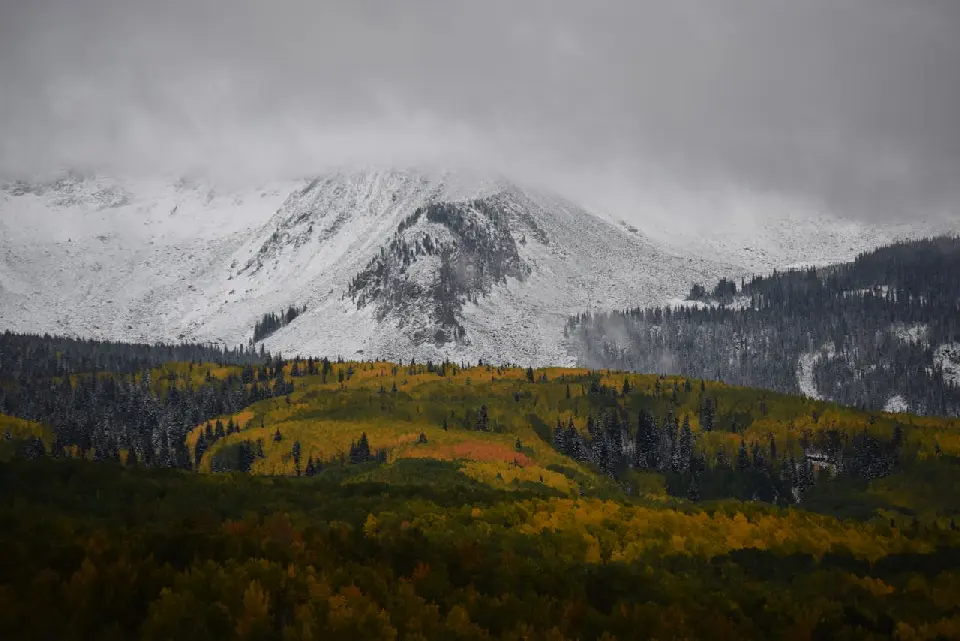
Colorado Fall Color Photography Art Retreat

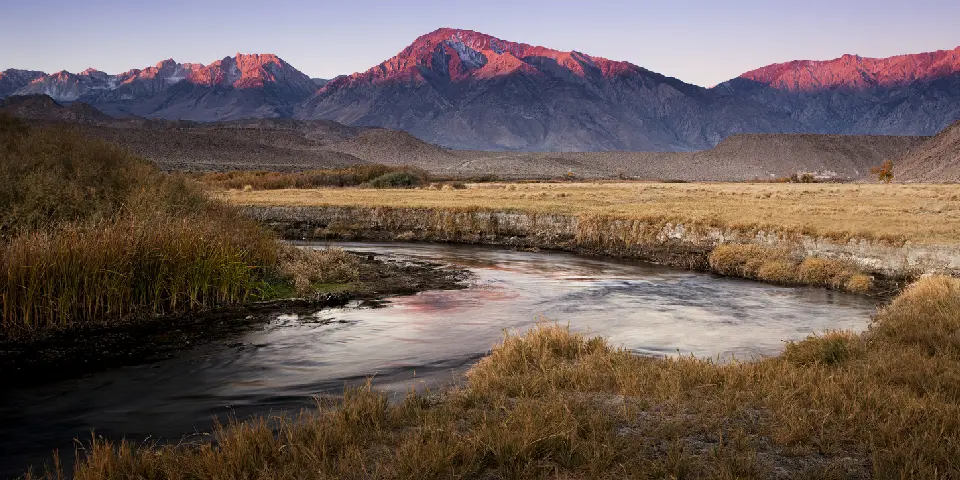
Autumn in Eastern Sierra

Oregon Coast Adventure Photography Workshop
Autumn in Utah Badlands