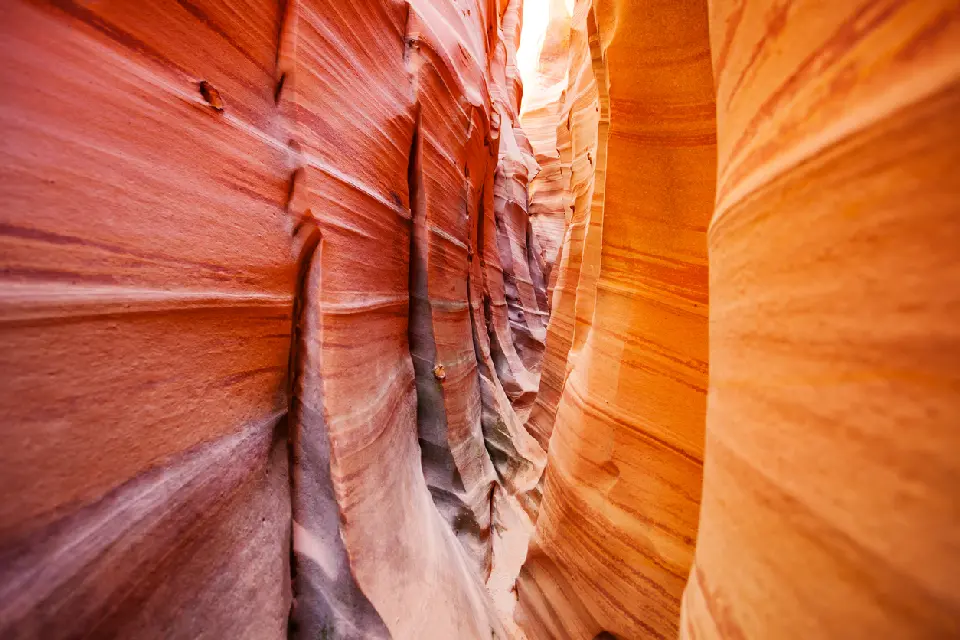
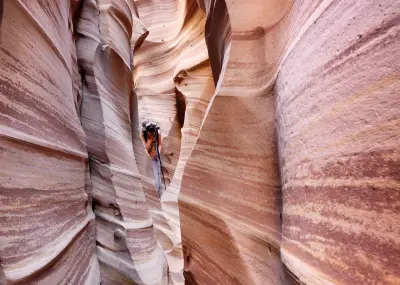
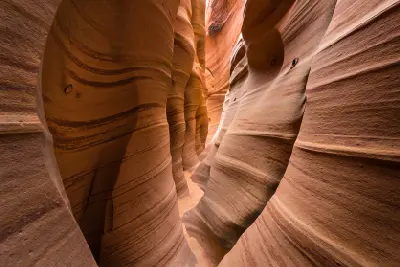
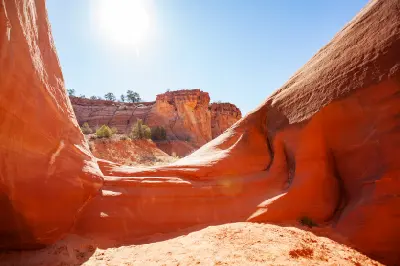
Striped sandstone walls inside Zebra Slot Canyon near Escalante, Utah, USA.
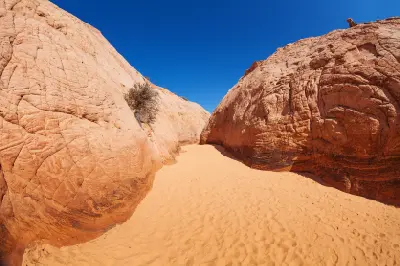
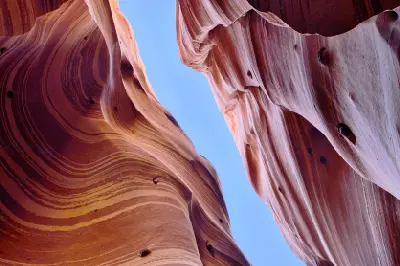
Zebra Slot Canyon is a narrow sandstone canyon in the Harris Wash area of Grand Staircase-Escalante in southern Utah. Its confined passages contain smooth walls marked by alternating bands of pink, red and pale sandstone, with sections narrowing considerably toward the interior. The striped rock patterns, curved surfaces and reflected light provide opportunities for abstract and geological photography.
37.66168, -111.41729
Gallery
Quick Facts
Access
Moderate Hike
90–180 min
Elevation Gain
120 m
Best Light
Reflected light reveals the striped sandstone and curved walls, while overhead light can penetrate farther into the narrow canyon around midday.
Why This Light
Season
Seasonally Distinct
Summer brings dry desert vegetation and warm sandstone colour, with storms occasionally producing runoff and water within the slot. Winter brings paler surrounding vegetation, lower-angle exterior light and occasional ice or lingering water inside the shaded canyon.
Crowds
Often Busy
Restrictions
The canyon is reached by an out-and-back hike from Hole-in-the-Rock Road, crossing open desert and following the Harris Wash drainage toward the slot. The narrowest sections may contain standing water and can become difficult to pass. Flash flooding is a serious risk in slot canyons, while rain can also make Hole-in-the-Rock Road difficult or impassable. Conditions should be checked before entering.