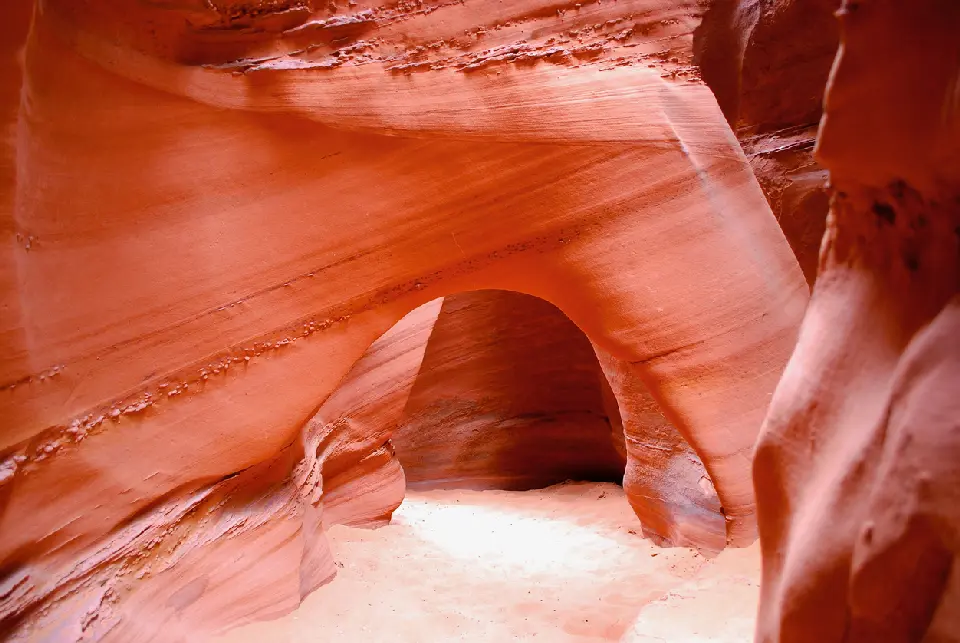
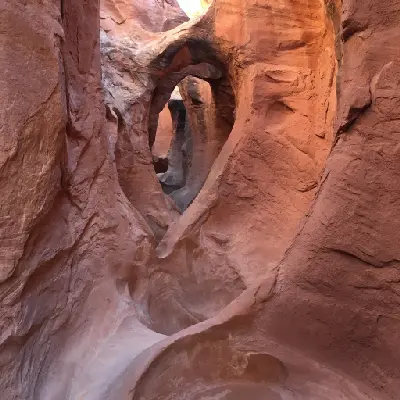
Natural sandstone arch in Peek-a-Boo Gulch, Grand Staircase-Escalante, Utah, USA.
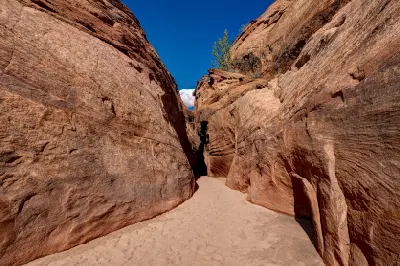
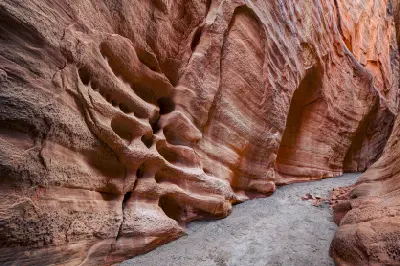
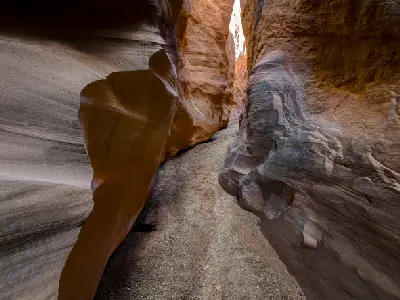
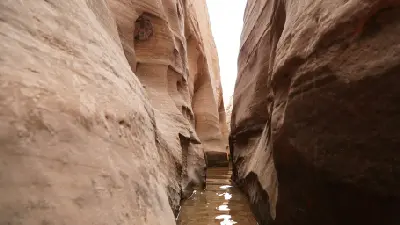
Peek-a-Boo and Spooky are narrow slot canyons in the Dry Fork area of Grand Staircase-Escalante, carved into Navajo sandstone by intermittent floodwater. The route passes through twisting passages, sculpted walls and sections narrow enough to require squeezing and scrambling. Reflected light, sandstone curves and confined compositions provide opportunities for abstract and geological photography.
37.48501, -111.21278
Gallery
Quick Facts
Access
Serious Hike
3+ hours
Elevation Gain
250 m
Best Light
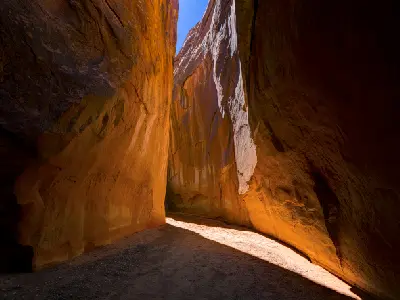
Overhead and reflected light reveals sandstone colour and curves within the slots, while softer conditions control contrast near canyon openings.
Why This Light
Season
Seasonally Distinct
Summer brings dry sandstone surfaces and strong reflected colour, with storm periods occasionally producing runoff and flash-flood conditions. Winter brings cooler-toned rock, lower-angle illumination and occasional snow or ice around exposed sections of the route.
Crowds
Often Busy
Restrictions
The canyons are normally reached from the Dry Fork trailhead via Hole-in-the-Rock Road, followed by a steep descent into the drainage. The combined route involves scrambling and extremely confined passages, particularly in Spooky. Road conditions can deteriorate after rain, and slot canyons carry serious flash-flood risk during storms. Current weather and road conditions should be checked before entering.