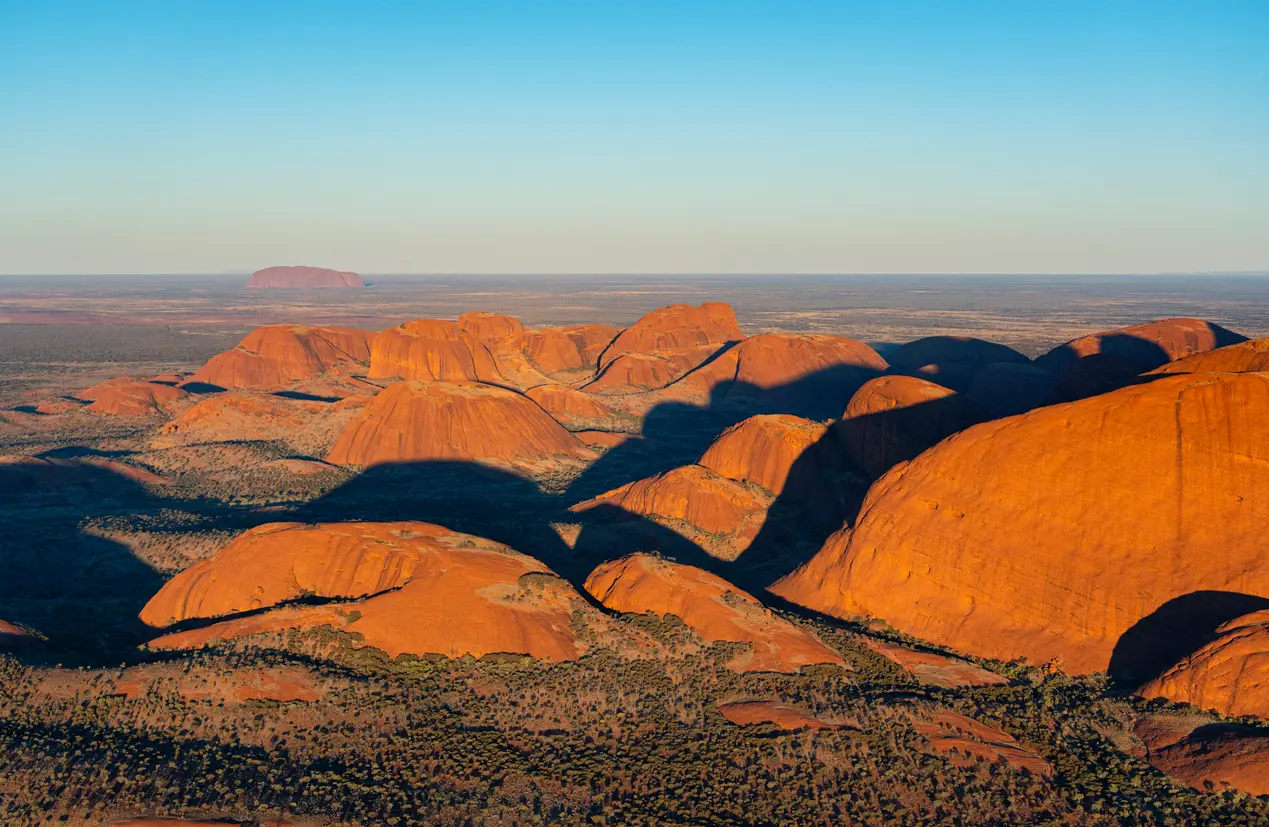
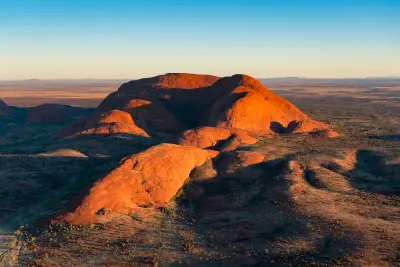
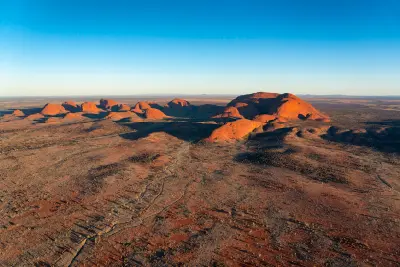
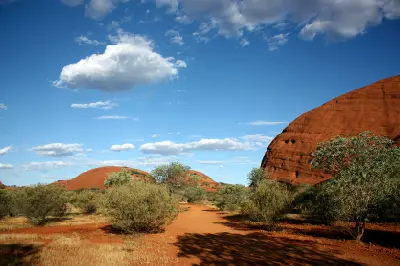
Evening light sweeps across the domes of Kata Tjuta, with Uluru visible on the distant horizon.
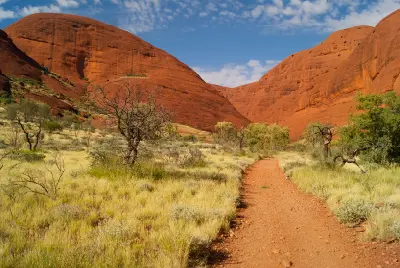
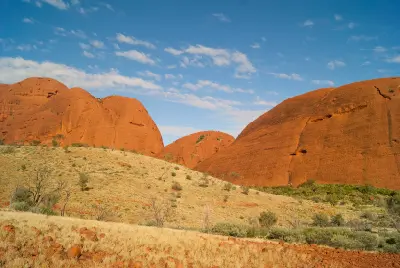
Kata Tjuta is a group of large sandstone domes rising from the desert plains west of Uluru within Uluru-Kata Tjuta National Park. The domes form deep valleys and narrow passages and are culturally significant to the Aṉangu people, the Traditional Owners of the land. Their clustered forms, changing light and relationship with the surrounding desert provide a different landscape character from nearby Uluru.
-25.29930, 130.74064
Gallery
Quick Facts
Access
Visitor Access
0–5 min
Elevation Gain
5 m
Best Light
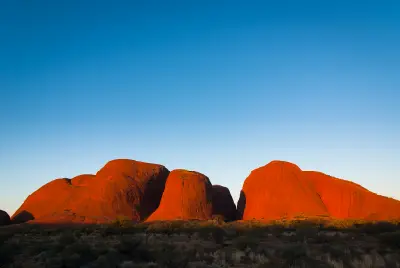
Low-angle light separates the individual domes and reveals their rounded relief, while open desert skies allow strong changes in colour and shadow.
Why This Light
Season
Seasonally Distinct
Summer brings stronger red and ochre tones across dry desert vegetation, with storm clouds occasionally adding contrast around the domes. Winter brings paler grasslands, clearer skies and softer desert colours around the rock formations.
Crowds
Often Busy
Restrictions
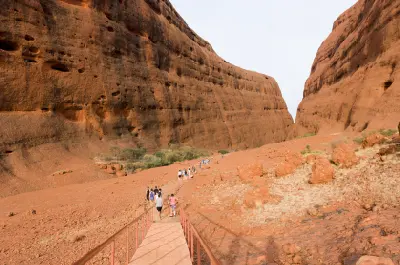
Kata Tjuta is reached by sealed road within Uluru-Kata Tjuta National Park, with parking at established viewing areas and trailheads. Park entry fees apply. The landscape is culturally significant to the Aṉangu people, and visitors should respect signs identifying culturally sensitive areas and photography restrictions. Walking access can be affected by extreme heat and other weather conditions.