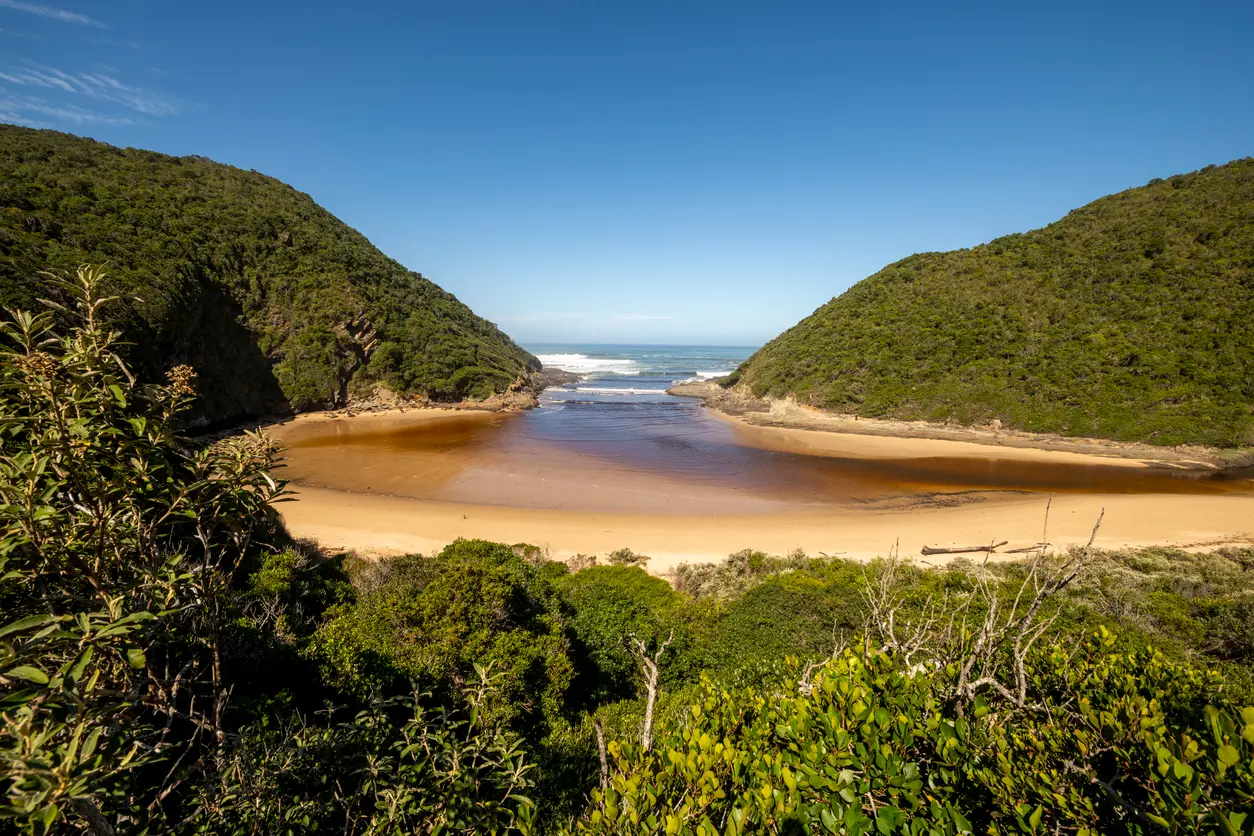
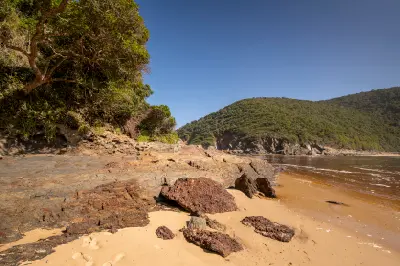
Salt River Mouth in Nature's Valley, where a forest-fringed river winds through coastal dunes before entering the Indian Ocean along the Garden Route.
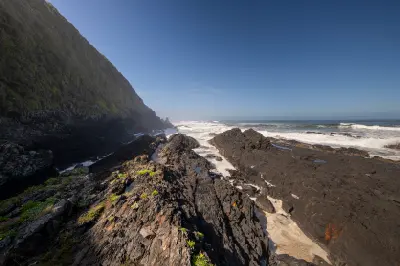
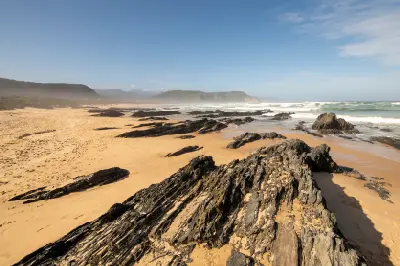
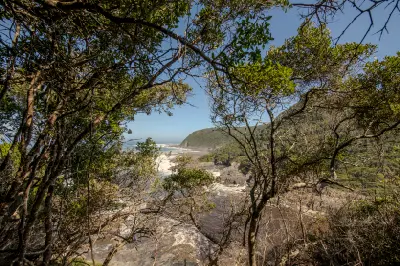
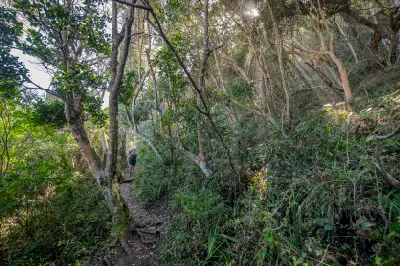
Salt River Mouth is a remote coastal river mouth located within the Tsitsikamma section of South Africa's Garden Route. Here the Salt River flows through a narrow gorge before entering the Indian Ocean, creating a dramatic landscape of rocky cliffs, rugged coastline, indigenous forest, and exposed shoreline. The combination of river, ocean, and steep coastal topography makes it one of the most distinctive natural features in the region.
-33.98725, 23.53476
Gallery
Quick Facts
Access
Moderate Hike
45–90 min
Elevation Gain
90 m
Best Light
Low-angle light enhances cliff textures, reveals coastal relief, and creates stronger separation between river, shoreline, and ocean.
Why This Light
Season
Year-Round Stable
Summer typically brings clearer visibility and calmer ocean conditions around the river mouth and surrounding coastline. Winter often introduces larger swells, changing weather systems, and more atmospheric conditions along the cliffs and shoreline.
Crowds
Usually Quiet
Restrictions
Access requires hiking and conditions may vary depending on weather, trail conditions, and river levels.