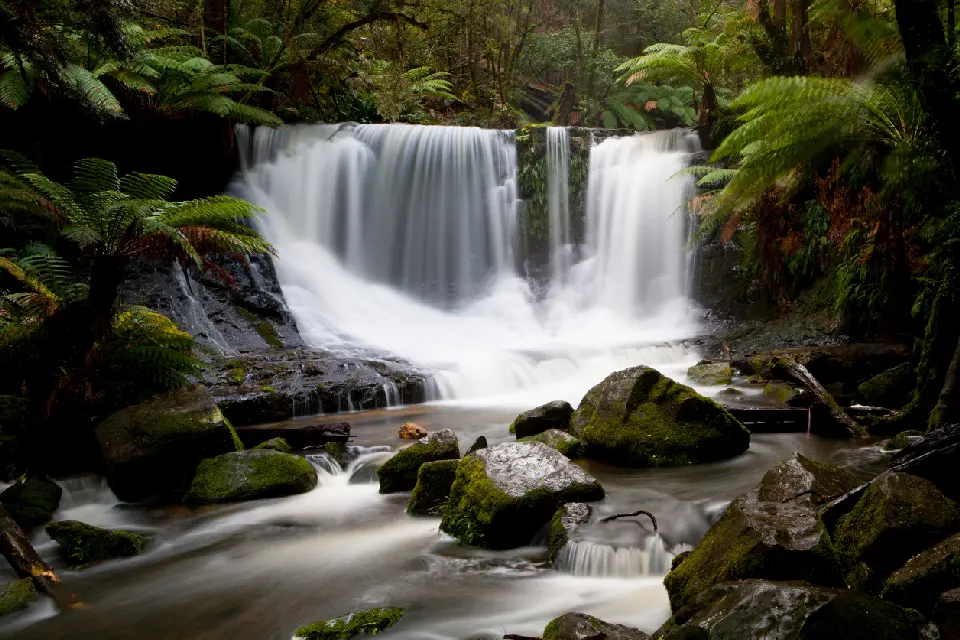
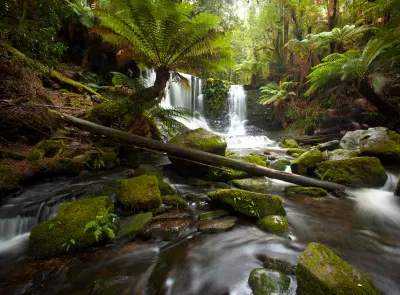
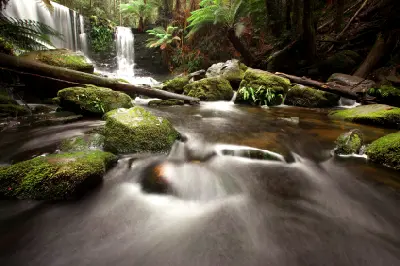
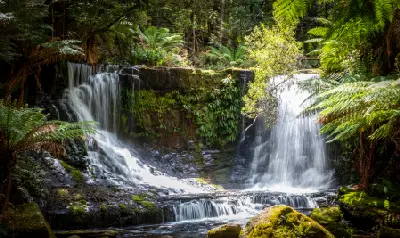
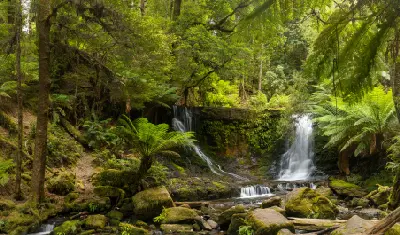
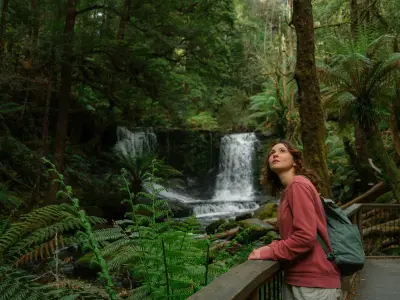
Horseshoe Falls flowing through lush temperate rainforest in Mount Field National Park, Tasmania.
The curved cascade is strongest when framed tightly by tree ferns, moss-covered rock and dense rainforest vegetation. Wide-angle lenses incorporate the complete waterfall and forest setting, while longer focal lengths isolate sections of falling water, ferns and textured rock. Overcast conditions provide particularly even illumination beneath the forest canopy and help control highlights in the water. Slower shutter speeds emphasise the shape and movement of the cascade, with stronger flows generally providing the most substantial waterfall compositions.
-42.67614, 146.71133
Gallery
Quick Facts
Access
Short Walk
15–45 min
Elevation Gain
80 m
Best Light
Soft forest light controls highlights in the falling water while retaining detail and rich colour across wet rock, moss and surrounding tree ferns.
Why This Light
Season
Seasonally Distinct
Winter and spring generally bring stronger water flow and particularly lush rainforest conditions. Summer can produce reduced flow, while autumn brings cooler, wetter conditions and subtle changes through the surrounding vegetation.
Crowds
Often Busy
Restrictions
Horseshoe Falls is reached from the Mount Field visitor area via the Russell Falls walking track and a continuation uphill through the rainforest. The final approach involves steps and a noticeable climb beyond Russell Falls, with wet surfaces potentially becoming slippery.