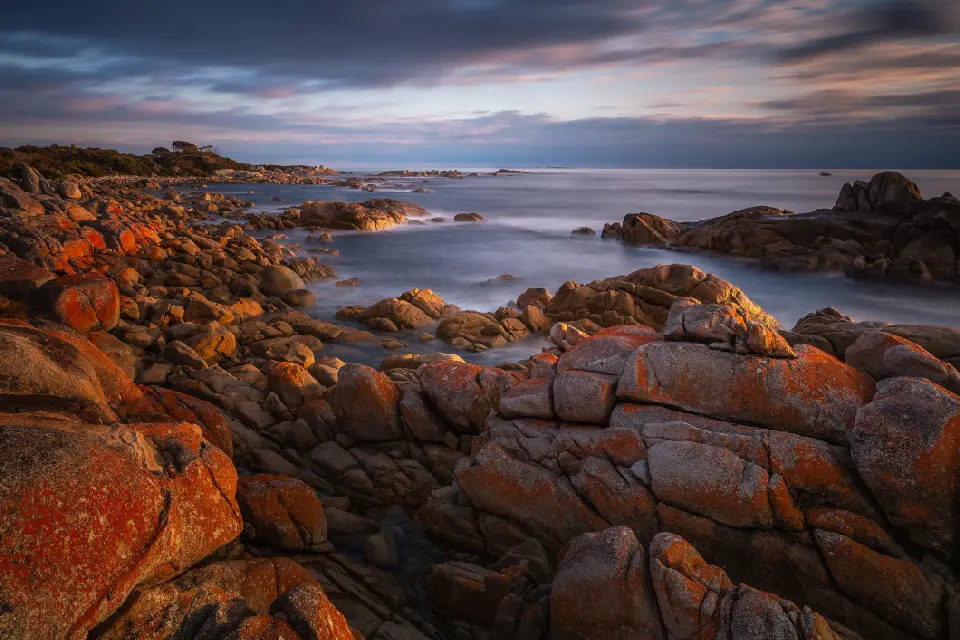
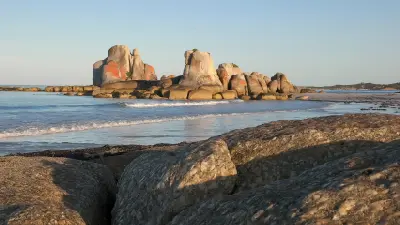
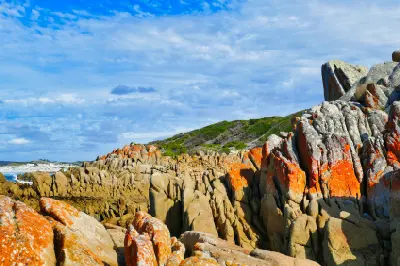
Sunrise light illuminates orange lichen-covered granite along the rugged coast at larapuna / Eddystone Point in Tasmania.
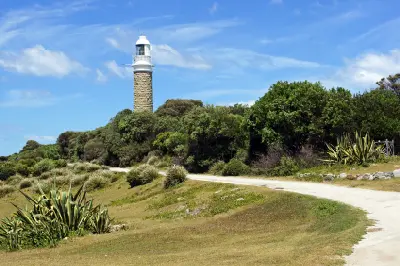
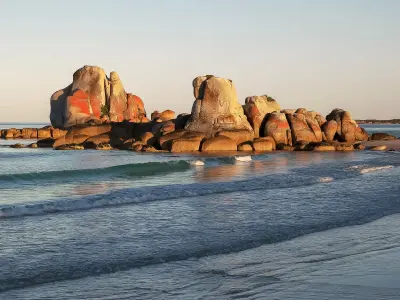
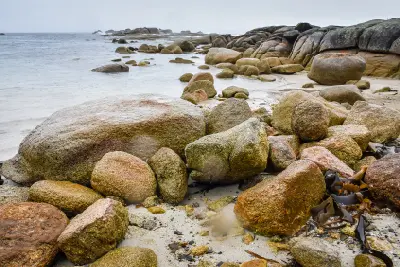
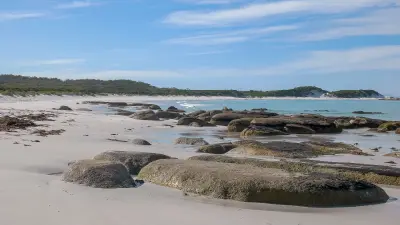
Eddystone Point is a remote headland on Tasmania's northeast coast, where a historic granite lighthouse stands above exposed rocky shores and the open Tasman Sea. Known as larapuna to the palawa people, the area combines orange-lichen granite, coastal heath, white beaches and powerful ocean scenery. The lighthouse provides a distinctive human landmark within the otherwise wild coastal landscape, giving the location a different photographic character from Binalong Bay and The Gardens.
-40.99491, 148.34902
Gallery
Quick Facts
Access
Roadside / Step-out
0–5 min
Elevation Gain
5 m
Best Light
Low-angle light adds warmth and texture to the granite and lighthouse, while softer conditions retain detail across the exposed coastline and surrounding heath.
Why This Light
Season
Seasonally Distinct
Summer brings longer daylight, brighter coastal colour and generally milder conditions. Autumn and spring produce variable skies and changing seas, while winter can bring stronger swell, cooler light and more dramatic weather across the exposed headland.
Crowds
Usually Quiet
Restrictions
Eddystone Point is reached by road through the remote northeast coast, with vehicle access close to the lighthouse and shoreline. Little walking is required for the principal views, although surrounding rocks and coastal terrain can be uneven and slippery. Conditions are exposed and can change quickly.