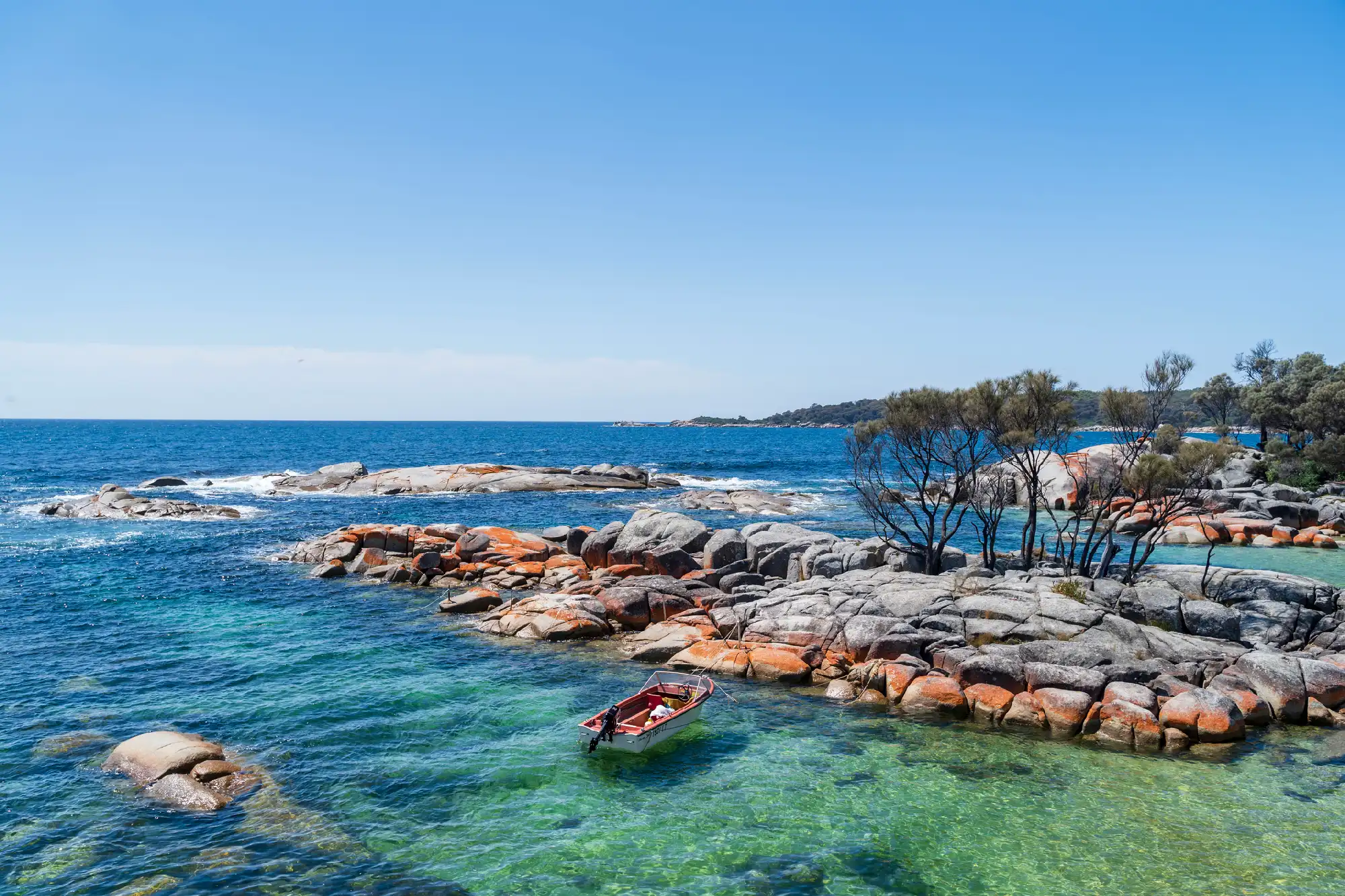
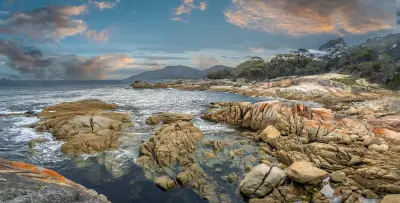
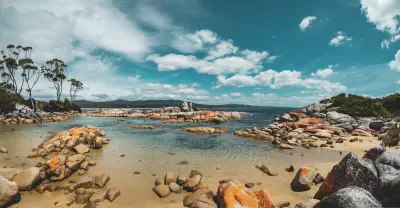
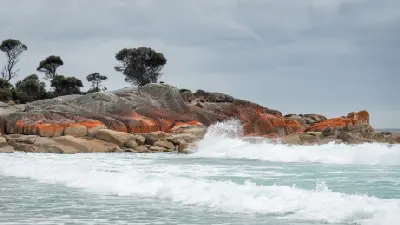
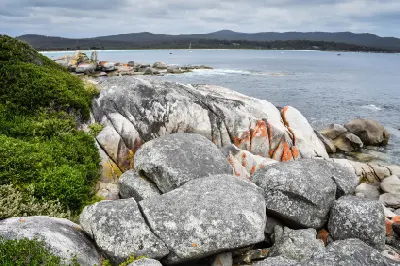
Orange lichen-covered granite and clear turquoise water at Binalong Bay on Tasmania’s northeast coast.
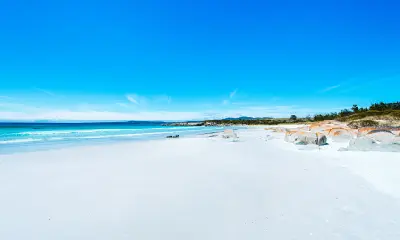
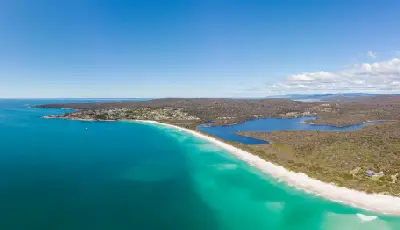
Binalong Bay is a coastal settlement and beach at the southern end of Tasmania's Bay of Fires, known for white sand, clear turquoise water and granite boulders covered in vivid orange lichen. Rocky coves and exposed granite break up the shoreline around the main beach, creating the characteristic colour contrasts associated with northeast Tasmania. The combination of pale sand, blue water and orange rock makes it one of the defining photographic locations of the Bay of Fires.
-41.24899, 148.31215
Gallery
Quick Facts
Access
Roadside / Step-out
0–5 min
Elevation Gain
5 m
Best Light
Early light strengthens colour across the granite and orange lichen, while softer conditions preserve detail between bright sand, rock and water.
Why This Light
Season
Seasonally Distinct
Summer brings warmer conditions, bright coastal colour and the highest visitor numbers. Autumn and spring are quieter with more variable weather, while winter can produce crisp air, stronger seas and dramatic coastal conditions.
Crowds
Often Busy
Restrictions
Binalong Bay is easily reached by sealed road, with parking and shoreline access available close to the main beach and rocky coastline. Many strong photographic positions require only short walks, although uneven and wet granite can become slippery near the water.