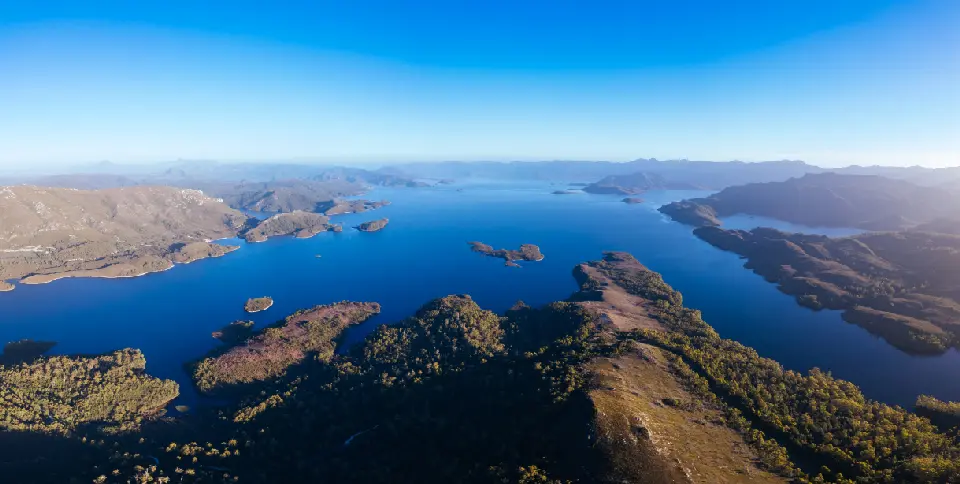
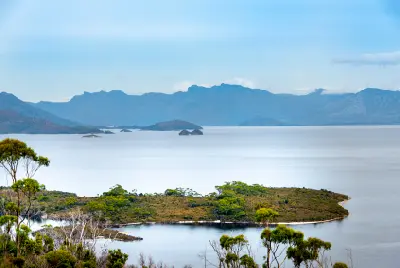
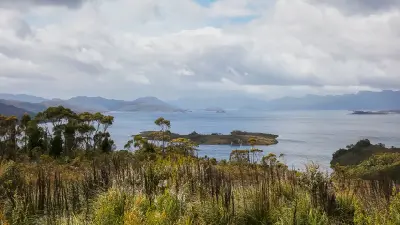
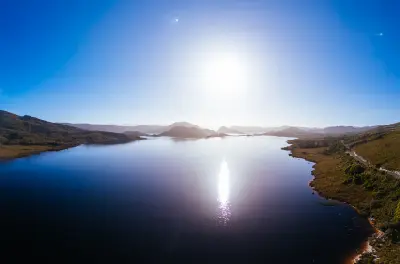
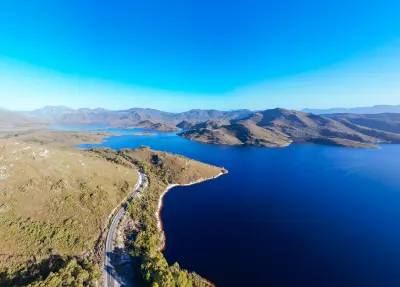
Aerial view across the vast waters, islands and mountain ranges of Lake Pedder in Tasmania’s Southwest National Park.
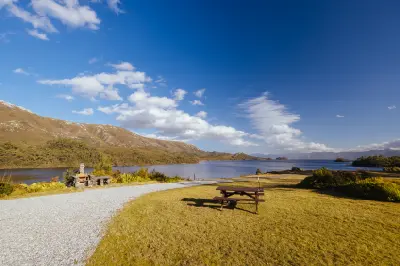
Lake Pedder is a vast freshwater lake surrounded by rugged mountains and remote wilderness in southwest Tasmania. The present lake was greatly enlarged by hydroelectric development, flooding the original glacial lake and surrounding valleys beneath an expansive body of water. Mountain ridges, forested shorelines and rapidly changing weather now create one of southwest Tasmania's most dramatic large-scale lake landscapes.
-42.90309, 146.08799
Gallery
Quick Facts
Access
Roadside / Step-out
0–5 min
Elevation Gain
5 m
Best Light
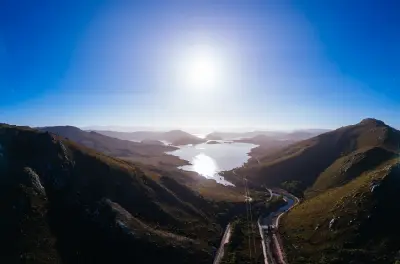
Calm water reflects surrounding ridges and changing skies, while low-angle light reveals layers and texture across the mountains enclosing the lake.
Why This Light
Season
Seasonally Distinct
Summer brings longer daylight and generally clearer mountain views, while autumn often provides calmer and cooler conditions. Winter brings frequent rain, low cloud and occasional snow on surrounding peaks, while spring produces highly variable weather across the southwest wilderness.
Crowds
Usually Quiet
Restrictions
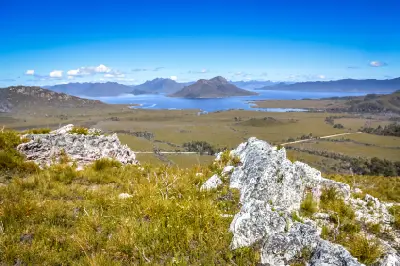
Lake Pedder is reached by road through southwest Tasmania, with several accessible positions around the eastern side of the lake providing views across the water and surrounding mountains. Strong photographs can be made close to the road, while additional walking provides alternative shoreline and elevated perspectives. Weather can change rapidly in this remote region.