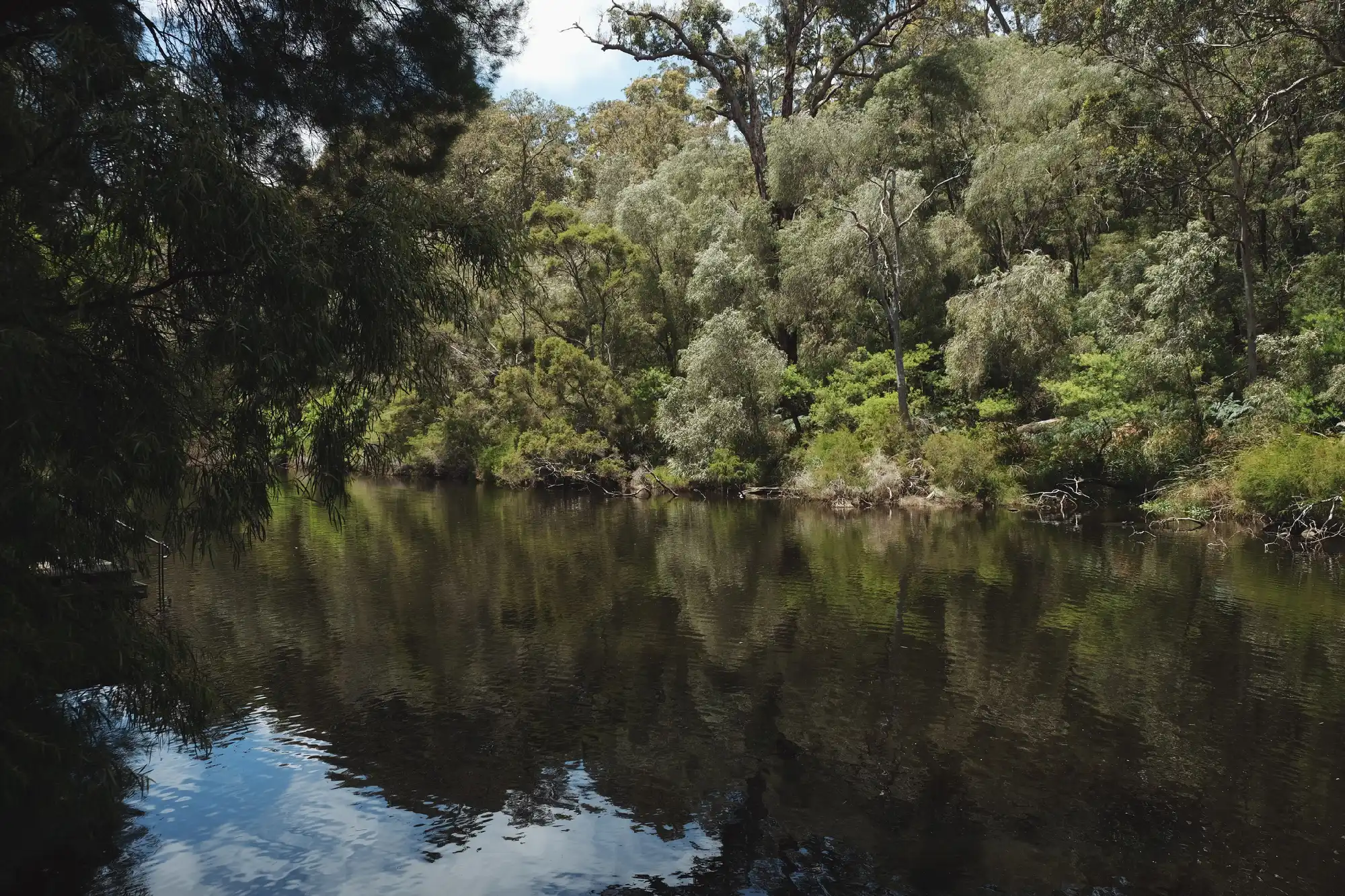
The dark waters of the Warren River reflect the dense forest lining its banks as it winds through Warren National Park near Pemberton.
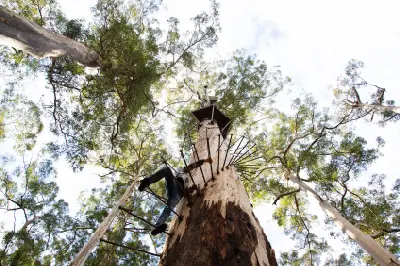
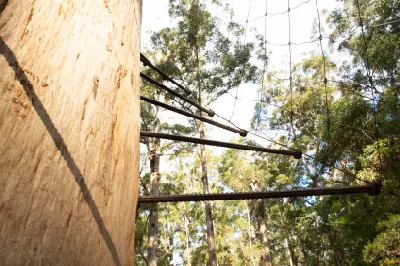
Warren National Park protects a dense karri forest south of Pemberton, centred on the Warren River as it winds through a deeply forested valley. Tall karri trees rise above an understorey of ferns and shrubs, with walking trails and viewpoints providing access to the river and surrounding forest. Towering trunks, layered vegetation and the enclosed river corridor provide opportunities for forest, landscape and detail photography.
-34.48484, 115.96492
Gallery
Quick Facts
Access
Short Walk
15–45 min
Elevation Gain
50 m
Best Light
Soft light controls contrast beneath the tall canopy, while calm sections of the Warren River can reflect surrounding karri forest and vegetation.
Why This Light
Season
Seasonally Distinct
Summer brings drier forest conditions, warmer bark tones and stronger patches of light filtering through the karri canopy. Winter brings wetter trunks, deeper green vegetation and higher river levels, with softer light throughout the forest.
Crowds
Usually Quiet
Restrictions
Warren National Park is reached by road south of Pemberton, with several visitor sites and walking trails providing access to the forest and Warren River. Park entry fees apply. Walking conditions vary from short riverside sections to longer trails with steeper slopes and uneven surfaces, while roads and tracks can be affected by wet weather or temporary park operations. Current park alerts and road conditions should be checked before travelling.