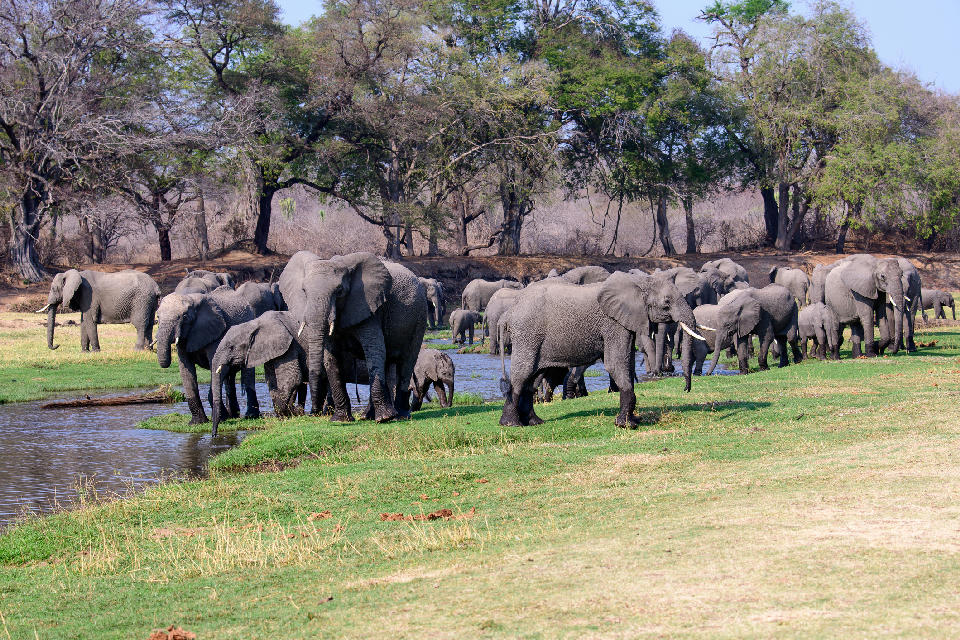
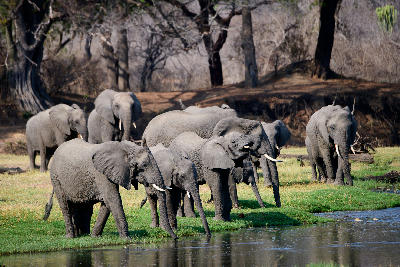
A large herd of African elephants gathers along the Jongomero River, one of Ruaha National Park's seasonal rivers that attracts wildlife during the dry months.
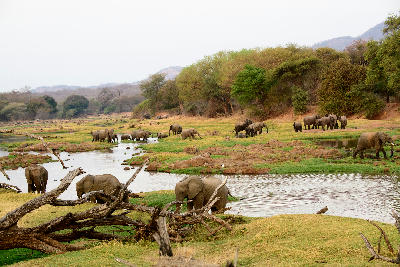
The Jongomero River is one of Ruaha National Park's most scenic river systems, attracting abundant wildlife to its sandy channels and permanent pools throughout the dry season. Fringed by riverine woodland and dramatic baobab landscapes, it offers outstanding opportunities for wildlife and landscape photography.
-7.90613, 34.55256
Gallery
Quick Facts
Access
Roadside / Step-out
0–5 min
Elevation Gain
0 m
Best Light
Light works best at sunrise and sunset because warm, low-angle sunlight enhances the river landscape and creates beautiful reflections on calm water.
Why This Light
Season
Seasonally Distinct
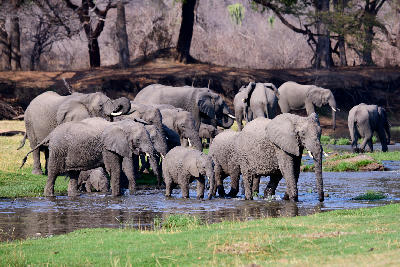
The dry season concentrates wildlife around the remaining pools and river channels, creating exceptional game-viewing opportunities. During the wet season, flowing water, greener vegetation and seasonal birdlife transform the river into a vibrant wilderness landscape.
Crowds
Usually Quiet
Restrictions
The Jongomero River is reached by guided game drives within the remote southern section of Ruaha National Park. Access requires park entry permits and is typically arranged through safari lodges and licensed guides.