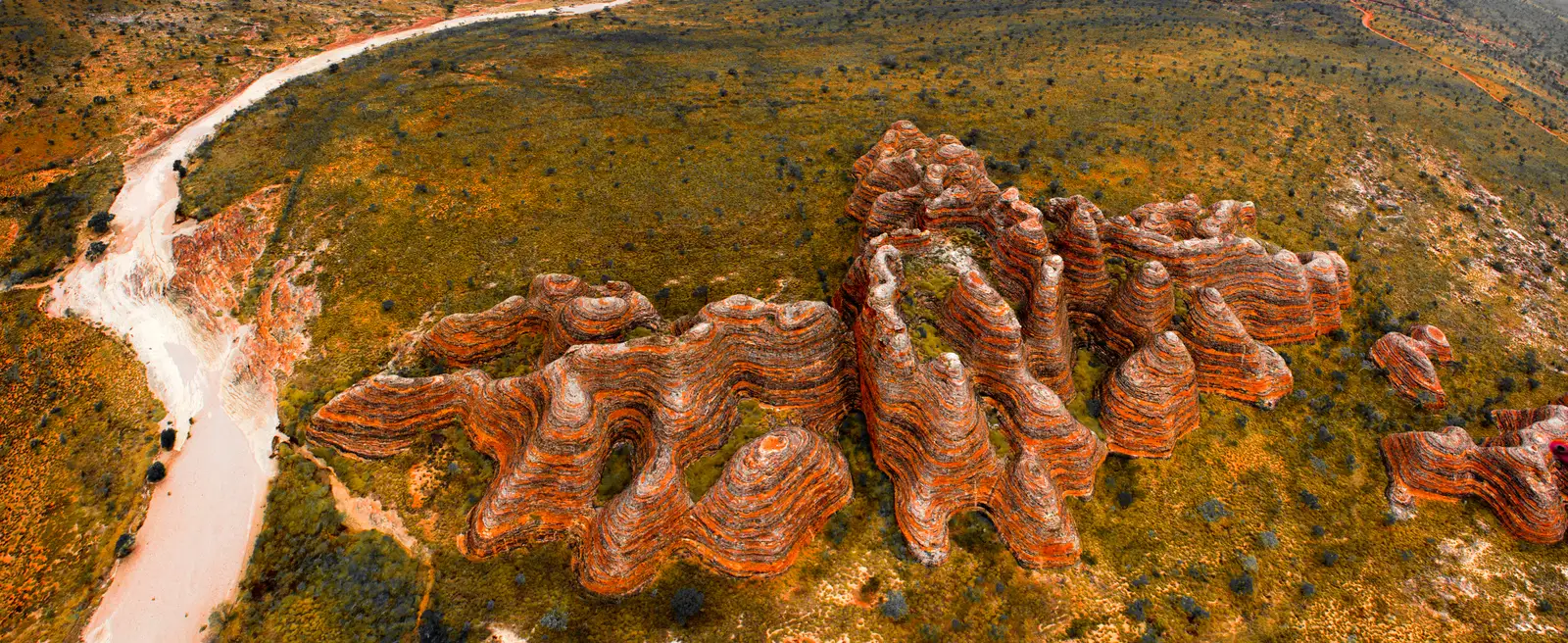
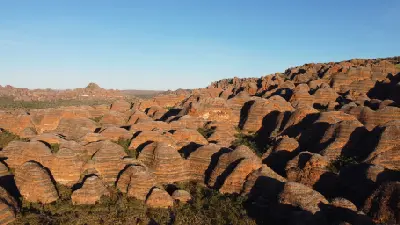
Aerial view of the Bungle Bungle Range in Purnululu National Park, Western Australia.
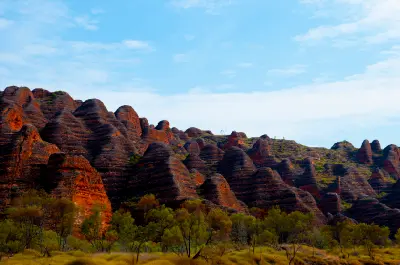
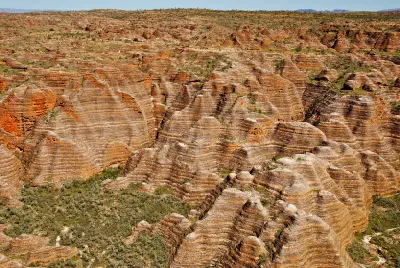
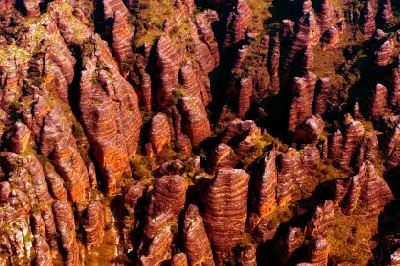
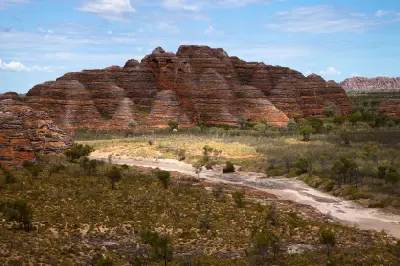
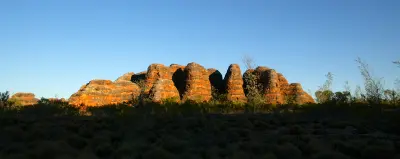
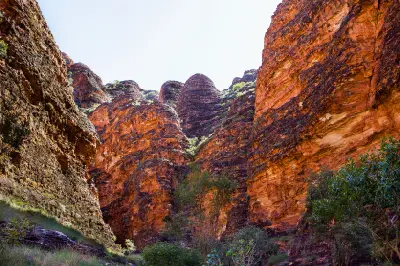
Bungle Bungle Range is a sandstone massif within Purnululu National Park in the eastern Kimberley, formed into hundreds of rounded and deeply eroded domes. Alternating orange and dark-grey bands give the formations their distinctive striped appearance, with narrow gorges and creek beds cutting through the range. The repeating domes, strong geological patterns and surrounding savanna provide opportunities for both broad landscapes and detailed studies of form and texture.
-17.38164, 128.38194
Gallery
Quick Facts
Access
Visitor Access
0–5 min
Elevation Gain
5 m
Best Light
Low-angle light separates the rounded domes and reveals their banding, while open desert conditions retain strong colour and geological detail.
Why This Light
Season
Seasonally Distinct
Summer brings greener vegetation, storm clouds and seasonal water through the ranges during the wet season. Winter brings dry golden grasses, clearer skies and stronger contrast between the striped domes and surrounding savanna.
Crowds
Often Busy
Restrictions
The Bungle Bungle Range is reached through Purnululu National Park via a long, rough access road from the Great Northern Highway. High-clearance 4WD vehicles are generally required, and road access is seasonal, with the park commonly inaccessible during the wet season. Established parking areas and walking trails provide access to the principal formations. Current road and park conditions should be checked before travelling.