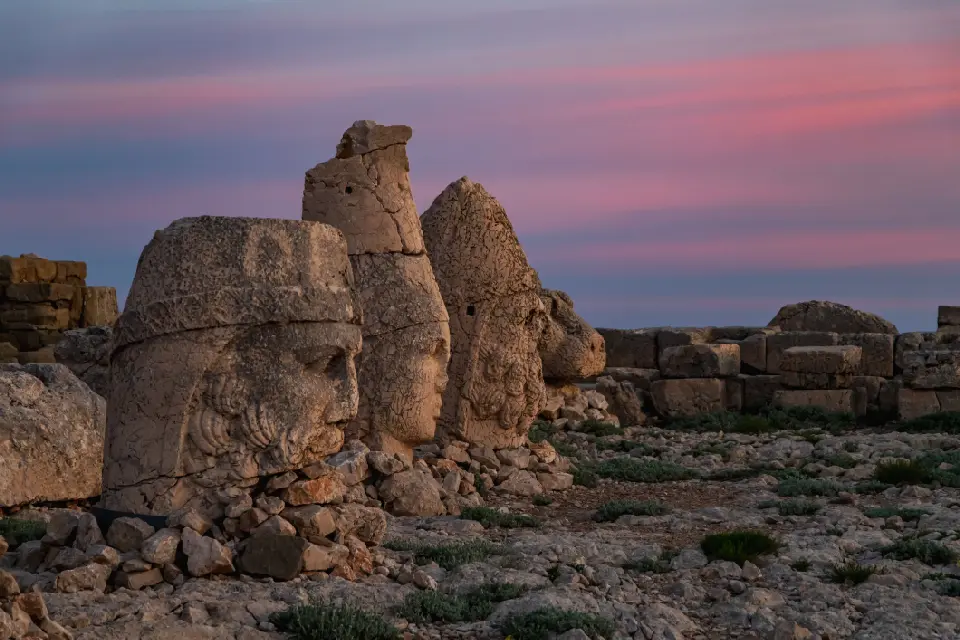
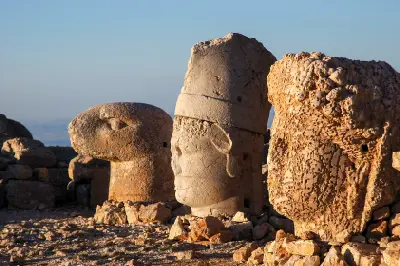
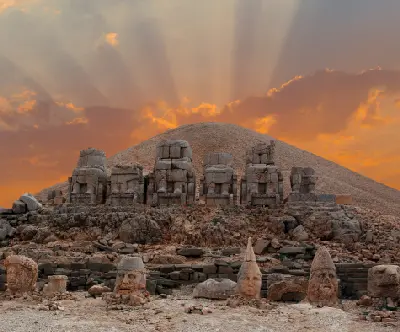
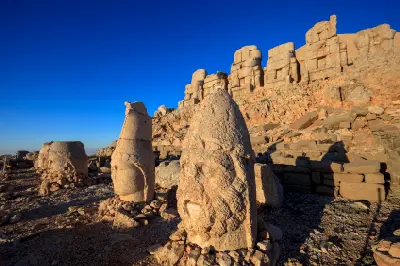
Colossal stone heads of the Commagene sanctuary on Mount Nemrut illuminated by the soft light of sunrise.
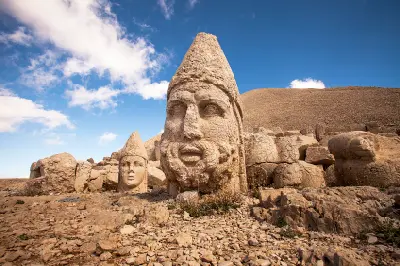
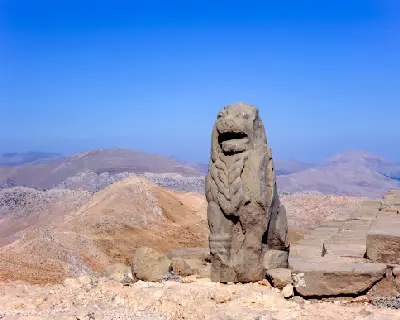
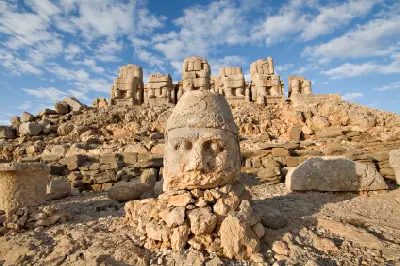
Mount Nemrut is a high archaeological sanctuary in southeastern Turkey, crowned by the monumental tomb complex of the Commagene king Antiochus I. Built in the 1st century BC, the summit is dominated by a vast stone burial mound surrounded by terraces containing colossal statues of the king, gods and animals. Fallen heads now stand separately from their seated stone figures, creating one of Turkey's most distinctive archaeological landscapes. The exposed summit also provides expansive views across the surrounding mountains and plains.
37.98076, 38.74084
Gallery
Quick Facts
Access
Visitor Access
15–45 min
Elevation Gain
100 m
Best Light
Low-angle light reveals texture across the colossal stone heads and burial mound while producing dramatic colour and shadows across the exposed summit.
Why This Light
Season
Seasonally Distinct
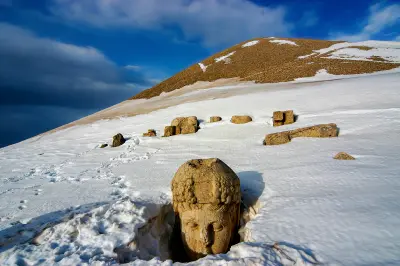
Late spring through autumn provides the main access season, with dry mountain conditions and clearer trails. Winter brings substantial snow to the summit and can make access difficult or impossible.
Crowds
Often Busy
Restrictions
Low-angle light reveals texture across the colossal stone heads and burial mound while producing dramatic colour and shadows across the exposed summit.