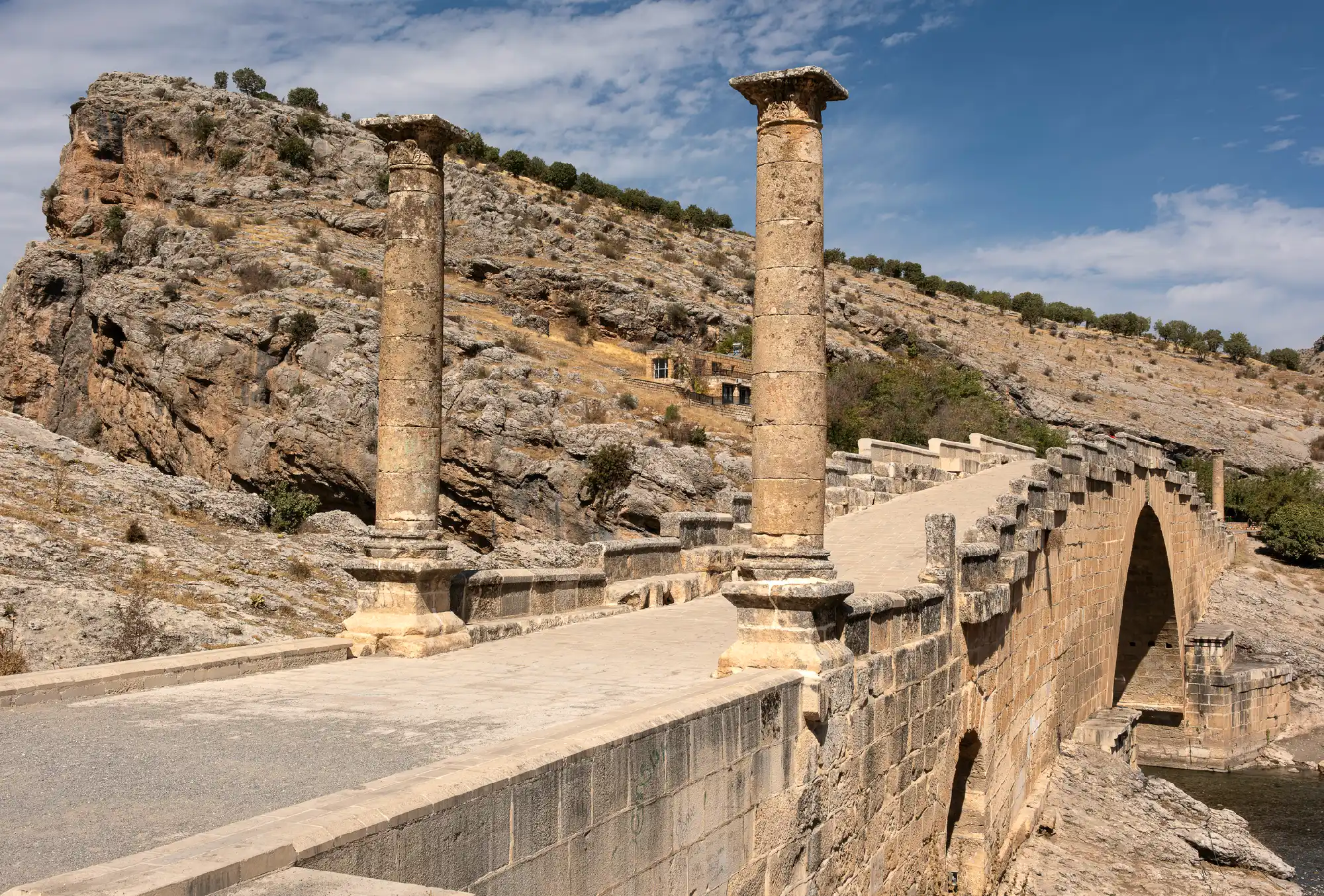
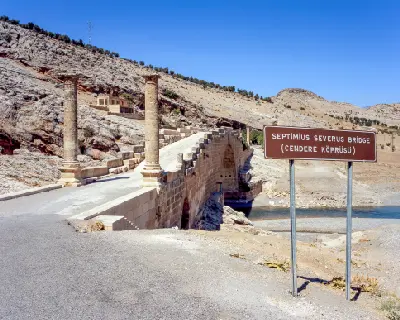
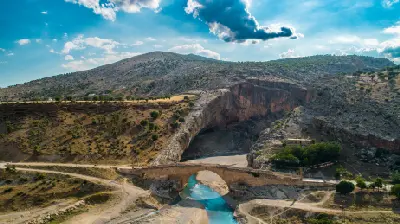
Cendere Bridge, a Roman-era bridge spanning the Cendere River near Kahta in southeastern Turkey.
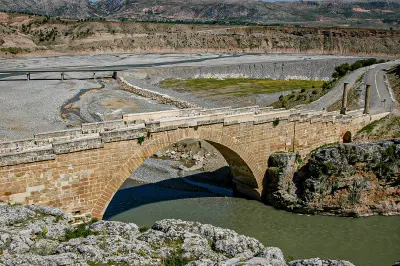
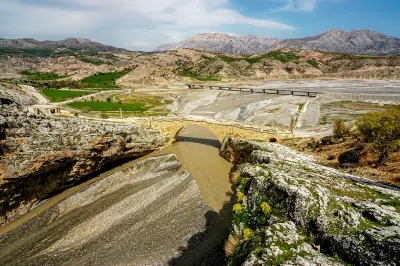
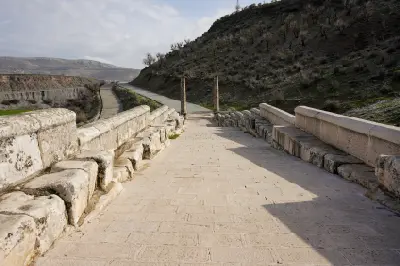
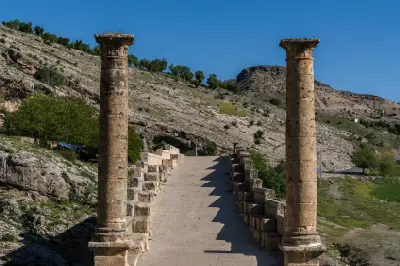
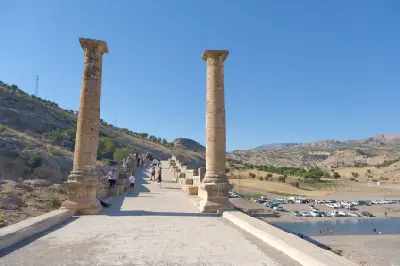
Cendere Bridge is a monumental Roman bridge spanning the narrow Cendere Gorge near Mount Nemrut in southeastern Turkey. Constructed during the Roman period from massive dressed stone blocks, its single principal arch crosses the Cendere River without the use of mortar. Surviving columns stand at the approaches to the bridge, while steep rocky slopes frame the river and ancient structure. Its remarkably intact form makes it one of the strongest surviving examples of Roman engineering in the wider Commagene landscape.
37.93291, 38.60850
Gallery
Quick Facts
Access
Roadside / Step-out
0–5 min
Elevation Gain
10 m
Best Light
Directional light reveals texture across the ancient stonework and arch while creating depth between the bridge, river and surrounding gorge.
Why This Light
Season
Seasonally Distinct
Spring brings greener vegetation and stronger river flow through the gorge, while summer produces a dry, exposed landscape. Autumn introduces warmer vegetation tones, while winter can bring colder conditions and occasional snow across the surrounding highlands.
Crowds
Often Busy
Restrictions
Cendere Bridge is reached directly from the road through the wider Mount Nemrut and Commagene archaeological circuit. Parking is available close to the site, with only a short walk required to reach the bridge and riverside viewpoints. Uneven rock near the river requires some care.